Investigating the Relationship between the Frequency of Laboratory Activities and Academic Performance in Science among Secondary School Students
Keywords:
Laboratory activities, academic performance, secondary school studentsAbstract
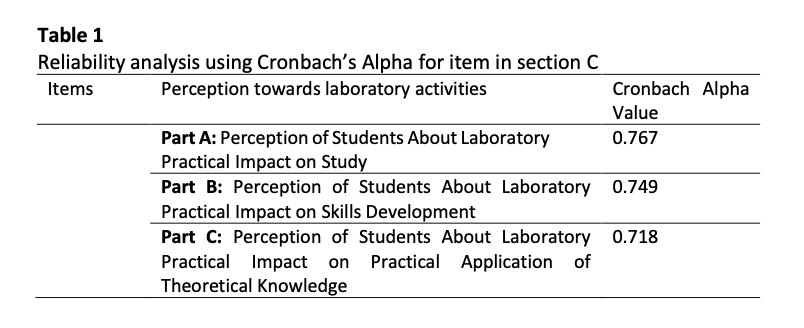
This study investigates the relationship between the frequency of laboratory activities and academic performance in science among secondary school students in Malaysia. It also explores students’ perceptions of laboratory-based learning and how these perceptions relate to their academic outcomes. This research used a quantitative survey method involving 234 students from Form 3 to Form 5 in a secondary school in Selangor. Data were collected through a structured questionnaire and analysed using descriptive and inferential statistics including Spearman correlation analysis. The results revealed that the frequency of laboratory activities varied among students with some experiencing adequate hands-on sessions and a minority of the respondents performing fewer practical works throughout the year. Students generally had positive perceptions towards laboratory activities, acknowledging their role in enhancing understanding, skills development and application of theoretical knowledge. There is no significant relationship between the frequency of laboratory activities and academic performance in science. However, a new relationship is discovered where students’ interests and academic performance is statistically significant. This study provides valuable insights for educators and policymakers to emphasise a better quality of laboratory activities and meaningful hands-on integration in science curriculum.