Leading Beyond the Conventional: Creative Leadership Driving School Innovation and Organisational Learning in Malaysia
Keywords:
Creative leadership, education change, Malaysian education, organisational learning, school innovativeness, transformationAbstract
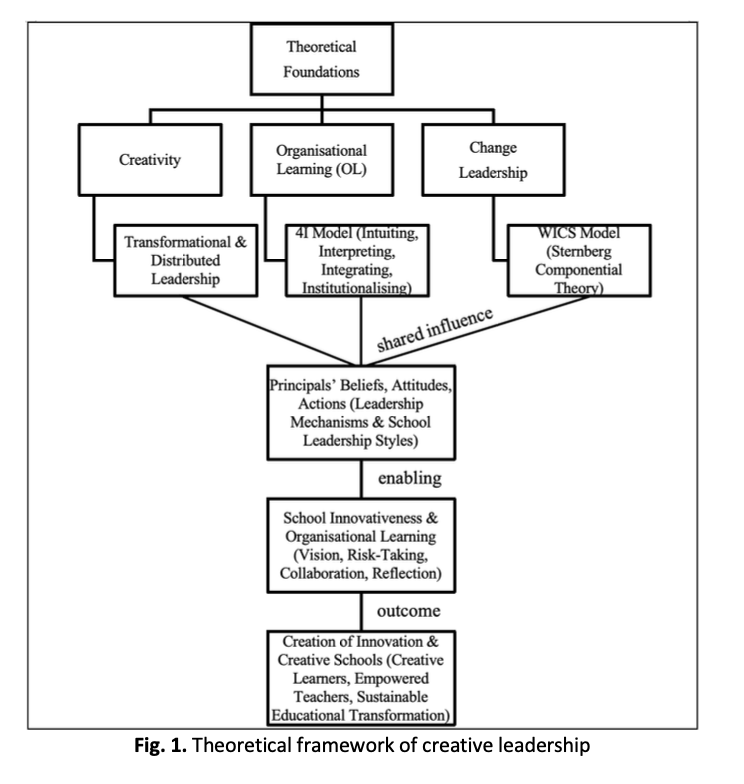
This study investigates how creative leadership enables school innovativeness and organisational learning within the Malaysian education context. Employing a qualitative multi-case study design, the research explores leadership practices across three different schools, drawing on interviews, open-ended questionnaires, observations and artefacts. Framed by Sternberg’s WICS model and Lewin’s Force Field Theory, the study reveals that visionary and courageous principals foster inclusive cultures of innovation through distributed leadership, flexible pedagogical practices and emotional intelligence. Key themes include the cultivation of dynamic school cultures, the empowerment of teachers through decentralised decision-making and the integration of organisational learning processes to support sustained transformation. Despite systemic barriers such as policy rigidity, resistance to change and resource constraints, creative leadership emerged as a critical force in navigating complexity and promoting resilience. The study contributes to the theoretical discourse by positioning creative leadership as a holistic, context-responsive model that integrates emotional, cognitive and strategic dimensions of change. Practical and policy implications are discussed, alongside recommendations for future research into leadership adaptability, professional development and curriculum innovation in the education field.