The Role of SDGs In Policy Transformation at UNNES: Current and Future Analysis

Authors

  • Bayu Triwibowo Department of Chemical Engineering, Faculty of Engineering, Universitas Negeri Semarang, UNNES Sekaran Campus, Semarang 50229 Indonesia
  • Haniif Prasetiawan Department of Chemical Engineering, Faculty of Engineering, Universitas Negeri Semarang, UNNES Sekaran Campus, Semarang 50229 Indonesia
  • Nur Qudus Civil Engineering Vocational Education program, Universitas Negeri Semarang, UNNES Kampus Campus, Semarang 50229 Indonesia
  • Alfath Yuniarto Information and Communication Technology, Universitas Negeri Semarang, UNNES Kampus Campus, Semarang 50229 Indonesia
  • Adi Nur Cahyo Faculty of Mathematics and Natural Sciences, Universitas Negeri Semarang, UNNES Kampus Campus, Semarang 50229 Indonesia
  • Mulida Zakia Department of Chemical Engineering, Faculty of Engineering, Universitas Negeri Semarang, UNNES Sekaran Campus, Semarang 50229 Indonesia

Keywords:

SDGs, Higher education, Policy transformation, Sustainability, UNNES

Abstract

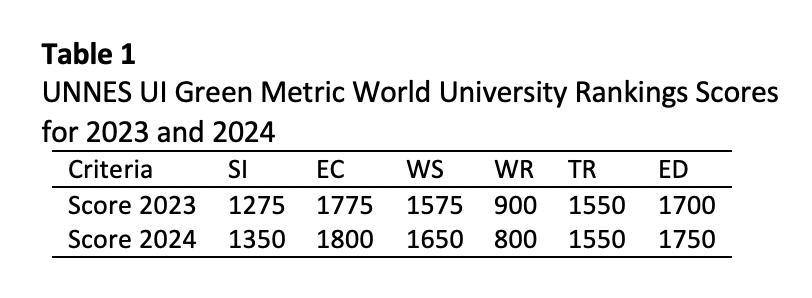
The Sustainable Development Goals (SDGs) have become a key global framework guiding the transformation of higher education institutions towards sustainable development. However, the integration of SDGs into university policies often faces challenges in terms of depth, consistency, and measurable impact. This study explores the current status and future direction of SDG-based policy transformation at Universitas Negeri Semarang (UNNES), a university that has declared itself as a Conservation University. The main objective of the research is to comprehensively analyse how SDGs have influenced institutional governance, academic policy, research priorities, and community engagement at UNNES, while also identifying the challenges and opportunities for strengthening sustainability practices. The research employs a qualitative case study method, utilizing document analysis, semi-structured interviews, and focus group discussions involving university leaders, faculty, and students. The findings indicate that UNNES has made notable progress in operationalizing SDGs across its strategic plans, curriculum development, research themes, and community outreach programs. Signature initiatives such as internal sustainability assessments, inclusive education access programs, innovation hubs, and the adoption of digital management systems demonstrate the university’s commitment to sustainability. Nevertheless, the results also highlight several persistent obstacles, including uneven SDG mainstreaming across units, limitations in monitoring and evaluation frameworks, and constraints in resources and cross-sectoral collaboration. In addition, while UNNES has achieved significant improvements in international sustainability rankings, there remains a need for stronger integration of SDG indicators into all levels of institutional planning and evaluation. In conclusion, the study emphasizes the importance of systematic and evidence-based strategies to reinforce SDG integration in higher education. Recommendations include enhancing inter-unit coordination, developing quantitative monitoring tools, building human resource capacity, and preparing adaptive policies for the post-2030 era. These measures are essential for positioning UNNES as a leading institution in sustainable development and can serve as a model for other universities seeking to align their policies with global sustainability agendas.

Author Biographies

Bayu Triwibowo, Department of Chemical Engineering, Faculty of Engineering, Universitas Negeri Semarang, UNNES Sekaran Campus, Semarang 50229 Indonesia

bayu.triwibowo@mail.unnes.ac.id

Haniif Prasetiawan, Department of Chemical Engineering, Faculty of Engineering, Universitas Negeri Semarang, UNNES Sekaran Campus, Semarang 50229 Indonesia

haniif.prasetiawan@mail.unnes.ac.id

Nur Qudus, Civil Engineering Vocational Education program, Universitas Negeri Semarang, UNNES Kampus Campus, Semarang 50229 Indonesia

nurqudus@mail.unnes.ac.id

Alfath Yuniarto, Information and Communication Technology, Universitas Negeri Semarang, UNNES Kampus Campus, Semarang 50229 Indonesia

alfath@mail.unnes.ac.id

Adi Nur Cahyo, Faculty of Mathematics and Natural Sciences, Universitas Negeri Semarang, UNNES Kampus Campus, Semarang 50229 Indonesia

adinurcahyono@mail.unnes.ac.id

Mulida Zakia, Department of Chemical Engineering, Faculty of Engineering, Universitas Negeri Semarang, UNNES Sekaran Campus, Semarang 50229 Indonesia

maulida.zakia@mail.unnes.ac.id

Downloads

Published

2025-12-10

Issue

Section

Articles