Using Medicinal Plants to Perform the Epigenetic Regulation of Gene Expression
Keywords:
Medicinal plants, epigenetic regulation, phytotherapy, geneAbstract
Phytochemical substances contained in medicinal plants are able to reverse epigenetic changes, actively regulate gene expression, prevent oncogenesis, as well as prevent diseases through epigenetic modifications. The purpose of the study was to perform the analysis of scientific literature on the effect of biologically active plant substances on epigenetic regulation of gene expression in various diseases. A systematic analysis of publications was carried out in order to identify the main directions of pharmacology of biologically active plant substances with an emphasis on epigenetic regulation. Biologically active plant substances affect DNA methylation, histone acetylation, etc., modulating the course of hereditary, viral, autoimmune diseases. Epigenetic studies of biologically active plant substances as gene expression regulators may be of interest as an explanation for the anti-tumor, anti-inflammatory, and metabolic and hereditary disorders effects of plants, as well as for identifying new plants that are promising for these purposes.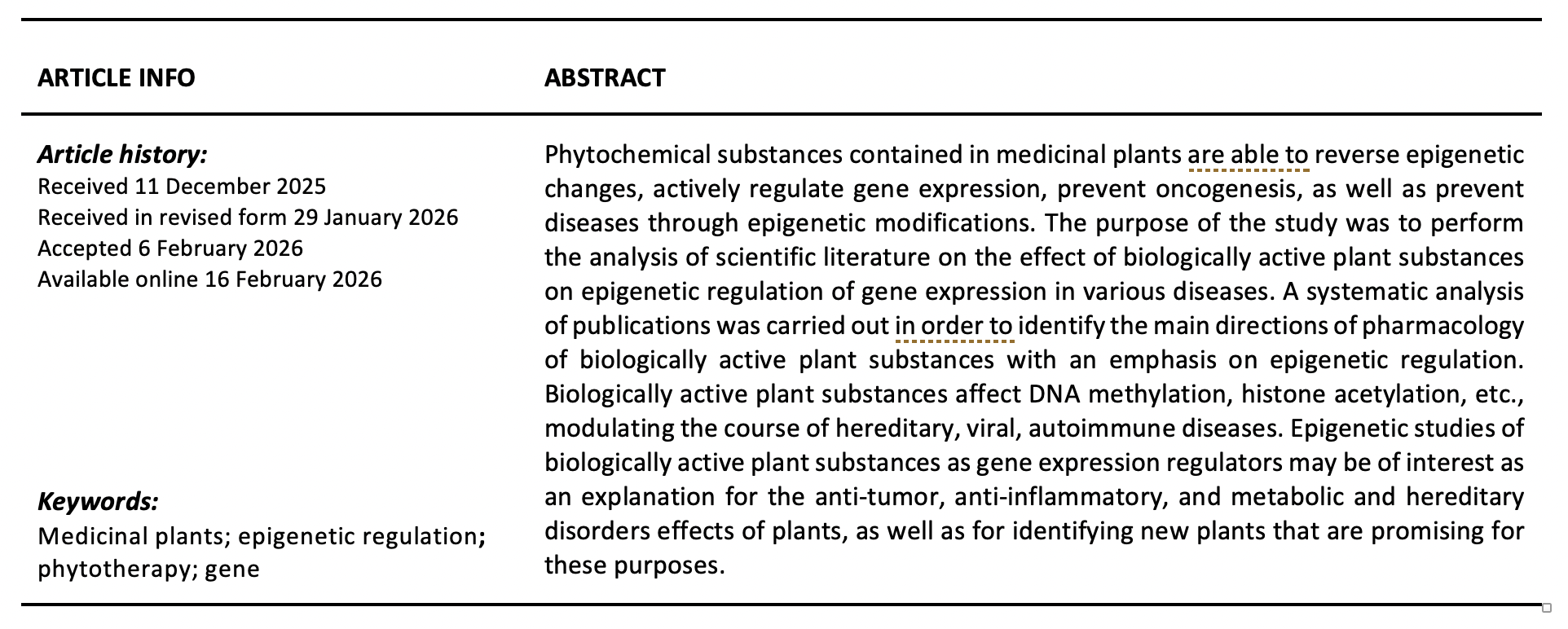
Downloads
Published
2026-02-15
How to Cite
Korsun, E. V., & Trushin, M. V. (2026). Using Medicinal Plants to Perform the Epigenetic Regulation of Gene Expression . Journal of Health and Quality of Life, 9(1), 59–63. Retrieved from https://karyailham.com.my/index.php/jhqol/article/view/945
Issue
Section
Articles