Optimizing Multi-Turn Dialogue Systems: An Automated History Context Selector via Three-Way Decision
Keywords:
Natural language processing, conversational agents, Fuzzy Naive Bayes, sequence-to-sequence learning, customer service automation, text pre-processingAbstract
Managing high-volume customer service requests across online channels creates significant operational strain and rising workforce costs for modern businesses. To alleviate this strain, this study develops and evaluates an automated conversational chatbot framework designed to optimize query responsiveness and classification accuracy in customer service. The study is grounded in sequence-to-sequence learning theory, natural language processing pipelines, and fuzzy decision-making frameworks. We employ an experimental research design set in a local restaurant customer service environment to evaluate system performance. The dataset consists of a sample of 283 authentic customer queries across 16 distinct intent classes, analysed using text pre-processing, multiple vector embeddings, and machine learning classifiers. The combination of Word2Vec embeddings and a multi-layer Artificial Neural Network classifier optimized intent recognition, achieving an average classification accuracy of 88.9% and a human volunteer relevance score of 13 out of 20. The proposed Bi-directional Recurrent Neural Network model with a Fuzzy Naive Bayes classifier under a sequence-to-sequence framework achieved a precision of 93% and a recall of 94% with a minimal processing latency of 4.22 milliseconds per query. In contrast, the high-dimensional Bidirectional Encoder Representations from Transformers embedding paired with an Artificial Neural Network underperformed due to overfitting in the parameter space, yielding a lower accuracy of 78.6% and a relevance score of only 6 out of 20. The originality of this study lies in its autonomous contextual selection mechanism that dynamically filters dialogue turns to mitigate semantic noise without requiring resource-intensive manual annotations. Practically, this framework enables service enterprises to deploy highly responsive, emotionally aware automated agents that reduce human agent workloads while maintaining conversational coherence.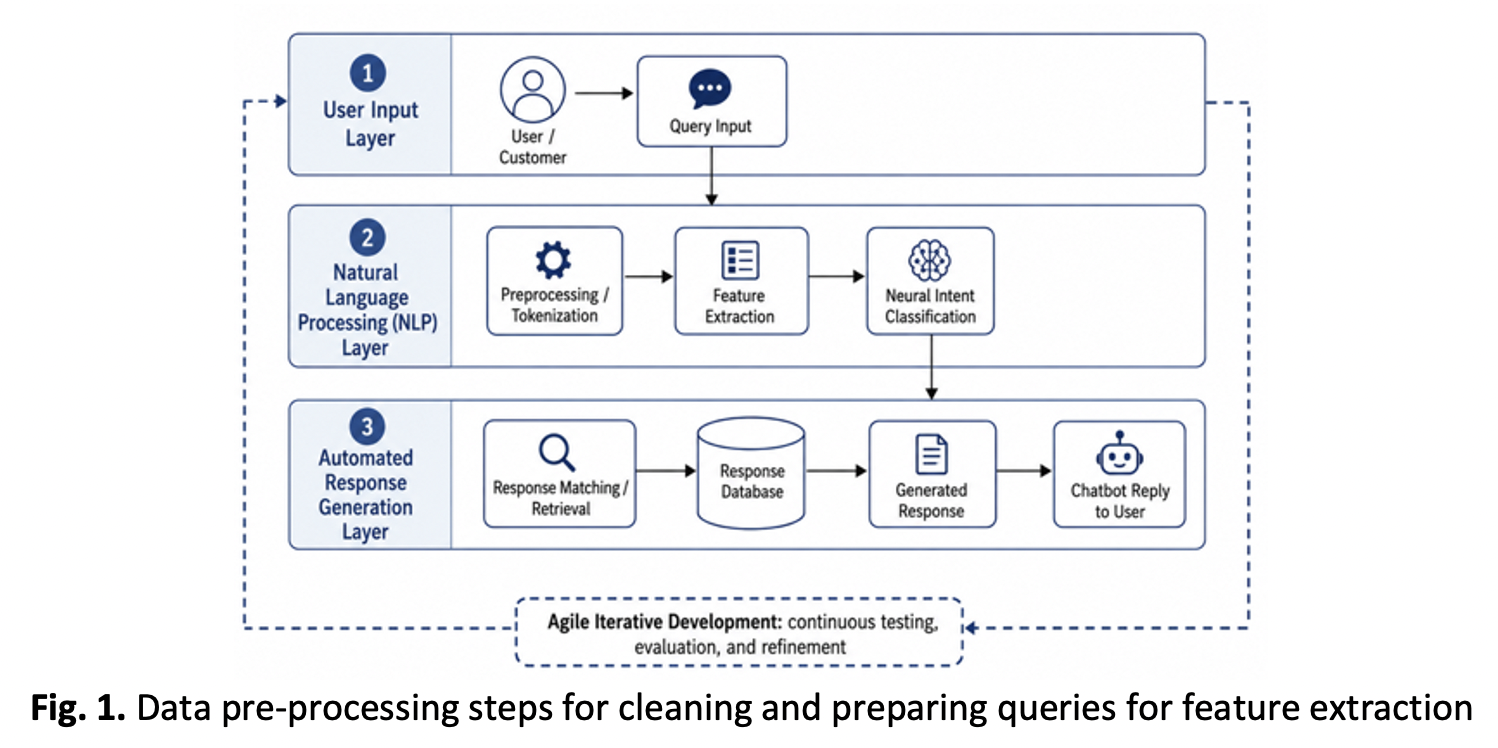
Downloads
Published
2026-10-05
How to Cite
Devniswaran Alaguraja, Rosidah Rosidi, & Ahgalya Subbiah. (2026). Optimizing Multi-Turn Dialogue Systems: An Automated History Context Selector via Three-Way Decision. International Journal of Advanced Research in Computational Thinking and Data Science, 10(1), 14–27. Retrieved from http://karyailham.com.my/index.php/ctds/article/view/1315
Issue
Section
Articles