Exploring The E–Waste Recycling Intention among Students in Higher Education Institutions in Malaysia
Keywords:
E-waste recycling, theory of planned behaviour, higher education students, emerging economiesAbstract
Electronic waste (e-waste) has become a rapidly growing environmental concern in Malaysia as increasing dependence on digital devices leads to high disposal rates and improper handling of discarded electronics. Despite various national initiatives to improve recycling systems, many higher education students still lack consistent recycling practices, reflecting gaps in awareness, accessibility, and behavioural motivation. Therefore, this research examines how the theory of planned behaviour (TPB) drives students' intention to recycle e-waste in Malaysian higher education institutions. Using a survey questionnaire of 384 higher education students, this research finds that TPB, specifically attitude, subjective norms and perceived behavioural control significantly drive students’ intention to recycle e-waste. The results indicate that perceived behavioural control was the most influential driver, followed by subjective norms and attitude. It also highlights that students are more likely to engage in e-waste recycling when they feel confident and perceive support from their social circles. Increasing environmental awareness and integrating sustainability initiatives into campus activities are among the measures that can increase e-waste recycling among higher education students.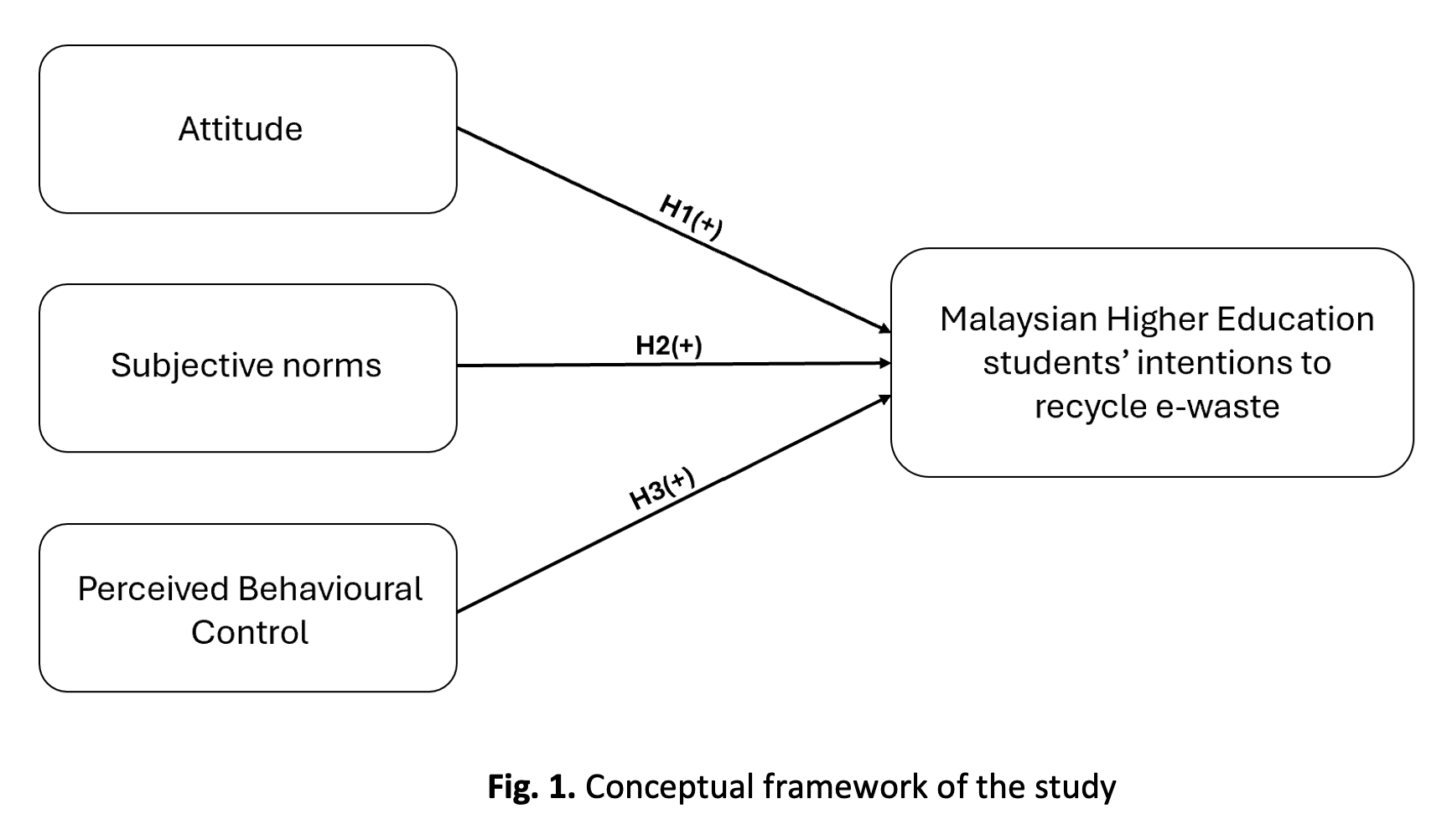
Downloads
Published
2026-02-04
How to Cite
Mazlan Hairulizwan, A. Z., Suhaimi, Z. S., & Suppatvech, C. (2026). Exploring The E–Waste Recycling Intention among Students in Higher Education Institutions in Malaysia . Future Energy and Environment Letters , 6(1), 9–17. Retrieved from http://karyailham.com.my/index.php/feel/article/view/932
Issue
Section
Articles