AGRI-OIL: An Energy-Aware Smart Electric Pyrolysis System for Agricultural Waste-to-Bio-Oil Conversion
Keywords:
agricultural waste, bio-oil, biomass pyrolysis, energy-conscious systems, temperature control, thermochemical conversionAbstract
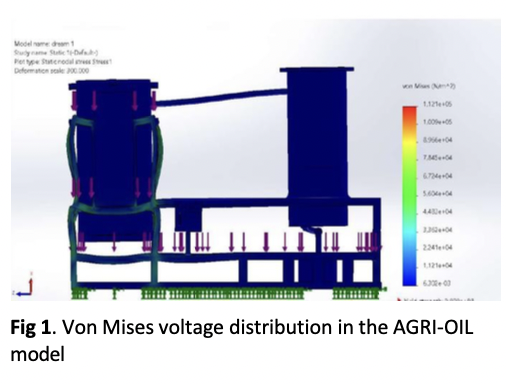
Agricultural waste accumulates almost every harvest season, and most of it ends up being burned in the field or decomposed without further processing. In fact, the biomass pile stores energy that can be taken through thermochemical conversion, one of which is pyrolysis, which is the process of thermally decomposing biomass under limited oxygen conditions that produces bio-oil, biochar, and non-condensing gas. Problems that often arise in small-scale pyrolysis equipment are process temperatures that are difficult to maintain stable and the lack of records on how much electrical energy is used compared to the bio-oil produced. Departing from that, this study developed AGRI-OIL, an electric pyrolysis systemequipped with a thermal energy monitoring and control unit throughout the process. Physically, the system consists of a pyrolysis reactor, heating elements, electrical system, sensor and temperature control units, copper pipe condensers, bio-oil storage containers, and an integrated energy monitoring system. The development phase reported here is still at the computer simulation level, pursued through two tracks: structural analysis ofthe frame and vessel using the Finite Element Method (FEM) using SolidWorks Simulation software to check whether the construction is able to safely withstand the load of components, and simulation of the process of separation-steam cooling of pyrolysis products using a mixture of fivecompounds (water, acetic acid, phenol, furfural, n-heptane) as the initial model of the bio-oil composition. The results of the structural analysis show a maximum von Mises voltage of 1,000. 121 × 10⁵ N/m², well below the material yield stress of 2.039 × 10⁸ N/m², with a minimum safety factor of about 3.0 and a maximum deflection of only 8.25 × 10⁻⁴ mm, so that the frame can be said to be safe to proceed to the fabrication stage. The process simulation shows an operatingtemperature range of 298.1-417.1 K with a condenser cooling load of 0.152 kW, as well as an estimated cost of installed equipment of approximately USD 317,380 for the separator and condenser subsystems. These two simulations provide a reasonable initial basis for proceeding with AGRI-OIL to the physical prototyping and experimental testing stages, including testing pyrolysis temperature variations on bio-oil yields and specific energy consumption planned at the next stage.