Feasibility and Conceptual Design of a Low-Cost AI-Powered Holographic Smartwatch for Assistive Education
Keywords:
wearable AI, embedded system, feasibility analysis, Holographic smartwatch, Assistive educationAbstract
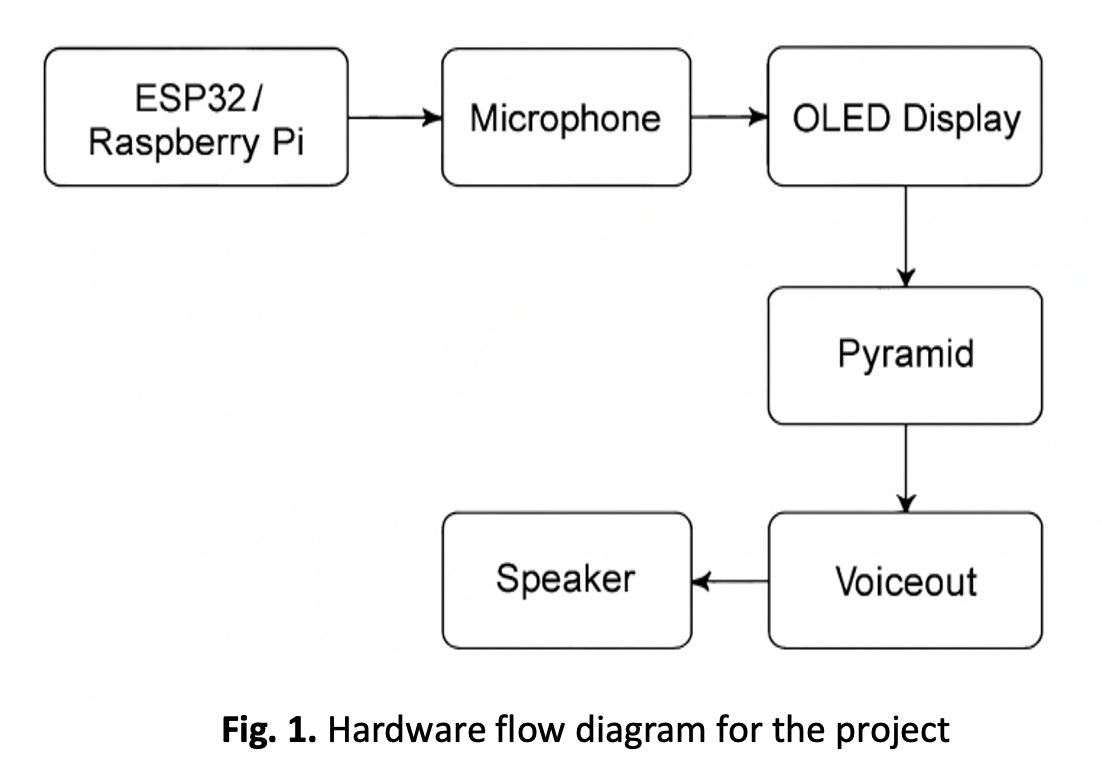
This paper represents the conceptual design and feasibility of a low-cost AI-based holographic smartwatch [1] dedicated for educational and accessibility applications. Generally commercial smartwatches are typically emphasize high-end hardware and closed ecosystems but the design we have proposed focuses on simplicity, affordability, and open-source adaptability. A tiny OLED screen positioned beneath a transparent pyramid and a low-power ESP32 microcontroller are combined in the system's design to produce a 3D holographic visual illusion An amplified microphone system facilitates voice interaction, and an AI processor and integrated speaker produce responsive, natural-sounding audio output Even though the physical construction has been delayed because of money problems, simulation results show that a modular design approach and careful component selection can make a sustainable and accessible AI-based wearable.The proposed smartwatch could make things easier to use and learn, especially for kids, students, and people with vision problems, because it has interactive holographic graphics and voice-based tutoring.