An Analysis of the Financial Performance of Non-Interest Banking in Nigeria: A Case Study of Jaiz Bank Nigeria Plc
Keywords:
Non-interest Banking, Financial Performance, Capital Adequacy, Jaiz BankAbstract
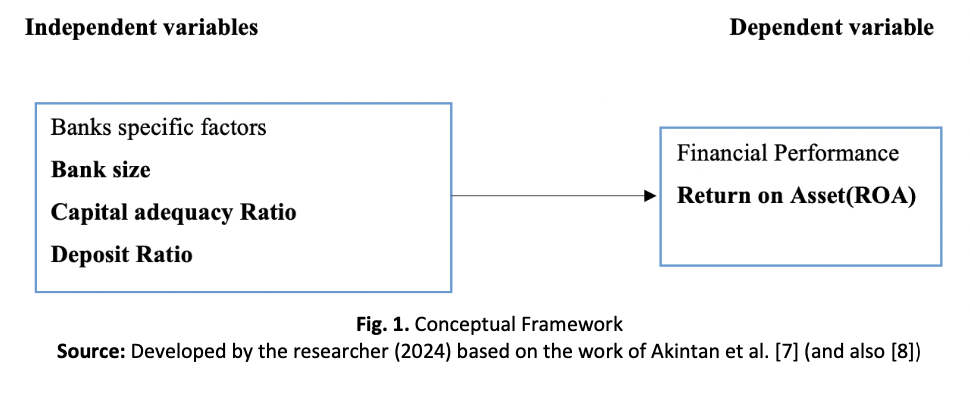
This study examines the financial performance of non-interest banking in Nigeria, focusing on Jaiz Bank Plc from 2014 to 2023. It evaluates how the bank’s financial performance, as determined by Return on Assets (ROA), is impacted by the Capital Adequacy Ratio (CAR), Deposit Ratio (DPR), and Bank Size (BSZ). Using quantitative, data were sourced secondarily from the bank's annual reports. To ascertain the associations between factors in the study, multiple regression models and Pearson correlation analysis using Statistical Package for the Social Science (SPSS 27) were used. The findings revealed a strong negative correlation between CAR and ROA, which indicate that greater level of capital adequacy may limit profitability by limiting participation in high-yielding but riskier investments. However, DPR exhibits a positive correlation with ROA, which suggested that effective deposit utilization improves financial performance. BSZ shows strong positive correlation with ROA, indicating that large bank size contributes to improved financial performance through economies of scale and enhanced risk management. The study recommended that the bank should enhance its deposit mobilization, utilization strategies, and pursue geographical and digital expansion to improve financial performance, as well as adopting balanced capital structure to ensure financial stability and profitability.