Integrating Biochar to Elevate Crop Productivity and Herbicide Effectiveness in Sustainable Farming
Keywords:
Biochar, herbicid, crop productivity, coated biochar, herbicidal efficiencyAbstract
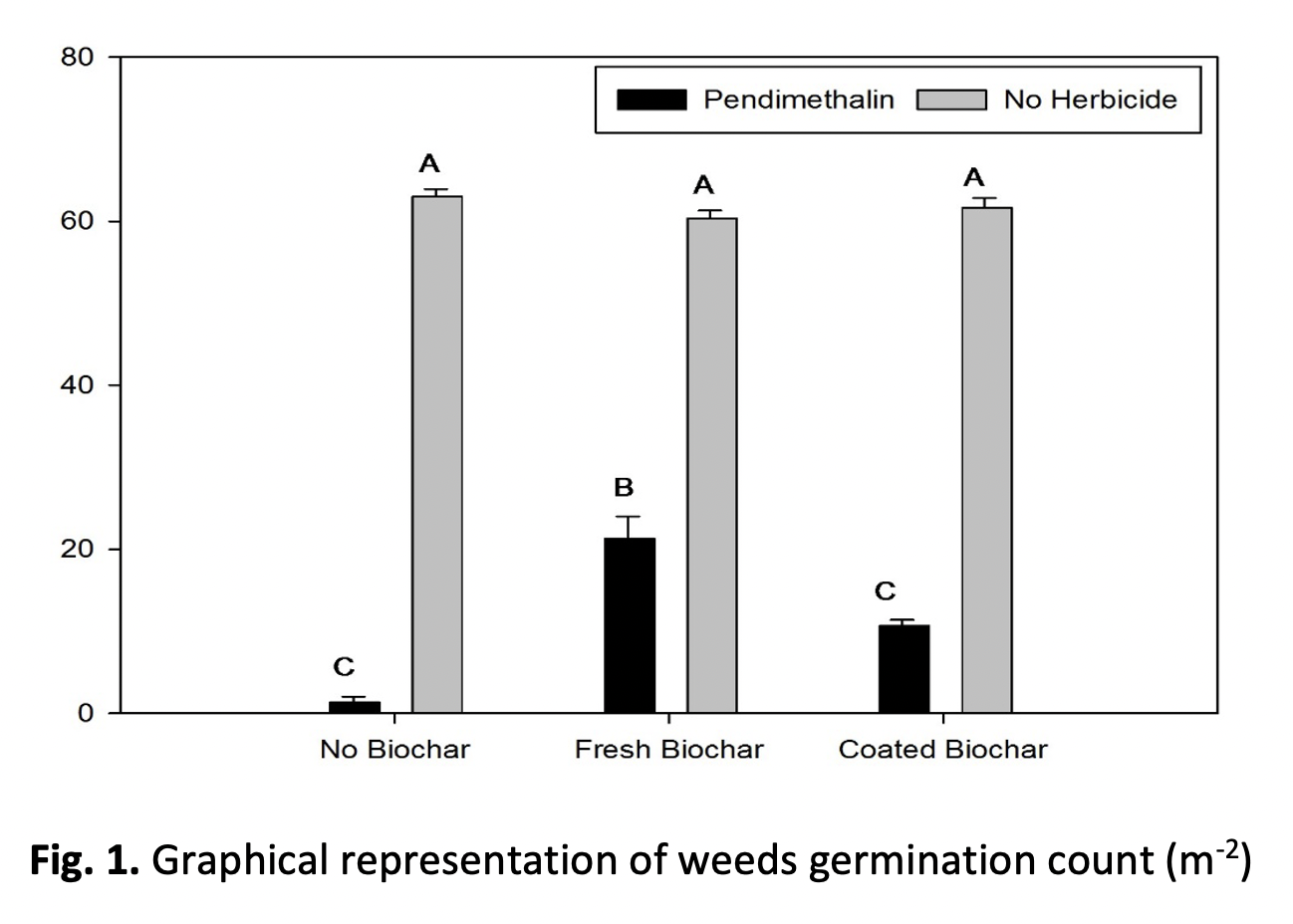
Biochar is a carbon rich compound prepared through pyrolysis (burning of organic materials in deficiency of oxygen). Biochar has been widely recognized as a tool to mitigate global warming and enhance food security. However, its chemical and physical properties, including high porosity, carbonaceous nature, large surface area and aromatic structure, are considered to negatively affect the soil applied herbicides. Biochar is also known to improve crop productivity of quinoa crops under water limited conditions. This study evaluated the effect of biochar (fresh and coated) on herbicide efficacy, weed suppression, and crop performance under field conditions. Two treatment factors were employed including herbicide (control and Pendimethalin) and biochar (control, fresh biochar and coated biochar). Results revealed that herbicide alone achieved lowest weed germination (1.33 plant m-2), highest weed control (99.07%) and herbicidal efficiency (97.88%). The addition of biochar reduced herbicidal performance, increased weed counts and lowered weed control efficiency to 82.84%, likely due to adsorption of herbicide on biochar surface. On the other hand, coated biochar improved herbicidal efficiency (83.07%) and maintained effectiveness of herbicide and weed suppression, indicating that coating of biochar surface is effective in mitigating herbicide sorption. Highest germination percentage was witnessed in fresh biochar (around 92%), showing its role in improving soil conditions for seed emergence, while coated biochar produced medium improvement. Highest grain yield was achieved by fresh biochar, flowed by coated biochar and no biochar. Harvest index remained stable across the treatments, whereas grain yield was highest in fresh biochar followed by coated biochar and no biochar. Overall, these findings demonstrate that the fresh biochar can impair herbicidal efficacy through adsorption, but clearly improved the grain yield, coated biochar efficiently balances weed control and crop productivity. Thereby coated biochar appears as a promising soil amendment for both herbicide performance and sustaining crop yield while fresh biochar was found to be best amendment in terms of crop productivity.