Diagnosing Soil Fertility Constraints in Commercial Durian Orchards of Perak, Malaysia: Implications for Sustainable Agroecological Management
Keywords:
Durian cultivation, soil chemical properties, nutrient deficiency, soil amendment, sustainable agroecologyAbstract
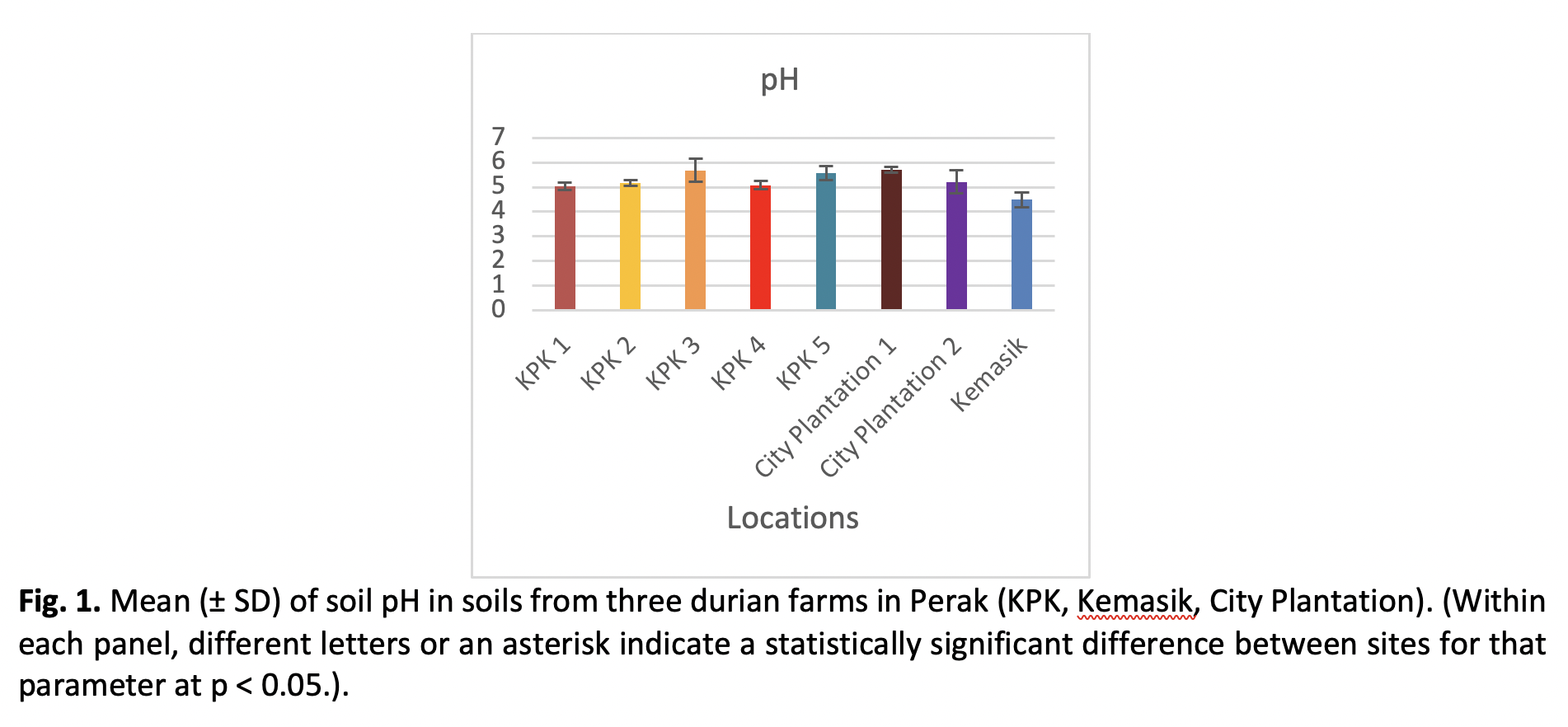
Durian (Durio zibethinus), revered as the “King of Fruits,” is a high-value tropical crop in Southeast Asia. However, declining soil fertility has been implicated in suboptimal durian yields in Malaysia. This study evaluated key soil chemical properties in three commercial durian farms in Perak, Koperasi Perladangan (KPK), Kemasik, and City Plantation (CP). Composite soil samples (0–10 cm depth) were analysed for pH, total nitrogen (N), available phosphorus (P), Cation Exchange Capacity (CEC), organic carbon, and exchangeable cations. Results showed that all sites have strongly acidic soils (pH <6), with Kemasik having the lowest pH at 4.48 (p < 0.01). CEC values ranged from low to moderate (5.21–9.72 cmol c/kg), indicating limited nutrient retention capacity. Soil organic carbon was uniformly low (~1.6–1.8%). Critically low levels of available P (0.14–2.32 ppm) and total N (0.08–0.14%) were recorded across all farms. Exchangeable base cations (K, Ca, Mg, Na) and micronutrients (B, Cu, Mn, Zn) were generally deficient, often near or below detection in many samples. Notably, exchangeable aluminium was relatively high (up to ~7 cmol(+)/kg at one KPK site) due to the low pH, and trace levels of potentially toxic metals like cadmium and zinc were detected indicating these elements were not limiting in the soil. These findings underscore severe fertility constraints: strongly acidic, low-organicmatter soils with multiple nutrient deficiencies. There is an urgent need for targeted soil management strategies such as liming to raise pH, organic matter amendments to improve CEC, balanced N–P–K fertilisation, and micronutrient supplementation to rehabilitate soil health and sustain durian productivity. Overall, improving soil pH and fertility through these interventions will help alleviate nutrient stress and support sustainable durian cultivation in the region.