
Predicting Secondary School Students’ Mathematics Performance: The Role of Attitude, Motivation and Anxiety Using a Logistic Regression Model

Authors

  • Aisyah Amalina Mohd Noor Centre for Mathematical Science, Universiti Malaysia Pahang Al-Sultan Abdullah, Lebuh Persiaran Tun Khalil Yaakob, 26300, Kuantan, Pahang, Malaysia
  • Noryanti Muhammad Centre for Mathematical Science, Universiti Malaysia Pahang Al-Sultan Abdullah, Lebuh Persiaran Tun Khalil Yaakob, 26300, Kuantan, Pahang, Malaysia
  • Sun Huimin School of Mathematics, Harbin Institute of Technology, West Dazhi Street, Nangang District, Harbin, 150001 Heilongjiang, China

Keywords:

Mathematics, STEM, education, performance, predicting, logistic regression, attitude, motivation, anxiety

Abstract

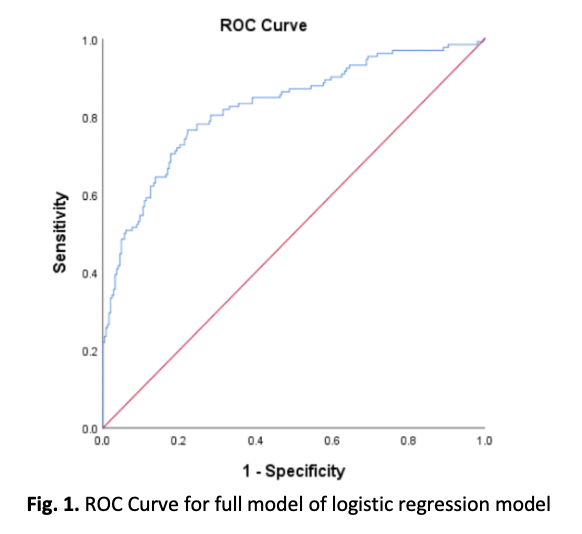
Predicting students’ performance in mathematics subject which is a critical component of Science, Technology, Engineering and Mathematics (STEM) education has consistently been an important research topic across various academic fields as this subject is prerequisite for all career paths. However, in secondary school in Malaysia there is not much research done in this field. This study aimed to examine the relationship between students’ attitude, motivation, anxiety towards mathematics and their academic performance. A total of 380 data were collected from form four students around Kemaman, Terengganu schools using a 5-point Likert scale questionnaire. A logistic regression model was developed to predict students’ likelihood of passing and failing in mathematics. Model performance was evaluated using various metrics such as Mean Square Error (MSE), Mean Absolute Error (MAE), Root Mean Square Error (RMSE), accuracy, confusion matrix and Area Under the Curve (AUC). The findings revealed that students’ attitude and students’ motivation were significant predictors of academic performance in mathematics. Even though students’ anxiety has been identified as non-significant factor, there were only minimal changes in model fit and explanatory power when this variable was removed. Therefore, both the full model and the reduced model were developed for comparison. The results shows that the full model of logistic regression outperformed the other model with the highest predictive accuracy of 78.29% and AUC of 0.824. These results suggest the model provides a valuable tool for educators and policymakers to identify students at risk and an early intervention can be done to improve their performance.

Author Biography

Noryanti Muhammad, Centre for Mathematical Science, Universiti Malaysia Pahang Al-Sultan Abdullah, Lebuh Persiaran Tun Khalil Yaakob, 26300, Kuantan, Pahang, Malaysia

noryanti@umpsa.edu.my

Downloads

Published

2026-10-16

Issue

Section

Articles