cover
THE PUBLISHER
SUBMISSION
AIMS AND SCOPE
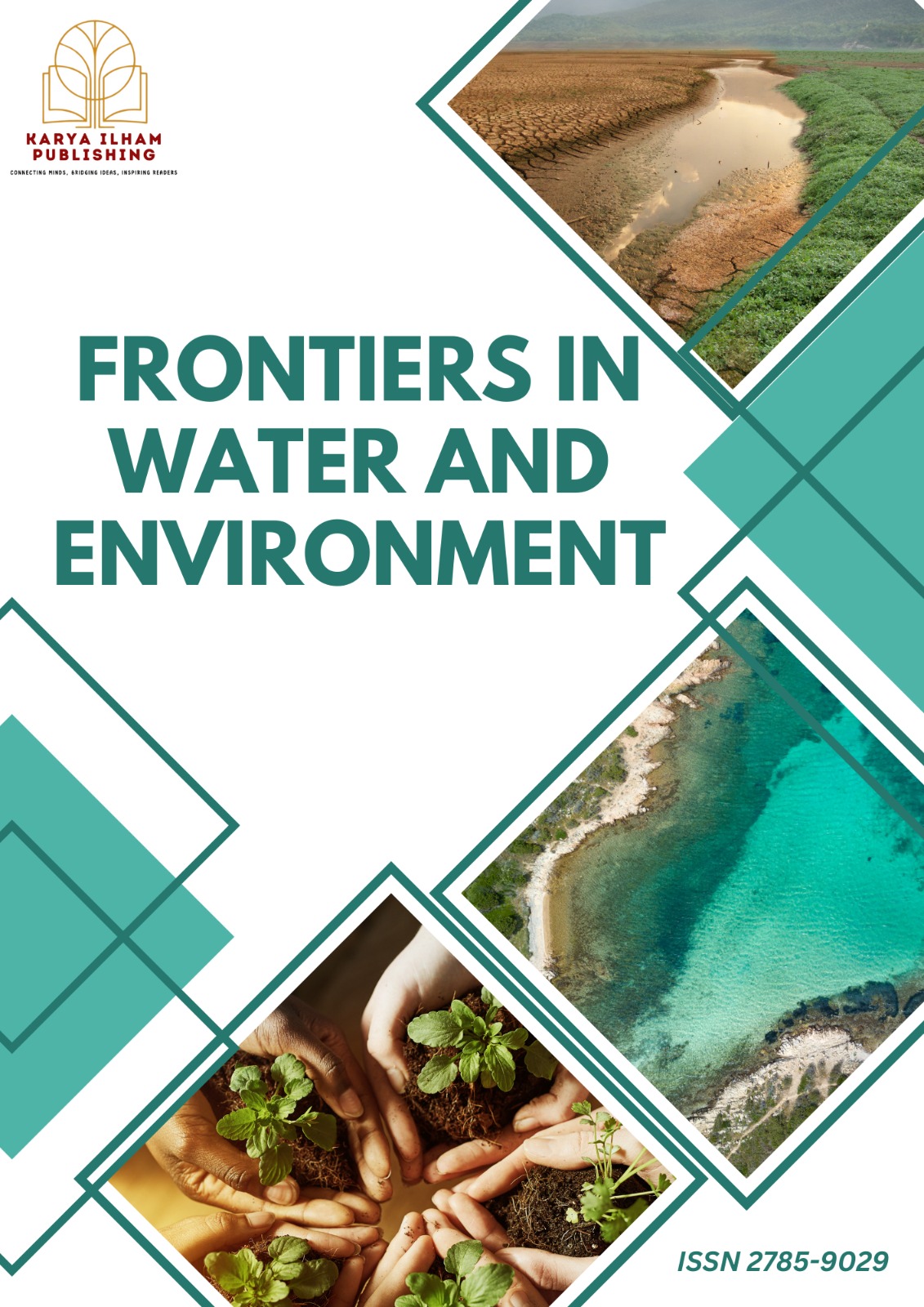
Frontiers in Water and Environment with a short form of FWE is a refereed academic journal that publishes research article, review, and short communication on theoretical and applied sciences related water, environment, all aspect of pollution and solution to pollution in the biosphere. FWE is published online with quarterly frequency and FREE of Article Processing Charge (APCs) and Articles Submission Charges (ASCs). Besides that, special issues of FWE will be published non-periodically from time to time. Focus and scope The journal is intended to provide a platform for research communities from different discipline to disseminate, exchange and communicate all aspects of water environment, all aspect of pollution and solution to pollution in the biosphere. Topics of specific interest include, but not limited to, are: Water research: Water resources management, Water policies and planning, Sustainability and water, Water pollution, Hydraulics, Water and wastewater treatment, Wetland systems, Sustainable drainage, Groundwater, Aquatic ecosystems Environmental pollution: Environmental monitoring, Transport, Fate and impact of contaminant, Risk mitigation, Deposition, Accumulation. Pollution Treatment technologies: safer and cleaner technologies (chemical, physical and biological process) with minimization of the environmental impact of contaminant in water, air, and soil environment. Emerging contaminants: all aspect related to persistent organic pollutants, endocrine disruptors, endocrine disruptors, pesticides, flame retardants, other industrial chemicals. Materials for remediation: membrane, nanomaterials, photocatalytic, electrochemistry, biochar, composite, and carbon-based materials. Other environmental aspects including Environmental modelling, climate change, and green technologies.
Keywords
INDEXING AND ABSTRACTING

Frontiers in Water and Environment (FWE) is licensed under a Creative Commons Attribution-NonCommercial 4.0 International License.
DISTRIBUTION OF AUTHORS
Malaysia, Indonesia, Japan, Bangladesh, China, Nigeria, United Kingdom, Canada, Pakistan