Estimating the Spatial Transport Revenue Contribution of Muslim Tourists to Malaysia
Keywords:
Islamic tourism; transport revenue; gateway concentration; multimodal transport; input–output multiplier; spatial distributionAbstract
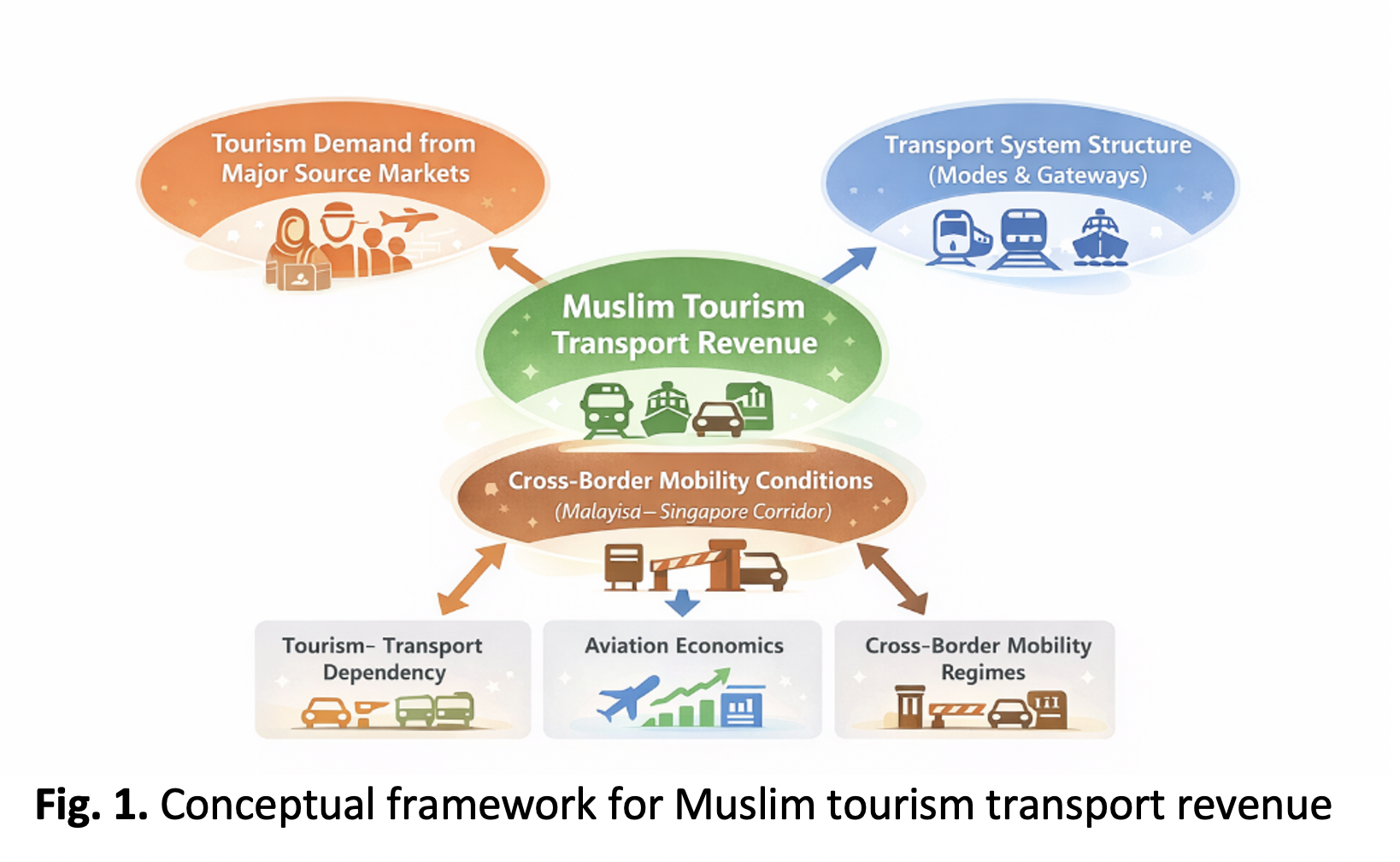
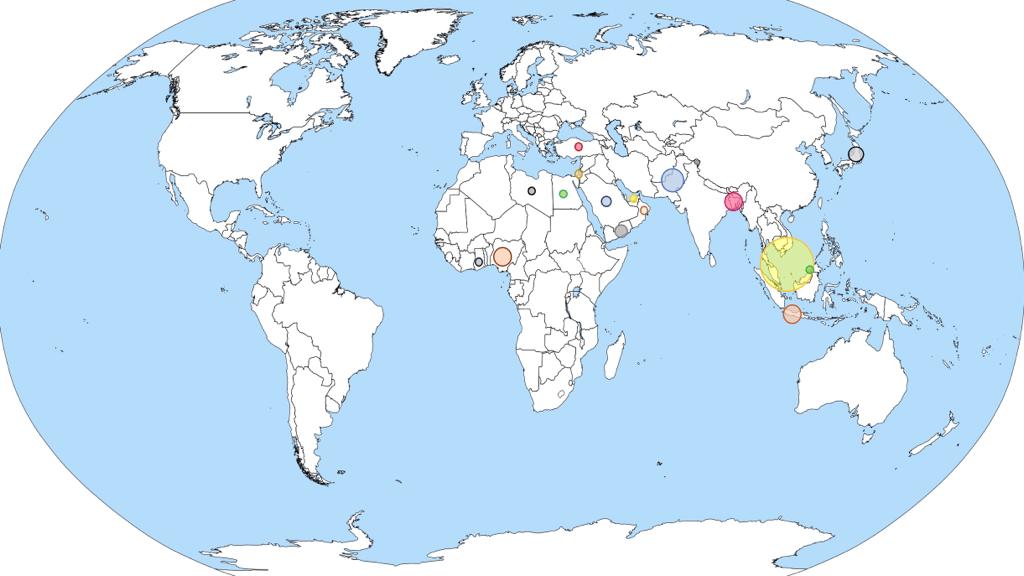
This paper estimates Malaysia’s transport sector revenue generated by Muslim inbound tourism and maps its spatial distribution across modes and entry gateways from 2019 to 2024. The analysis covers six principal source markets, Singapore, Indonesia, China, Thailand, Brunei, and India. Muslim arrivals are approximated using origin country Muslim population shares and converted into transport receipts using national expenditure parameters. Direct Muslim transport revenue reached RM4.09 billion in 2024, exceeding RM3.07 billion in 2019. The recovery is corridor based and increasingly concentrated in surface mobility and Johor gateways. Land transport contributed 66.1 percent of total transport revenue in 2024, while Tambak Johor accounted for 37.1 percent as the largest single gateway share. Extending direct demand using input output coefficients, Muslim transport activity supported RM8.29 billion in total output in 2024, including RM4.20 billion in indirect upstream production. Policy should prioritise throughput and reliability at Johor Singapore checkpoints and maintain airport efficiency for medium haul markets.