Examining Factors Influencing Electric Vehicle Adoption Intention in Klang Valley, Malaysia: An Integrated TPB and DOI Perspective
Abstract
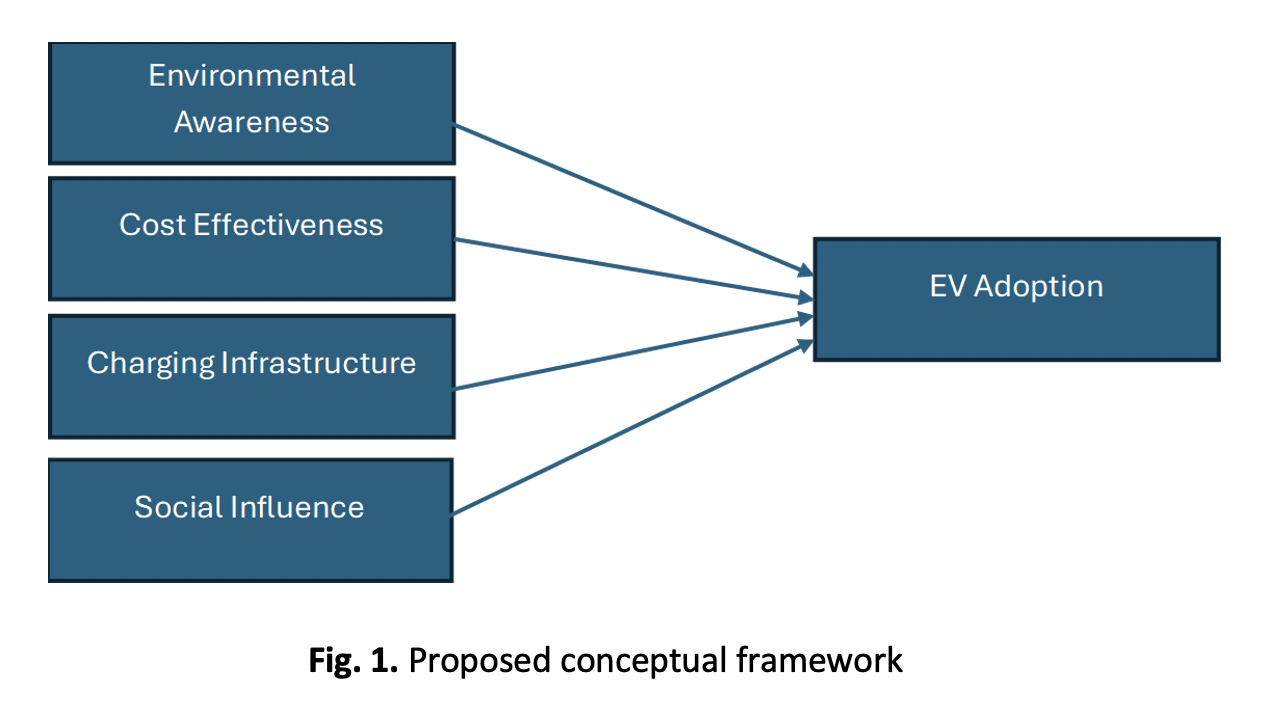
The transition towards electric vehicles (EVs) has become a strategic priority in achieving sustainable transportation and reducing carbon emissions. Despite various government initiatives and policy incentives introduced to accelerate EV adoption in Malaysia, consumer acceptance remains relatively low compared to other countries in the region. This study examines the factors influencing consumers' intention to adopt electric vehicles in Klang Valley, Malaysia, by integrating the Theory of Planned Behaviour (TPB) and the Diffusion of Innovation (DOI) framework. Specifically, the study investigates the effects of environmental awareness, cost-effectiveness, charging infrastructure, and social influence on EV adoption intention. A quantitative research design was employed using a structured questionnaire distributed to residents in Klang Valley. After data screening and cleaning, 136 valid responses were analysed using IBM SPSS Statistics Version 28. Descriptive statistics, reliability analysis, Pearson correlation, and multiple regression analysis were performed to examine the proposed relationships. The findings reveal that the regression model explains 56.9% of the variance in EV adoption intention. Cost-effectiveness emerged as the strongest positive predictor, followed by social influence, while charging infrastructure demonstrated a significant but negative relationship when controlling for other variables. Environmental awareness, although positively associated with EV adoption intention, was not found to be statistically significant. These findings suggest that Malaysian consumers prioritise economic benefits and social influences over environmental considerations when making vehicle purchasing decisions. The study contributes to the existing literature by providing updated empirical evidence on EV adoption in Malaysia through an integrated TPB–DOI perspective and offers practical implications for policymakers, automotive manufacturers, and infrastructure providers in developing more effective strategies to accelerate the transition towards sustainable mobility.