Advancing Sustainable Waste Management in Malaysia: Lessons from Southeast Asia
Keywords:
Municipal Solid Waste Management, Sustainability, Regional CollaborationAbstract
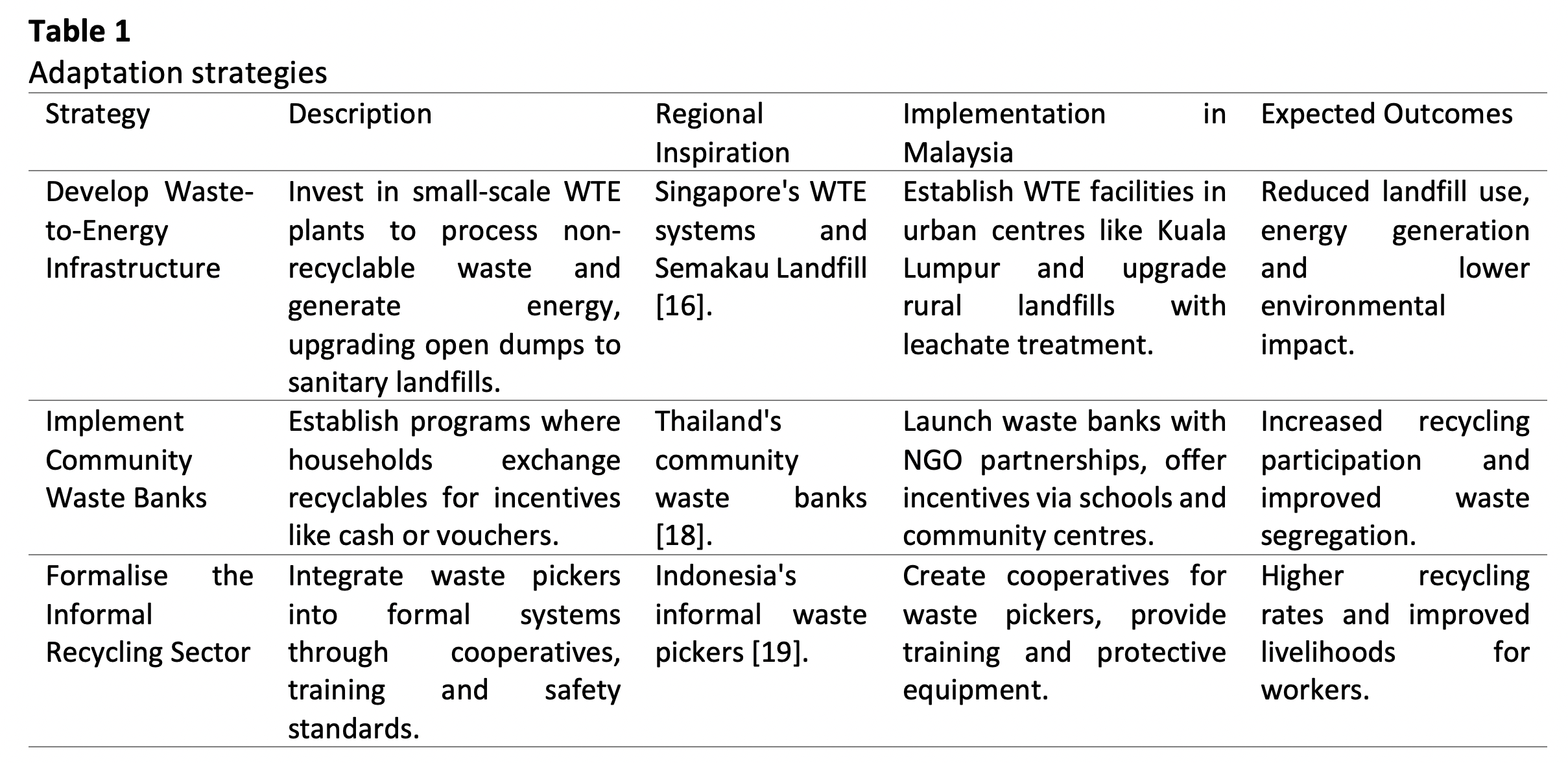
Rapid urbanisation in Southeast Asia has worsened municipal solid waste (MSW) problems. Malaysia produces over 39,000 tonnes of waste daily, with 65% sent to landfills. This creates serious environmental and health risks. This study compares MSW management in Malaysia, Singapore, Thailand and Indonesia. It focuses on waste generation, disposal methods, recycling rates and policy measures. Malaysia’s recycling rate is 31.5%, lower than Singapore, which benefits from waste-to-energy (WTE) plants. Thailand achieves 34% through community waste banks, while Indonesia records only 10–15%, relying heavily on informal recycling. A comparative case study method was used, drawing on reports and published literature. The findings suggest Malaysia should adopt WTE systems, formalise informal recycling, increase community involvement and enforce stronger policies. These steps could help reach the national recycling target of 40% by 2025. Regional collaboration is also recommended to share knowledge and improve sustainable waste management.