Calming the Storm: How Crisis Response Strategy Defuse Halal Food Boycotts
Keywords:
Crisis communication, Crisis response strategy, Halal food harm crisis, Consumer boycott intention, Organizational responsibilityAbstract
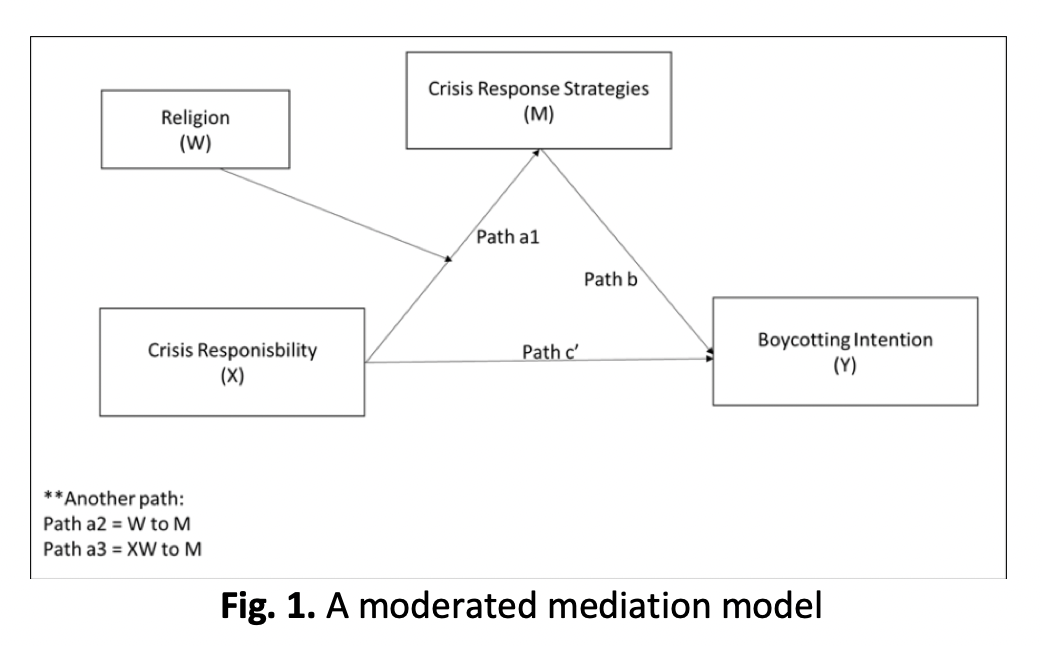
Crises related to Halal food pose significant challenges for businesses in Malaysia. Many organizations struggle with effective crisis management, particularly when Halal issues arise, which can lead to negative outcomes such as consumer boycotts. This research focuses on how crisis response strategies affect the relationship between crisis responsibility and consumer boycotting intentions during a Halal food crisis, with religion as a moderating factor. The research used an online experimental approach with a 3x4 between-subjects design, utilizing survey questionnaires for data collection. The experiment involved 180 respondents who were randomly assigned to four experimental treatment conditions, with 45 respondents in each condition. The findings indicate that organizations perceived to bear high crisis responsibility are at greater risk of facing consumer boycotts. Crisis response strategies were found to mediate the impact of crisis responsibility on boycotting intentions. Interestingly, no major differences were found between Muslims and non-Muslims in terms of how crisis response strategies influence boycotting behaviour at different levels of crisis responsibility. This study highlights the importance of implementing effective crisis response strategies to reduce the risk of consumer boycotts during Halal food crises.