First-principles Study on Structural, Electronic and Optical Properties of Cu2ZnSnS4 as Absorber Layer for Thin Film Solar Cell
Keywords:
CZTS, Kesterite, CASTEP, optical propertiesAbstract
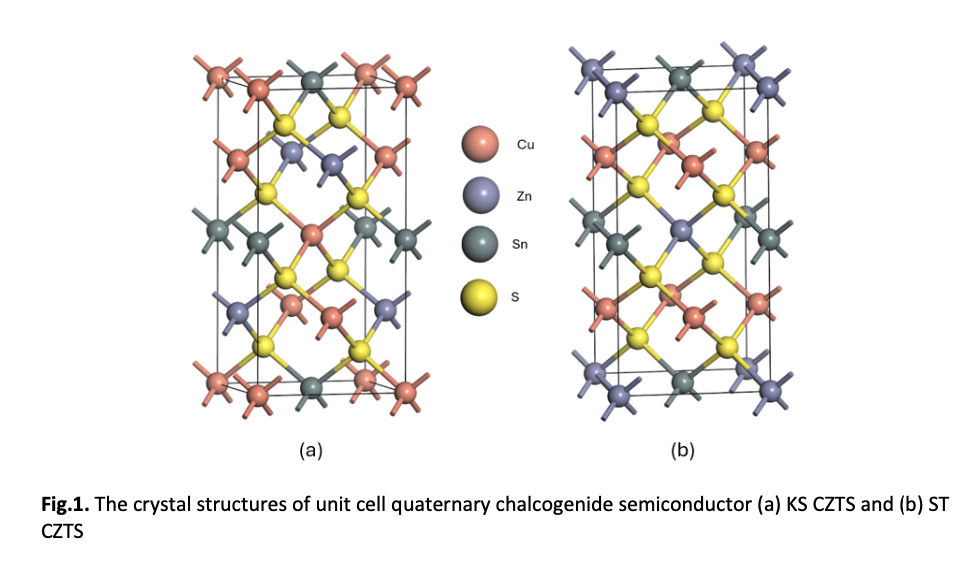
The quaternary compound Cu2ZnSnS4 (CZTS) has gained attention as a potential "next generation" photovoltaic material. CZTS has a high absorption coefficient (>104 cm-1) and an optimal direct bandgap energy of 1.4-1.6 eV, making it an ideal option for thin-film solar cell applications. The purpose of this study is to analyze the structural, electronic, and optical properties of CZTS in its kesterite and stannite phases using first-principles density functional theory (DFT) computations within the Cambridge Serial Total Energy Package (CASTEP) computational framework. The results revealed that the kesterite phase exhibits slightly better structural stability for solar energy conversion compared to the stannite phase. Furthermore, the calculations use Hubbard U = 7 eV for copper (Cu) and Zinc (Zn), U = 3 eV for Tin (Sn) and U = 9 eV for Sulphur (S) to fix the strongly localized 3d and 5p orbitals. It improves the accuracy of electronic structure predictions by increasing the bandgap value to 1.5 eV, as opposed to the 0.98 eV predicted by standard density functional approaches. This advancement overcomes the limitations of these methods in accurately describing electron-electron interactions in transition metal compounds. Additionally, optical absorption estimates reveal a high absorption coefficient in the visible spectrum, which is crucial for effective solar energy capture. These findings highlight the potential of CZTS, particularly the kesterite phase, as a remarkably effective and environmentally friendly material for thin-film solar cells. This study provides vital insights into the structural, electronic, and optical properties of CZTS, offering the basis for optimizing its design and fabrication, and opening the way for the development of sustainable and high-performance solar solutions.