Performance Evaluation of an IoT-Based Wearable System for Real-time Assessment of Parkinson's Disease Motor Symptoms
Keywords:
Wearable IoT, Parkinson’s Disease (PD), piezoelectric sensorsAbstract
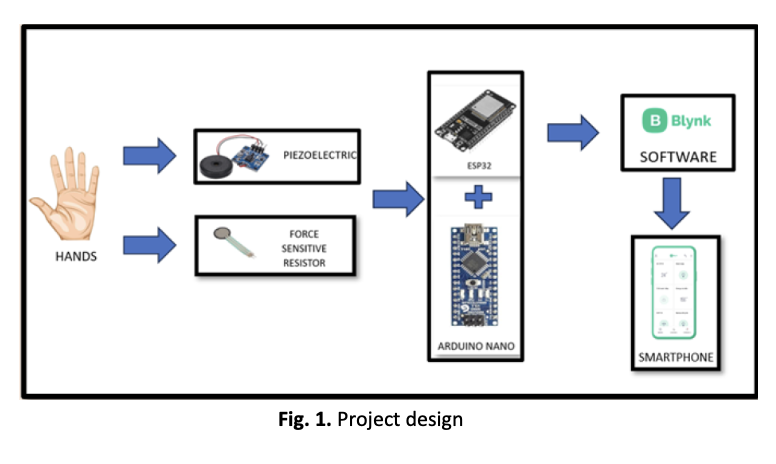
Parkinson’s Disease (PD) prevalence is increasing, driving a critical need for continuous and objective symptom monitoring. Current subjective, episodic clinical assessments fail to capture the full scope of motor fluctuations outside the clinic. This research introduces a low-cost, high-utility wearable IoT system designed to provide quantitative, real-time data on key PD motor symptoms: tremors and bradykinesia (reduced muscle strength). The device integrates piezoelectric sensors to track tremor frequency during various hand movements (e.g., resting, finger tapping) and Force-Sensitive Resistors (FSR) to measure muscle strength. Data is processed locally by an Arduino Nano V3 microcontroller and streamed to an online platform for remote, real-time assessment by healthcare providers. Performance analysis between a PD patient and healthy controls demonstrated the system's strong discriminative capability. Tremor measurements showed the PD patient had a characteristic low resting tremor frequency of approximately 4 Hz, distinct from healthy subjects (6–10 Hz). Furthermore, the patient recorded significantly lower average muscle strength (12–14.5 N) compared to controls (23–24.5 N). This objective evaluation validates the system's high utility as a Quantitative Assessment Platform for accurate and continuous PD symptom monitoring. By bridging the gap between clinic visits and daily life, the device enables earlier intervention and facilitates personalized, timely medication management, ultimately improving patient care.