
Elevating Blockchain Consensus: A Comparative Performance Analysis on Proof of Stake, Delegated Proof of Stake, Practical Byzantine Fault Tolerance and Casper

Authors

  • Sarwen Kumar Naidu Kumrasen Department of Computer Science, Faculty of Defence Science and Technology, National Defence University of Malaysia (UPNM), 57000 Kuala Lumpur, Malaysia
  • Syarifah Bahiyah Rahayu Cyber Security and Industry Revolution Digital Centre, Institute of CyberSecurity and Electronic Systems, National Defence University of Malaysia, (UPNM) 57000 Kuala Lumpur, Malaysia
  • Stefan Wolfgang Pickl Department of Computer Science, University of Bundeswehr Munich, Neubiberg, 85579, Germany

Keywords:

Consensus Algorithms, Decentralization, Latency, Security, Throughput, Blockchain

Abstract

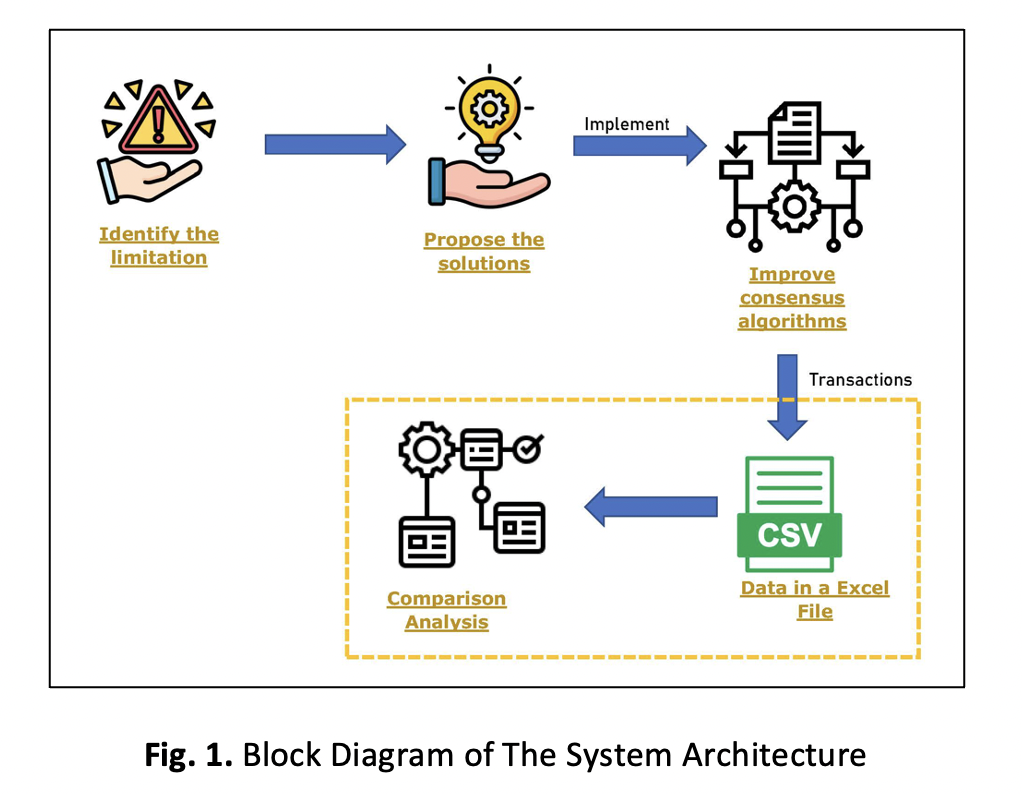
The growth of Blockchain technology has fundamentally impacted how digital transactions are made by making them more secure and decentralized while preserving data integrity and transparency. Traditional consensus algorithms, such as Casper, Delegated Proof of Stake (DPoS), Proof of Stake (PoS), and Practical Byzantine Fault Tolerance (PBFT), have several drawbacks, including inadequate network scalability, insufficient security, and inefficient transaction processing. By optimizing the existing algorithms Proof of Stake Plus (PoS+), Randomized Delegated Proof of Stake (RDPoS), Flexible Byzantine Fault Tolerance (FBFT), and Casper + Secure, this study on blockchain consensus methods seeks to increase network performance, decentralization, and reliability. A structured methodology is designed to conduct data gathering, algorithm design, implementation, and evaluation. The evaluation is based on throughput and latency. The findings shows PoS+ significantly outperforms PoS resulting in higher throughput and lower latency. Due to the dynamic delegate selection process, RDPoS outperforms DPoS in terms of fairness, decentralization, and transaction speed. However, FBFT performs the poorest, making it unsuitable for settings where quick transactions are common. Casper+ Secure preserves the trade-off between security and performance despite its reduced throughput. Future study is to build self-adaptive blockchain networks with enhanced versatility, resilience, and decision-making.

Author Biography

Syarifah Bahiyah Rahayu, Cyber Security and Industry Revolution Digital Centre, Institute of CyberSecurity and Electronic Systems, National Defence University of Malaysia, (UPNM) 57000 Kuala Lumpur, Malaysia

syarifahbahiyah@upnm.edu.my

Downloads

Published

2025-12-09

Issue

Section

Articles