Vehicle Microsleep Detection System using Heart Rate Monitoring System

Authors

  • Noraishikin Zulkarnain Department of Electrical, Electronic and Systems Engineering, Faculty of Engineering & Built Environment, Universiti Kebangsaan Malaysia, Malaysia
  • Muhammad Hazman Muhammad Fikri Moh Department of Electrical, Electronic and Systems Engineering, Faculty of Engineering & Built Environment, Universiti Kebangsaan Malaysia, Malaysia
  • Nor Aziyatul Izni Centre of Foundation Studies, Universiti Teknologi MARA, Cawangan Selangor, Kampus Dengkil Dengkil, Selangor, Malaysia
  • Syahirah Abd Halim Department of Electrical, Electronic and Systems Engineering, Faculty of Engineering & Built Environment, Universiti Kebangsaan Malaysia, Malaysia
  • Siti Salasiah Mokri Department of Electrical, Electronic and Systems Engineering, Faculty of Engineering & Built Environment, Universiti Kebangsaan Malaysia, Malaysia
  • Seri Mastura Mustaza Department of Electrical, Electronic and Systems Engineering, Faculty of Engineering & Built Environment, Universiti Kebangsaan Malaysia, Malaysia

Keywords:

Driver, microsleep, photoplethysmography, alarm system, internet of things

Abstract

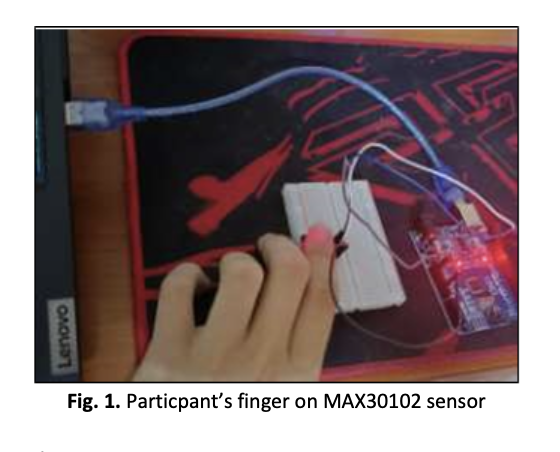
The occurrence of sleep in a few seconds called microsleep while driving is very likely to cause traffic accidents. Currently, the microsleep monitoring system on vehicles is taken lightly. The absence of an alarm system causes the driver to be unaware of microsleep detection. In addition, existing monitoring systems have low accuracy for determining microsleep conditions. Therefore, a microsleep detection system with a heart rate input based on a photoplethysmography (PPG) sensor was designed, an alarm system on Android smartphone was used and a PPG system capable of determining the state of the driver was designed. This study uses Arduino software to process heart rate data with a peak detection algorithm method, Internet of Things (IoT) is used to trigger alarm system on a smartphone. Study results show that the PPG system can detect and act according to the state of the driver and trigger an alarm system on the smartphone when microsleep is detected. A comparison of heart rate readings on PPG system sensors with commercial sensors is taken by calculating the Pearson’s correlation coefficient using 25 samples which shows r = 0.93709 and r = 0.98734 for smartwatch and pulse oximeter sensor respectively which is close to the linear correlation coefficient, r= 1. 25 samples were taken to determine the range of normal (79 - 63 BPM), drowsy (62 - 50 BPM) and microsleep (49 BPM and below). In conclusion, the use of the PPG system should be combined with existing sensors such as facial image sensors to determine the state of microsleep for higher accuracy.

Author Biographies

Noraishikin Zulkarnain, Department of Electrical, Electronic and Systems Engineering, Faculty of Engineering & Built Environment, Universiti Kebangsaan Malaysia, Malaysia

shikinzulkarnain@ukm.edu.my

Nor Aziyatul Izni, Centre of Foundation Studies, Universiti Teknologi MARA, Cawangan Selangor, Kampus Dengkil Dengkil, Selangor, Malaysia

naizni@uitm.edu.my

Syahirah Abd Halim, Department of Electrical, Electronic and Systems Engineering, Faculty of Engineering & Built Environment, Universiti Kebangsaan Malaysia, Malaysia

syahirah_h@ukm.edu.my

Siti Salasiah Mokri, Department of Electrical, Electronic and Systems Engineering, Faculty of Engineering & Built Environment, Universiti Kebangsaan Malaysia, Malaysia

siti1950@ukm.edu.my

Seri Mastura Mustaza, Department of Electrical, Electronic and Systems Engineering, Faculty of Engineering & Built Environment, Universiti Kebangsaan Malaysia, Malaysia

seri.mastura@ukm.edu.my

Downloads

Published

2025-12-10

Issue

Section

Articles