Emotion Recognition Using Galvanic Skin Response (GSR) Signal
Keywords:
Emotion recognition, Galvanic Skin Response, machine learning, classification, signal processingAbstract
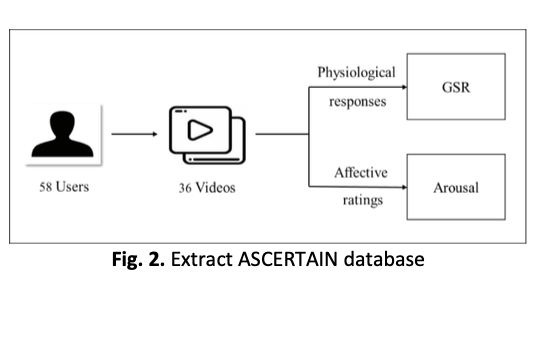
Physiological signals play a vital role in emotion recognition as they are not controllable and are of immediate response type. The primary purpose of this work is to acquire skin conductance of GSR by performing GSR signal classification for emotion recognition using various classifiers. Machine learning applications penetrate more spheres of everyday life. Recent studies show promising results in analyzing other physiological signals using machine learning to access emotional states. Commonly, specific emotions are invoked by playing compelling videos or sounds. However, there is no canonical way for emotional state interpretation. The primary materials are GSR data signals collected from ASCERTAIN database and MATLAB software. The affective arousal seven-point emotional scale was obtained from the classified GSR signals implemented using machine learning algorithms. Features and class labels can be imported into the Classification Learner application in MATLAB software to train and test various classifiers. A comparison of GSR signal classification of the different classifiers has shown that the highest accuracy was achieved using k-nearest neighbours (KNN) and Ensemble classifiers with 97.9% emotion detection. The advantage of this work shows the importance of features and class label selection in emotion recognition tasks. Moreover, the dataset obtained must be suitable for machine learning algorithms. Acquired results may help select proper GSR signals with emotional labels for further dataset pre-processing and feature extraction.