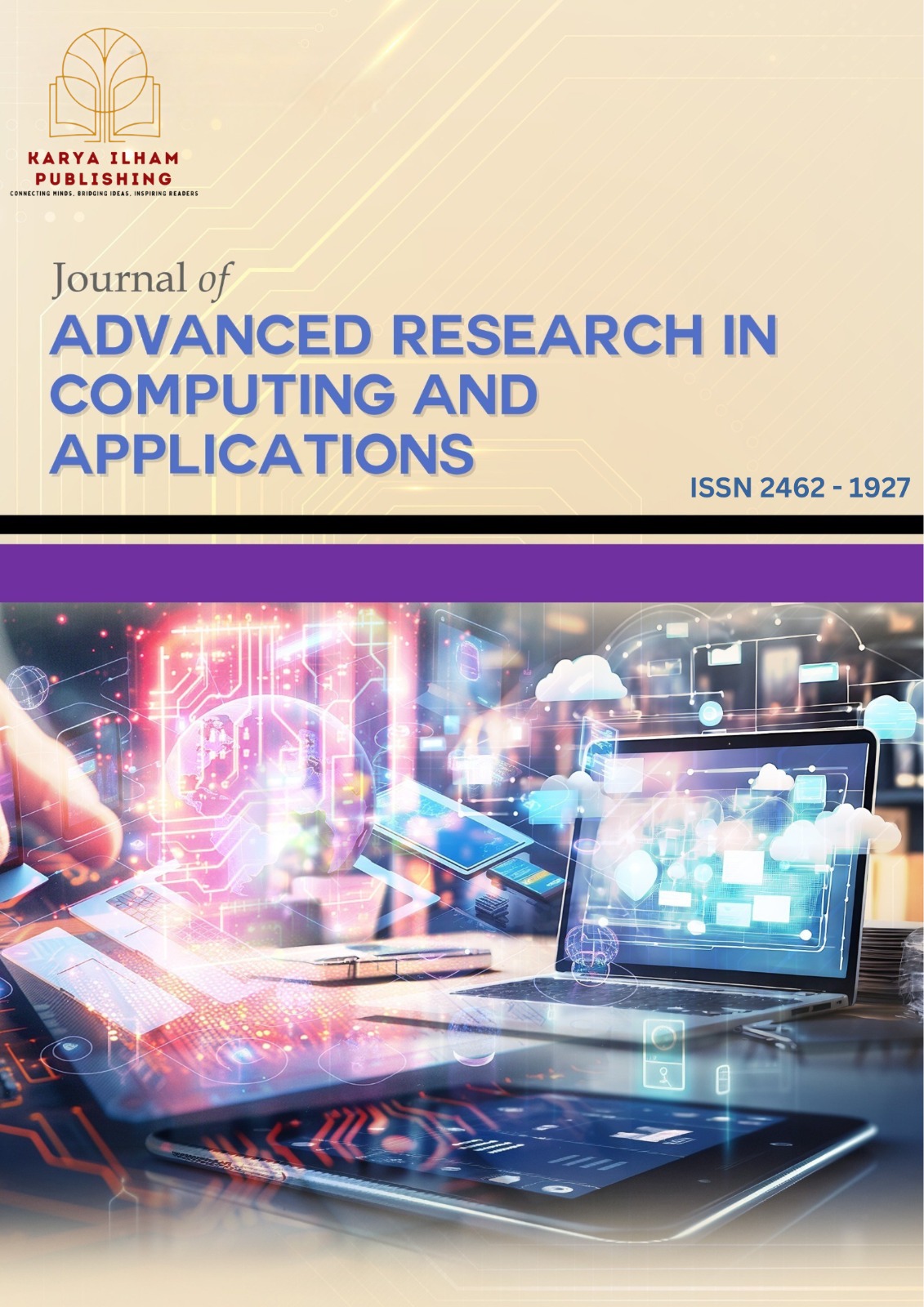
cover
THE PUBLISHER

SUBMISSION
AIMS AND SCOPE
Journal of Advanced Research in Computing and Applications (ARCA) is a peer-reviewed international forum for the publication and dissemination of original work which contributes to greater scientific understanding in all fields of computing and its applications. The Journal publishes review reports and surveys, theoretical and technical papers that covers all areas of computer science and computer engineering such as, but not limited to theory of computing, parallel computing, artificial intelligence, Web technologies, technology enhanced learning, services computing, cloud computing, image processing, pattern recognition, software evolution and mining, network security, Mobile & Web Applications.
Keywords
INDEXING AND ABSTRACTING






Under evaluation by SCOPUS

Journal of Advanced Research in Computing and Applications (ARCA) is licensed under a Creative Commons Attribution-NonCommercial 4.0 International License.
DISTRIBUTION OF AUTHORS
Malaysia, Indonesia, Pakistan, Iraq, Japan, Egypt, Sudan, Saudi Arabia, Czech Republic, Singapore, Nigeria, Uzbekistan, Syria, United Kingdom, Nigeria, Spain, India, Uganda, China, Turkiye, Oman