Applications of Machine Learning in Modelling and Optimization of Breakthrough Curve Analysis: A Focus on Artificial Neural Network and their Comparison
Keywords:
Machine learning, artificial neural network, adsorption, breakthrough curve, separationAbstract
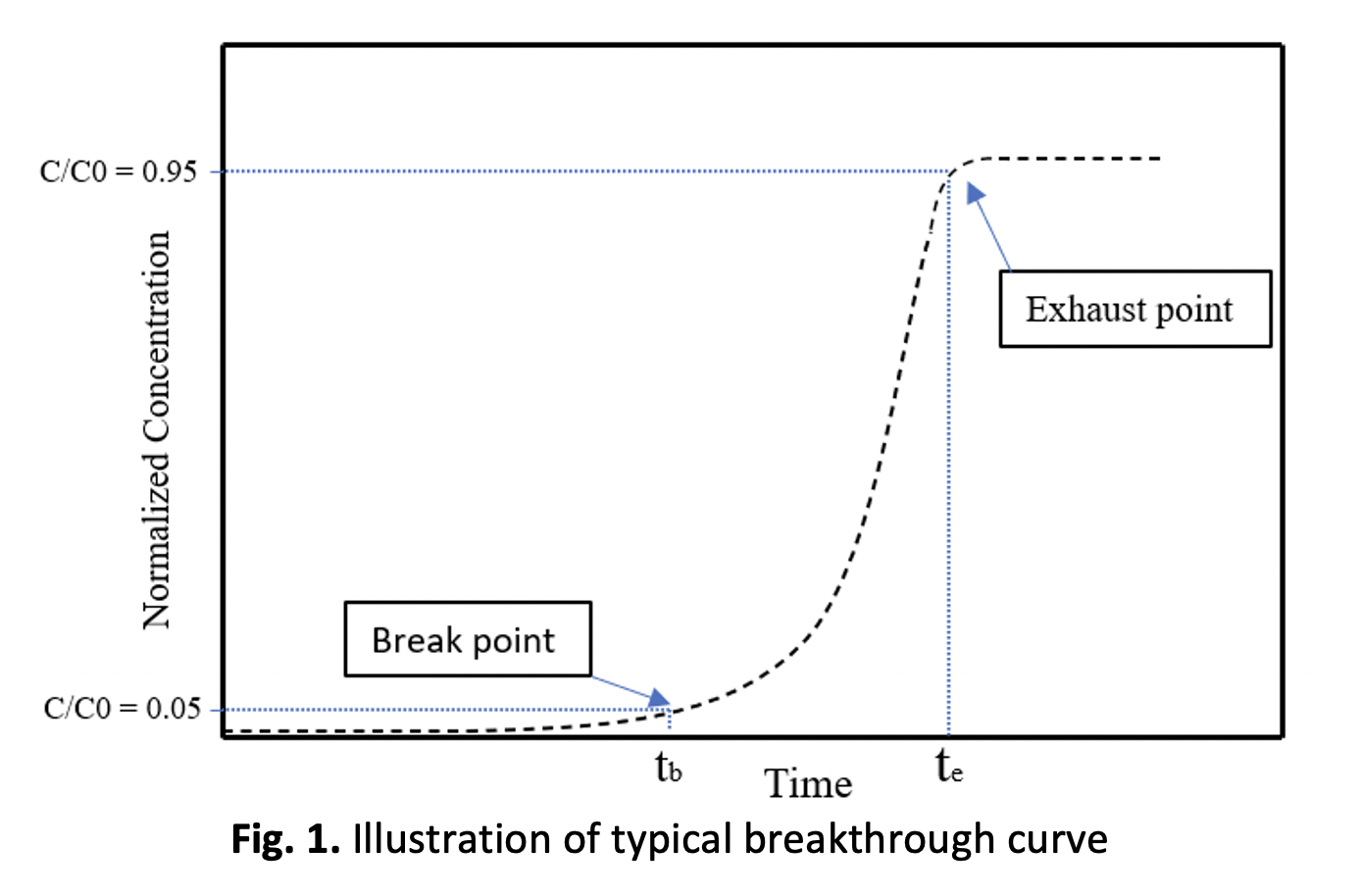
Complex processes like adsorption in fixed-bed columns can now be optimized thanks to the application of machine learning (ML) and deep learning (DL) in chemical engineering. One of the most important metrics for assessing adsorption performance in packed bed columns is breakthrough curve analysis. However, predicting breakthrough curve is not an easy task due to high complexity between the adsorbate and desorbent interactions. Different adsorption system requires different ML algorithm types with distinct configurations and hyperparameters. Hence, this article discusses the performance of various artificial neural networks (ANNs) architectures and hyperparameters in predicting breakthrough curves from various published literatures. We also evaluate ANNs configurations, optimization approaches, and performance metrics against traditional techniques and other machine learning algorithms, such as Random Forest, XGBoost, and Support Vector Machines. Our review demonstrates how ANNs may capture nonlinear correlations between breakthrough curve factors and adsorption performances. The comparison results highlight that ANNs enhance prediction accuracy and adaptability, establishing it as an essential instrument for dynamic process simulation and optimization. Unlike previous reviews, this work uniquely consolidates and analyzes trends in ANN configurations and hyperparameter effects across diverse adsorption systems, providing new insights into best practices for data-driven adsorption modelling. The findings encourage a wider use of machine learning in process engineering applications and advance data-driven modelling techniques in adsorption science.