Synthesis of Eco-Friendly Inks from Waste Cooking Oil: Evaluating the Properties of Charcoal and Butterfly Pea Flower Formulations
Keywords:
Ink, palm waste cooking oil, natural pigment, eco-friendlyAbstract
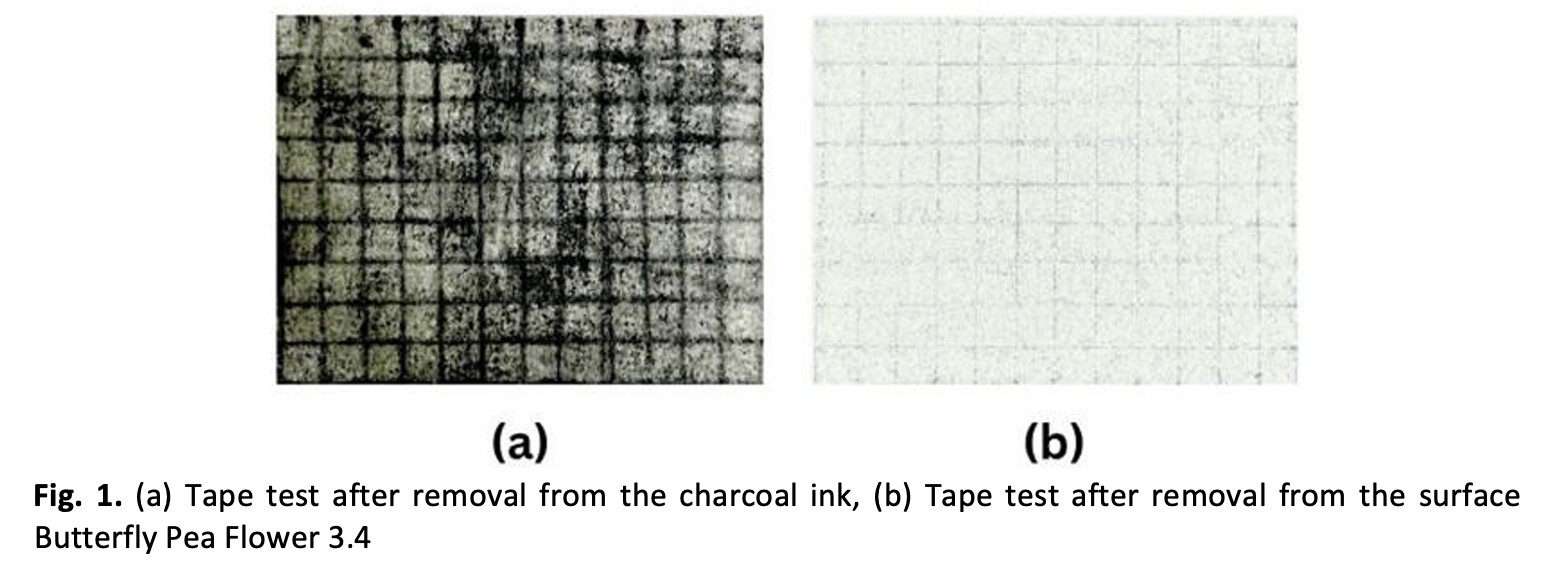
The development of eco-ink offers a sustainable alternative to conventional inks that often contain harmful substances. In this study, an ink formulation from waste cooking oil by combining a binder, raw materials, natural pigment, and additives. Physical properties were evaluated through viscosity, ink flow and adhesion to determine the suitability of the eco-ink formulation for practical use. The results demonstrated the broad absorption band in the range of 3000–3600 cm⁻¹ corresponds to the O-H stretching mode, which indicates that the -OH group which may originate from distilled water, ethanol or glycerine and is present in both the charcoal and butterfly pea flower (BPF) inks during FTIR analysis. The viscosity was found to be 4-5 mPa.s. Since the ink flow time is shorter, it indicates a lower viscosity value. The adhesion for charcoal ink was 44.44% and for BPF was 100%. Overall, the finding highlight the potential of waste cooking oil as a viable raw material for new development of sustainable products like eco-ink.