Performance Analysis of Hydropower Generation Based on Inflow and Capacity Factor at PLTA Wlingi
Keywords:
Hydropower performance, power plant efficiency, water discharge analysis, operational hours, energy conversionAbstract
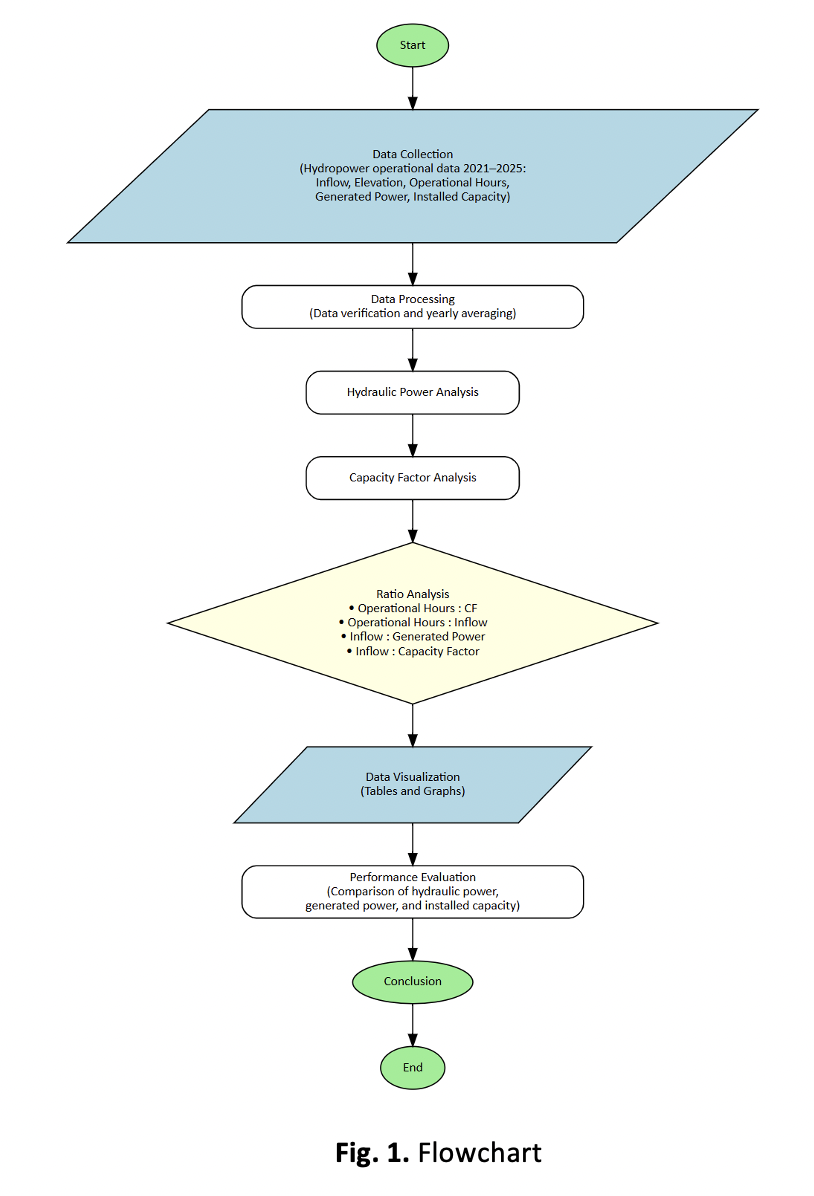
Hydropower is an important renewable energy source that converts water potential into electrical energy through turbine–generator systems. The performance of a hydropower plant is influenced by several operational parameters such as water inflow, reservoir elevation, operational hours, and installed capacity. Therefore, evaluating these parameters is necessary to understand how effectively water resources are utilized for electricity generation. This study aims to analyze the operational performance of PLTA Wlingi using operational data from 2021 to 2025. The research mesthod includes hydraulic power calculation based on water discharge and head, capacity factor analysis, and ratio analysis between operational parameters such as operational hours, inflow, generated power, and capacity factor. The results show that the capacity factor of the hydropower plant varies between 32% and 52.9%, depending on operational hours and water availability. The analysis also indicates that the relationship between inflow and generated power remains relatively stable, with an average requirement of approximately 4.3 m³/s of inflow to produce 1 MW of electrical power. In addition, the ratio analysis shows that approximately 23.5 operational hours are required to achieve 1% capacity factor and around 2.3 m³/s inflow is associated with a 1% capacity factor increase. These results indicate that the operational performance of the hydropower plant is strongly influenced by water availability and plant operating conditions. The findings of this study provide useful insights for evaluating hydropower plant performance and improving the management of water resources for electricity generation.