
Evaluating Sight Distance Limitations and Accident Risks on Horizontal Curves: A PRISMA-Based Systematic Literature Review

Authors

  • Norhafizah Manap Department of Civil Engineering, Politeknik Kuching Sarawak, 93050 Kuching, Sarawak, Malaysia
  • Azurahani Bahari Department of Mathematics, Science & Computer, Politeknik Sultan Haji Ahmad Shah, 23530 Semambu, Pahang, Malaysia
  • Norain Ali Department of Civil Engineering, Politeknik Sultan Abdul Halim Mu'adzam Shah, 06000 Jitra,Kedah, Malaysia

Keywords:

horizontal curve, sight distance, automation

Abstract

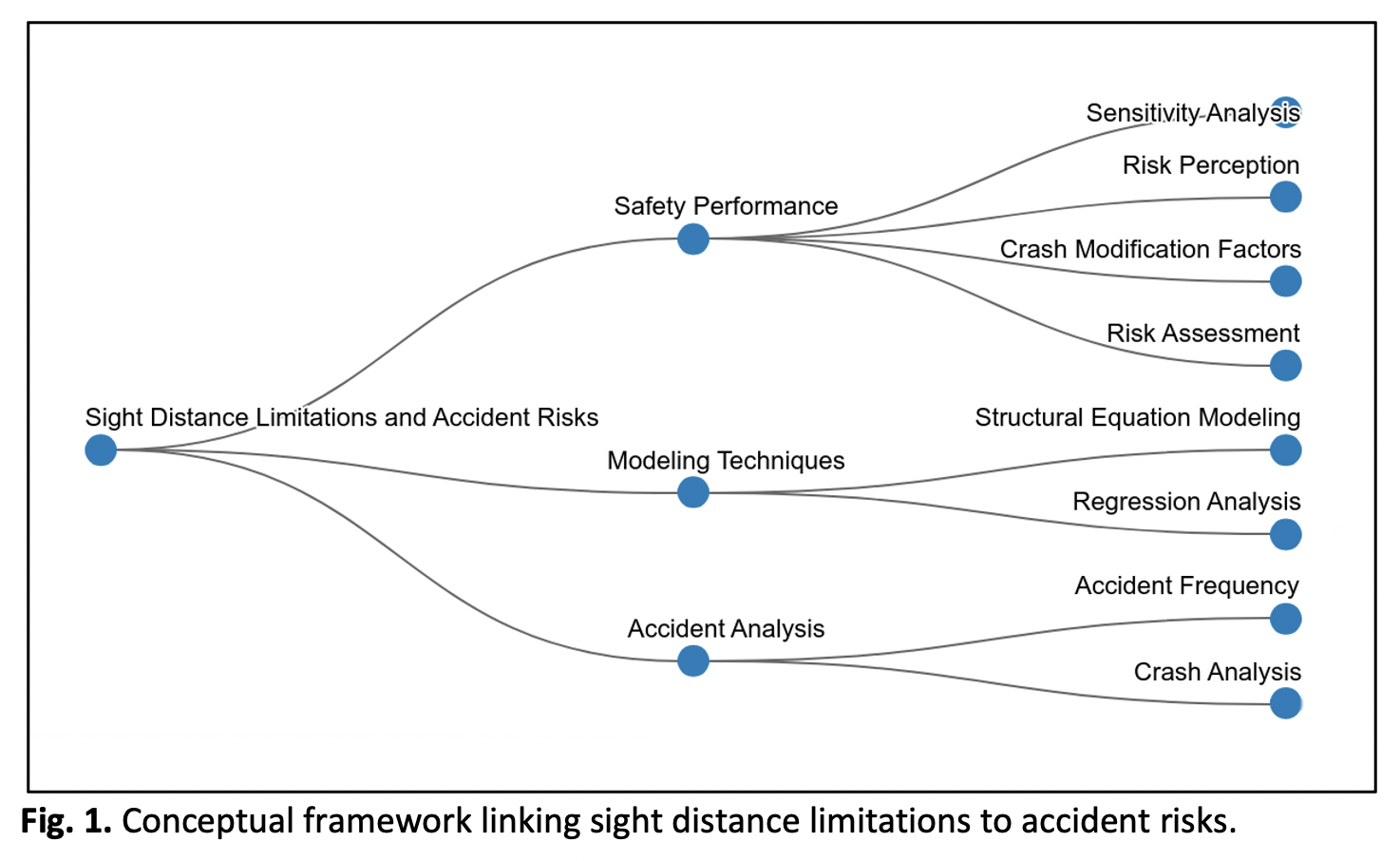
Sight distance is a fundamental parameter in roadway design, as insufficient visibility along horizontal curves often leads to higher accident risks and reduced driver performance. Despite ongoing efforts in road safety research, the evidence concerning sight distance limitations remains dispersed, making it challenging to consolidate effective strategies for mitigating crash likelihood. This study addresses this gap by conducting a systematic literature review to synthesize the current state of knowledge on the relationship between sight distance and accident risk. The review followed the PRISMA protocol, with data retrieved from two major databases, Scopus and ScienceDirect, applying strict inclusion and exclusion criteria to ensure relevance and quality. After the screening process, 29 primary studies were selected for detailed analysis. The findings were categorized into three central themes. The first theme, Sight Distance, Visibility & Lighting, highlights how roadway geometry, lighting design, and visibility enhancements directly influence hazard perception and driver safety margins. The second theme, Reliability, Design Consistency & Optimization, demonstrates the importance of reliability-based design measures, consistency evaluation, and optimization frameworks in predicting crash risks and guiding safer roadway alignment. The third theme, Automation, Connected Vehicles & Human Factors, emphasizes the role of intelligent speed adaptation, connected-vehicle technologies, and driver behavioral responses in enhancing safety, particularly under adverse conditions. Collectively, the evidence suggests that addressing sight distance limitations requires not only traditional geometric and lighting considerations but also integration with modern reliability-based approaches and automation-driven safety systems. The study concludes that future roadway safety improvements should adopt a multidisciplinary perspective that combines engineering design, system reliability, and human–technology interaction to reduce accident risks associated with limited sight distance.

Author Biographies

Norhafizah Manap, Department of Civil Engineering, Politeknik Kuching Sarawak, 93050 Kuching, Sarawak, Malaysia

Azurahani Bahari, Department of Mathematics, Science & Computer, Politeknik Sultan Haji Ahmad Shah, 23530 Semambu, Pahang, Malaysia

Norain Ali, Department of Civil Engineering, Politeknik Sultan Abdul Halim Mu'adzam Shah, 06000 Jitra,Kedah, Malaysia

Downloads

Published

2026-04-14

Issue

Section

Articles