The Transmission of Japanese Ideas and the Formation of Mahathir Mohamad’s Leadership Thought: A Bibliographic and Intellectual Reflection
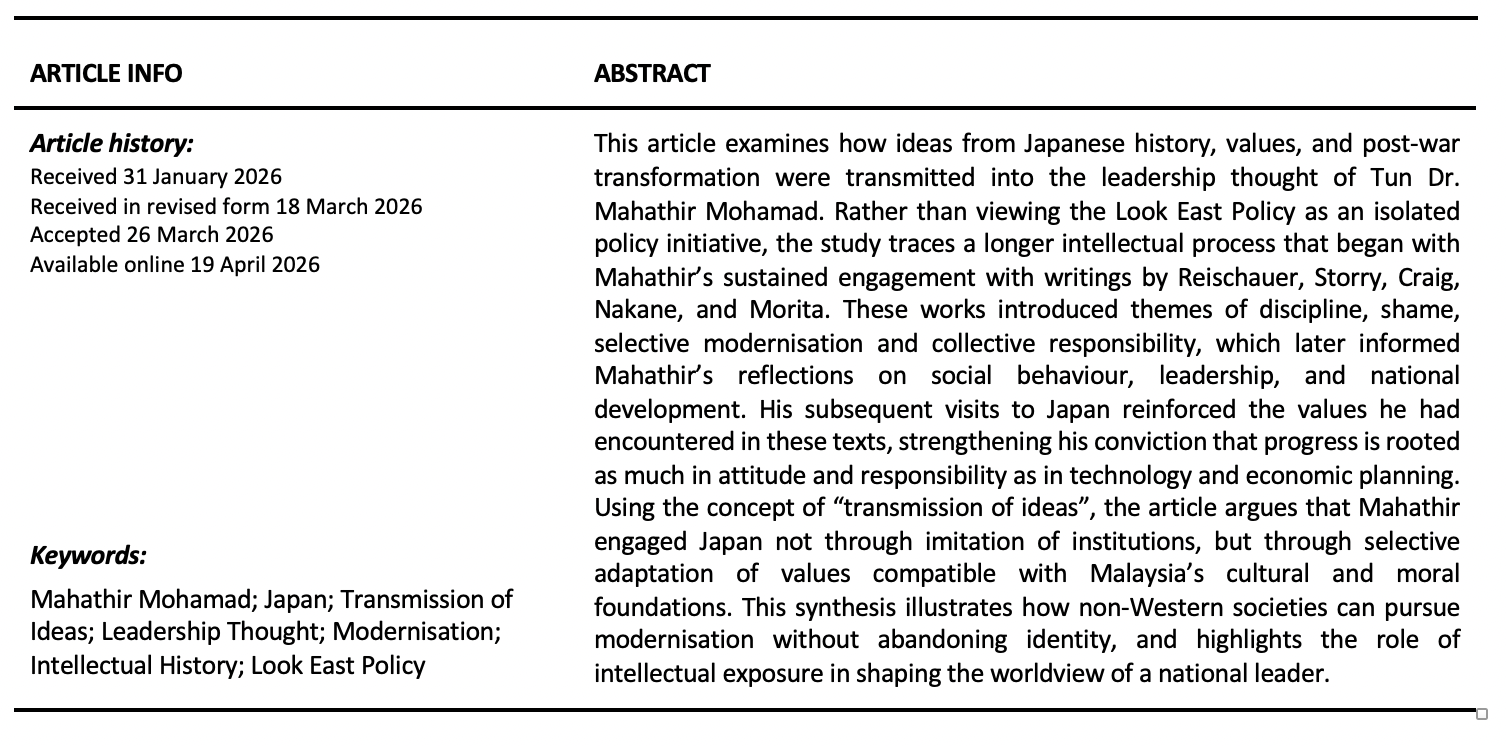
Keywords:
Mahathir Mohamad, Japan, Transmission of Ideas, Leadership Thought, Modernisation, Intellectual History, Look East PolicyAbstract
This article examines how ideas from Japanese history, values, and post-war transformation were transmitted into the leadership thought of Tun Dr. Mahathir Mohamad. Rather than viewing the Look East Policy as an isolated policy initiative, the study traces a longer intellectual process that began with Mahathir’s sustained engagement with writings by Reischauer, Storry, Craig, Nakane, and Morita. These works introduced themes of discipline, shame, selective modernisation and collective responsibility, which later informed Mahathir’s reflections on social behaviour, leadership, and national development. His subsequent visits to Japan reinforced the values he had encountered in these texts, strengthening his conviction that progress is rooted as much in attitude and responsibility as in technology and economic planning. Using the concept of “transmission of ideas”, the article argues that Mahathir engaged Japan not through imitation of institutions, but through selective adaptation of values compatible with Malaysia’s cultural and moral foundations. This synthesis illustrates how non-Western societies can pursue modernisation without abandoning identity, and highlights the role of intellectual exposure in shaping the worldview of a national leader.