Bridging the Gap in STEM Education by Visualizing Physics Concepts with 3D Printing
Keywords:
Additive manufacturing, hands-on, kinesthetics, physics, visualizationAbstract
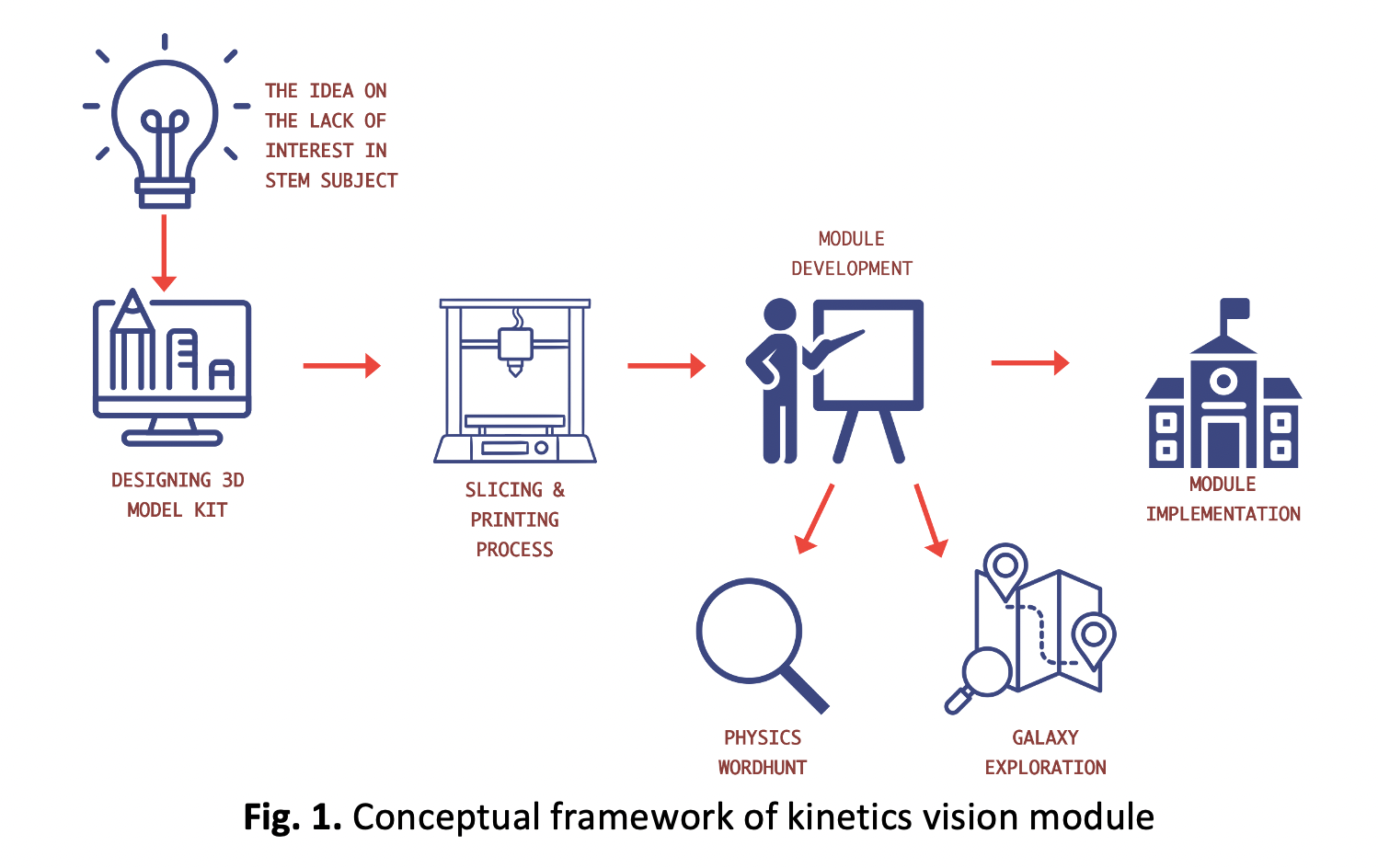
STEM (science, technology, engineering, and mathematics) is often perceived by students as a difficult area of study, which can lead to many learning challenges. As today’s world technology becomes part of everyday life, students who avoid STEM are more likely to lack the skills and understanding needed to deal with real-world problems. Meanwhile, as part of STEM, Physics, a branch of science that explores matter, energy, and fundamental force in which this fundamental are often difficult to visualize and understand by many students. The struggling faced by them then diminishes their interest in learning science. Therefore, to help students understand and stay engaged in Physics, 3D printing technology was used to create clear and tangible learning materials. 3D printed kits were developed according to the challenging topics in physics and accompanied with a teaching module. This study introduces the Kinetic Vision module, which integrates 3D-printed learning kits with game-based activities to support more engaging and meaningful physics learning. Two interactive kits which were Galaxy Exploration and Physics Wordhunt. were designed and implemented with primary school students to facilitate experiential and kinaesthetic learning. The feedback from the preliminary implementation were analysed and the data from the preliminary implementation showed a strong positive response to the use of the 3D printed tools. Particularly all participants reported that activities designed in the module as enjoyable and they would like to participate in the similar future activates. This findings suggesting a strong alterative for the module to be used further. Besides, the participants also described that the Physics kit using 3D models encouraged and helped them to improve their understanding especially in the topics of Gravitation and Solar System. The tactile planet models were regarded as the most useful component of the learning experience. In addition, the participants reported noticeable improvements in teamwork and leadership, however varied outcomes in critical thinking was observed. Therefore, the results highlight how 3D printed kits possible to enhance physics education by helping students grasp complex concepts more effectively while also encouraging collaboration and active participation. Hence, this study demonstrates the value of student-centered, creative approaches in STEM learning.