Time Series Analysis of Population Aging in Malaysia: The Roles of Economic and Social Determinants
Keywords:
Population aging, ARDL bound test, female labor participation, life expectancy, migrationAbstract
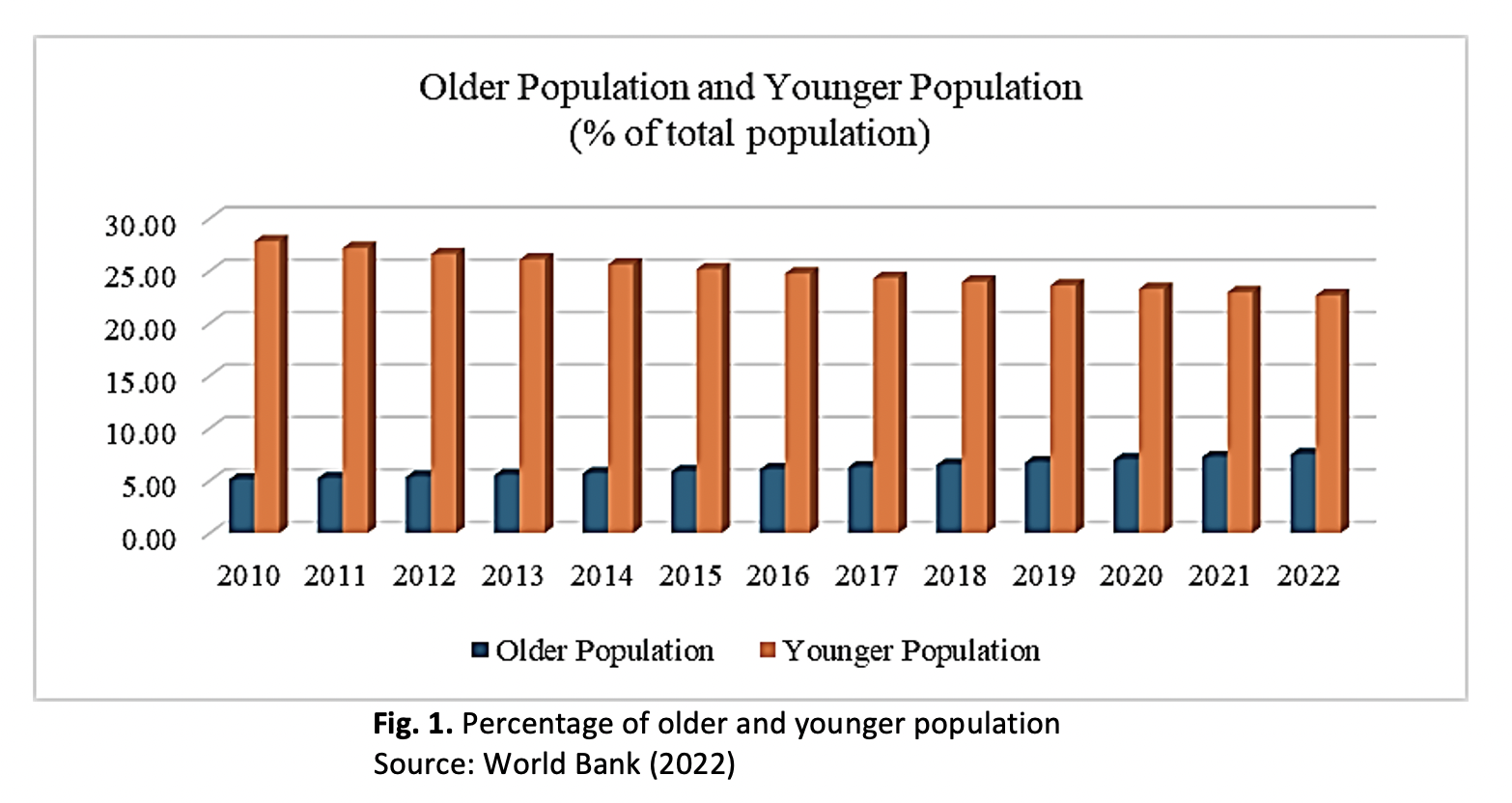
Malaysia has been experiencing a gradual increase in the proportion of its elderly population over the years, posing a crucial demographic transition with significant social and economic implications that could be detrimental to its economic growth. This research examines the factors influencing this phenomenon by applying the Autoregressive Distributed Lag (ARDL) model to analyse annual data from 1991 to 2020. The short- and long-run effects of key factors are analysed, including fertility rates, life expectancy, GDP per capita, healthcare quality, migration, and female labour force participation. The findings reveal that fertility rates and GDP per capita have negative, long-run relationships with population aging, while life expectancy and female labour participation are positively associated. Migration has a dual impact: reducing population aging in the long run but temporarily exacerbating it in the short run. The quality of healthcare, however, shows an insignificant relationship with population aging. Addressing these factors will be critical for managing the consequences of population aging. The findings of this study offer valuable insights into the impact of various factors driving population aging, highlighting the need for targeted policy interventions to foster sustainable development in Malaysia.