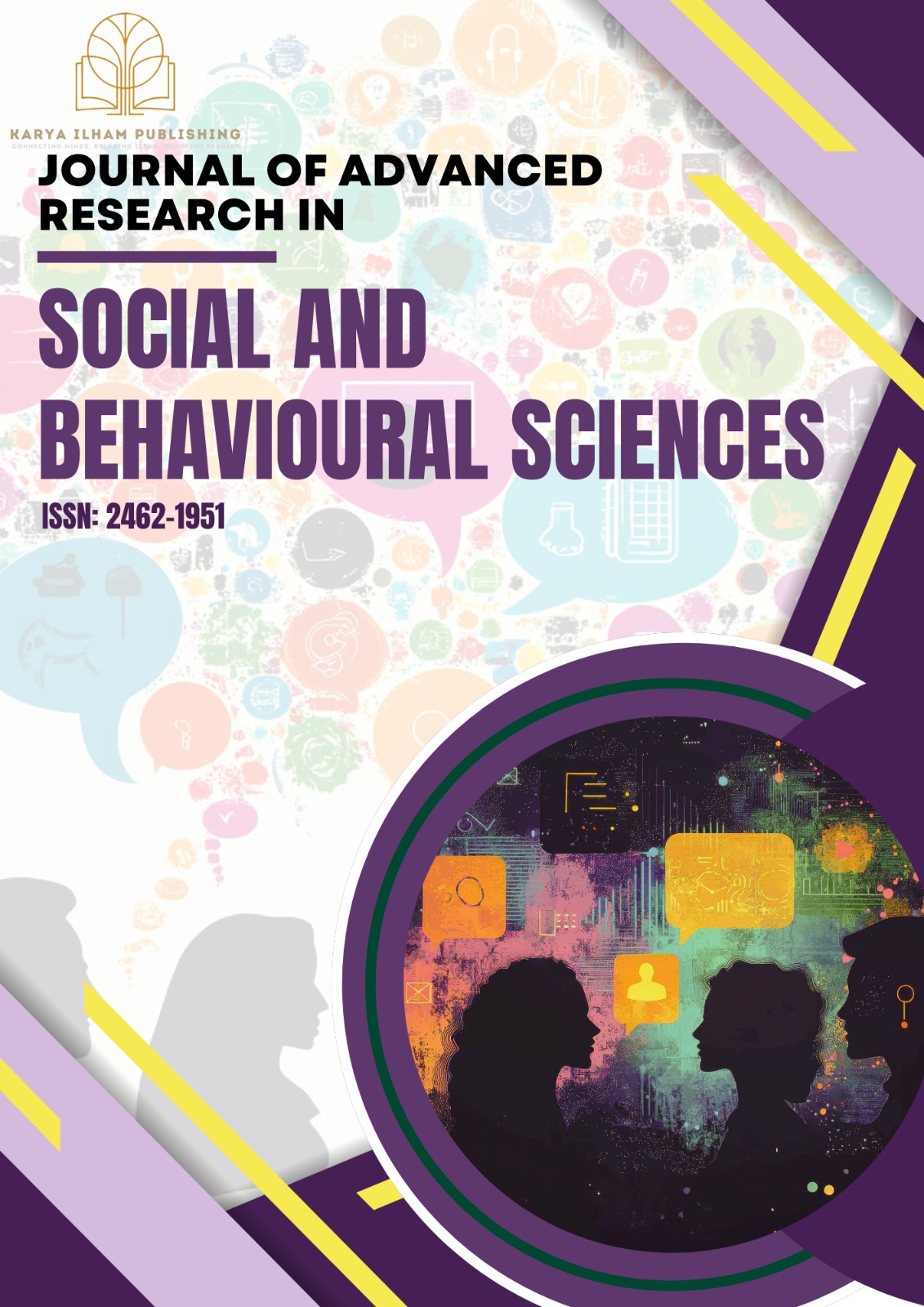
cover
THE PUBLISHER
"CONNECTING MINDS, BRIDGING IDEAS, INSPIRING READERS"
Knowledge has power, but it's much more powerful when it is shared
SUBMISSION
AIMS AND SCOPE
Journal of Advanced Research in Social and Behavioural Sciences (JARSBS) is an international, open access, peer-reviewed journal, collects original contributions in all major area of social and behavioural sciences. The journal accepts all type of articles such as research articles, case reports, review, commentary and short communications etc., publishes works related to behavioral and social sciences include psychology, psychobiology, criminology and cognitive science, sociology, education, geography, political science, history, law, linguistics, etc.
INDEXING AND ABSTRACTING






Journal of Advanced Research in Social and Behavioural Sciences (JARSBS)
is licensed under a Creative Commons Attribution-NonCommercial 4.0 International License.
DISTRIBUTION OF AUTHORS
Malaysia, Australia, Nigeria, India, Indonesia, Pakistan, United Kingdom, Saudi Arabia, China, Bangladesh, Morocco