
Reimagining Inclusive Higher Education for Autistic Students: Conceptual and Preliminary Empirical Insights toward Realizing SDG4 in Malaysia

Authors

  • Mohd Norafizal Abd Aziz Faculty of Computer and Mathematical Sciences, Universiti Teknologi MARA Pahang, Raub Campus, Pahang, Malaysia
  • Juhaida Ismail Faculty of Computer and Mathematical Sciences, Universiti Teknologi MARA Pahang, Raub Campus, Pahang, Malaysia
  • Rozeleenda Abdul Rahman Faculty of Computer and Mathematical Sciences, Universiti Teknologi MARA Pahang, Raub Campus, Pahang, Malaysia
  • Zazaleena Zakariah Centre of Foundation Studies, Universiti Teknologi MARA, Cawangan Selangor, Kampus Dengkil, 43800 Dengkil, Selangor, Malaysia
  • Haslinda Noradzan Faculty of Computer and Mathematical Sciences, Universiti Teknologi MARA Negeri Sembilan, Seremban Campus, Negeri Sembilan, Malaysia

Keywords:

Autism Spectrum Disorder, universal design for learning, SDG4

Abstract

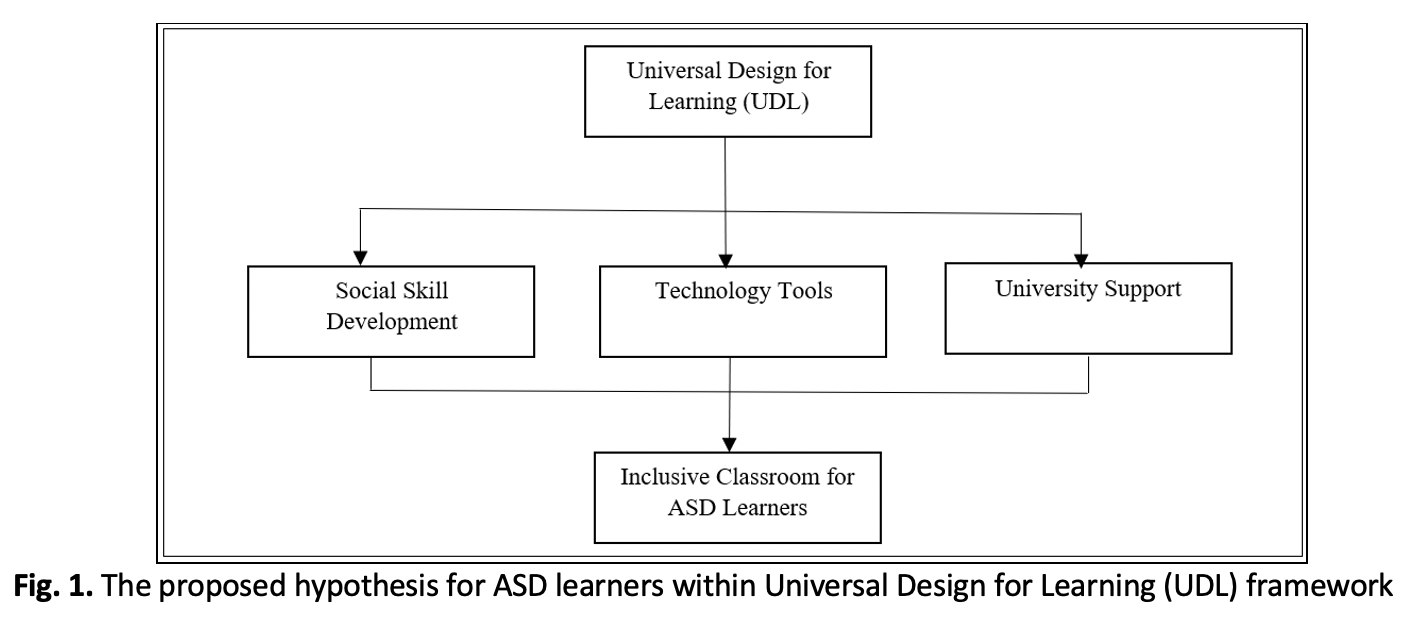
The increasing enrolment of students with Autism Spectrum Disorder (ASD) in Malaysian higher education institutions reflects promising progress toward a more competitive and inclusive academic access. However, existing pedagogical approaches, assessment methods, and institutional frameworks in Malaysian higher education continue to cater predominantly to the needs of neurotypical students, often failing to address the unique cognitive, emotional, and social needs of neurodivergent learners. This study seeks to explore the challenges faced by autistic students, particularly those enrolled in technology-based diploma programmes. Moving beyond a purely conceptual reflection, this study incorporates a preliminary analysis of academic performance trajectories of ASD students within a computer science programme in a Malaysian university. Initial findings reveal a distinctive pattern: high foundational cognitive performance with students achieving Grade A+ in core technical subjects and initial GPAs as high as 3.69, followed by a consistent longitudinal decline in CGPA as the curriculum complexity increases. These observations underscore the urgent need for transformative educational models to sustain academic momentum. Through a detailed review and reflection, this discussion highlights the Universal Design for Learning (UDL) framework as a strategic mechanism to improve institutional flexibility, accessibility, and engagement. Ultimately, this study aims to advance Malaysia’s discourse on inclusive education and support national and global efforts to realise SDG 4: quality education for all.

Author Biographies

Mohd Norafizal Abd Aziz, Faculty of Computer and Mathematical Sciences, Universiti Teknologi MARA Pahang, Raub Campus, Pahang, Malaysia

mnorafizal@uitm.edu.my

Juhaida Ismail, Faculty of Computer and Mathematical Sciences, Universiti Teknologi MARA Pahang, Raub Campus, Pahang, Malaysia

juhaida_ismail@uitm.edu.my

Rozeleenda Abdul Rahman, Faculty of Computer and Mathematical Sciences, Universiti Teknologi MARA Pahang, Raub Campus, Pahang, Malaysia

rozeleenda@uitm.edu.my

Zazaleena Zakariah, Centre of Foundation Studies, Universiti Teknologi MARA, Cawangan Selangor, Kampus Dengkil, 43800 Dengkil, Selangor, Malaysia

zazaleena@uitm.edu.my

Haslinda Noradzan, Faculty of Computer and Mathematical Sciences, Universiti Teknologi MARA Negeri Sembilan, Seremban Campus, Negeri Sembilan, Malaysia

haslindanoradzan@uitm.edu.my

Downloads

Published

2026-07-02

Issue

Section

Articles