
The Influence of Zakat on the Quality of Life of the Orang Asli Community in Kuala Tahan

Authors

  • Sumaiyah Bahri Academy of Contemporary Islamic Studies, Universiti Teknologi MARA, Shah Alam, Malaysia
  • Mohammad Nasrul Hakim Roslan Academy of Contemporary Islamic Studies, Universiti Teknologi MARA, Raub, Pahang, Malaysia
  • Muhammad Fuad Abdullah Institite For Biodiversity & Sustainable Development, Universiti Teknologi MARA, Shah Alam, Malaysia

Keywords:

Zakat, Orang Asli, Kuala Tahan, quality of life, Aid, Islamic Economics

Abstract

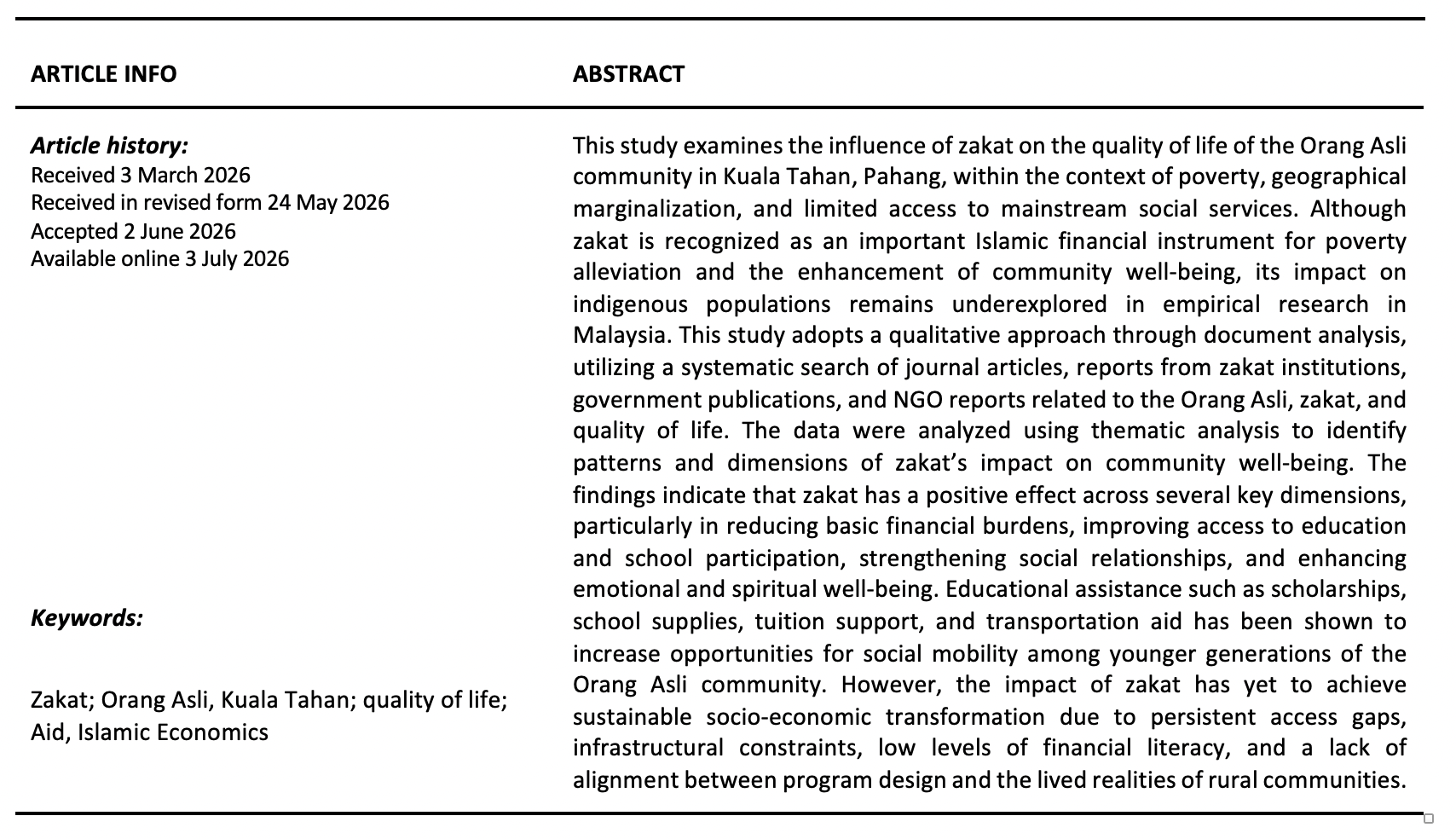
This study examines the influence of zakat on the quality of life of the Orang Asli community in Kuala Tahan, Pahang, within the context of poverty, geographical marginalization, and limited access to mainstream social services. Although zakat is recognized as an important Islamic financial instrument for poverty alleviation and the enhancement of community well-being, its impact on indigenous populations remains underexplored in empirical research in Malaysia. This study adopts a qualitative approach through document analysis, utilizing a systematic search of journal articles, reports from zakat institutions, government publications, and NGO reports related to the Orang Asli, zakat, and quality of life. The data were analyzed using thematic analysis to identify patterns and dimensions of zakat’s impact on community well-being. The findings indicate that zakat has a positive effect across several key dimensions, particularly in reducing basic financial burdens, improving access to education and school participation, strengthening social relationships, and enhancing emotional and spiritual well-being. Educational assistance such as scholarships, school supplies, tuition support, and transportation aid has been shown to increase opportunities for social mobility among younger generations of the Orang Asli community. However, the impact of zakat has yet to achieve sustainable socio-economic transformation due to persistent access gaps, infrastructural constraints, low levels of financial literacy, and a lack of alignment between program design and the lived realities of rural communities.

Author Biographies

Sumaiyah Bahri, Academy of Contemporary Islamic Studies, Universiti Teknologi MARA, Shah Alam, Malaysia

sumaiyah@uitm.edu.my

Mohammad Nasrul Hakim Roslan, Academy of Contemporary Islamic Studies, Universiti Teknologi MARA, Raub, Pahang, Malaysia

nasrulhakim@uitm.edu.my

Muhammad Fuad Abdullah, Institite For Biodiversity & Sustainable Development, Universiti Teknologi MARA, Shah Alam, Malaysia

fuad.abdullah@uitm.edu.my

Downloads

Published

2026-07-03

Issue

Section

Articles