From Heritage to High-Tech: An Integrated Multimodal Framework for Enhancing English Communicative Competence and Entrepreneurial Agency among B40 Women
Keywords:
Multimodality, entrepreneurial agency, B40 women, adult learning, English communication, digital literacy, University social responsibilityAbstract
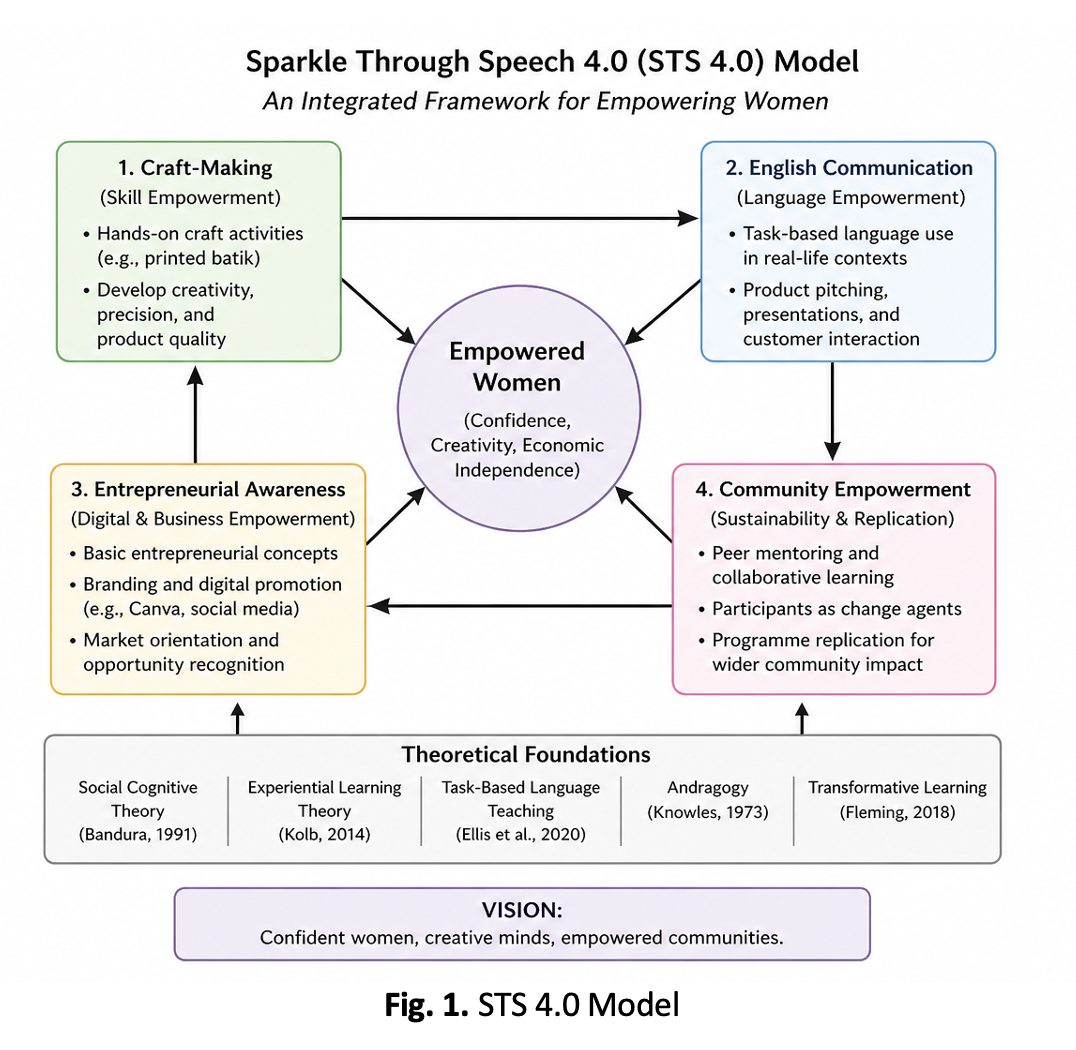
The Sparkle Through Speech 4.0 (STS 4.0) initiative addresses a critical limitation in existing empowerment programmes for B40 women, which frequently treat vocational, linguistic, and digital skills as discrete domains, thereby constraining their real-world applicability. Despite growing interest in experiential and community-based learning, there remains limited research integrating multimodal skill development with language learning and entrepreneurial agency within a single, scalable framework. This conceptual paper proposes the Sparkle Through Speech 4.0 (STS 4.0) model as a framework for community-based language and entrepreneurship development, reconceptualising communicative competence as a form of entrepreneurial agency developed through the interaction of material, linguistic, visual, and digital modes. The study adopts a conceptual paper approach through theoretical synthesis of literature related to multimodal learning, entrepreneurship education, task-based language teaching, and adult learning. The model is structured around four interrelated components: (i) vocational mastery through printed batik production, (ii) linguistic agency via task-based English communication for marketing and public engagement, (iii) digital empowerment through the use of Canva and social media platforms for branding, and (iv) community leadership enabled by a peer-mentoring replication approach. Grounded in self-efficacy theory, andragogy, and transformative learning, the paper articulates the theoretical foundations and design principles underpinning the proposed model. The paper argues that integrated multimodal engagement can enhance participants’ confidence, identity, and entrepreneurial awareness, particularly within underserved communities. By bridging language education, entrepreneurship, and community development, this study contributes a theoretically grounded and practice-oriented model for experiential language learning, with implications for scalable and sustainable empowerment initiatives in Malaysia and comparable contexts.