Input, Interaction, Feedback, and Classroom Management in EFL Primary English Teaching Behaviors: A Quantitative Classroom Observation Study in Mainland China
Keywords:
EFL teaching behaviors, classroom observation, primary English education, corrective feedback, teacher questioningAbstract
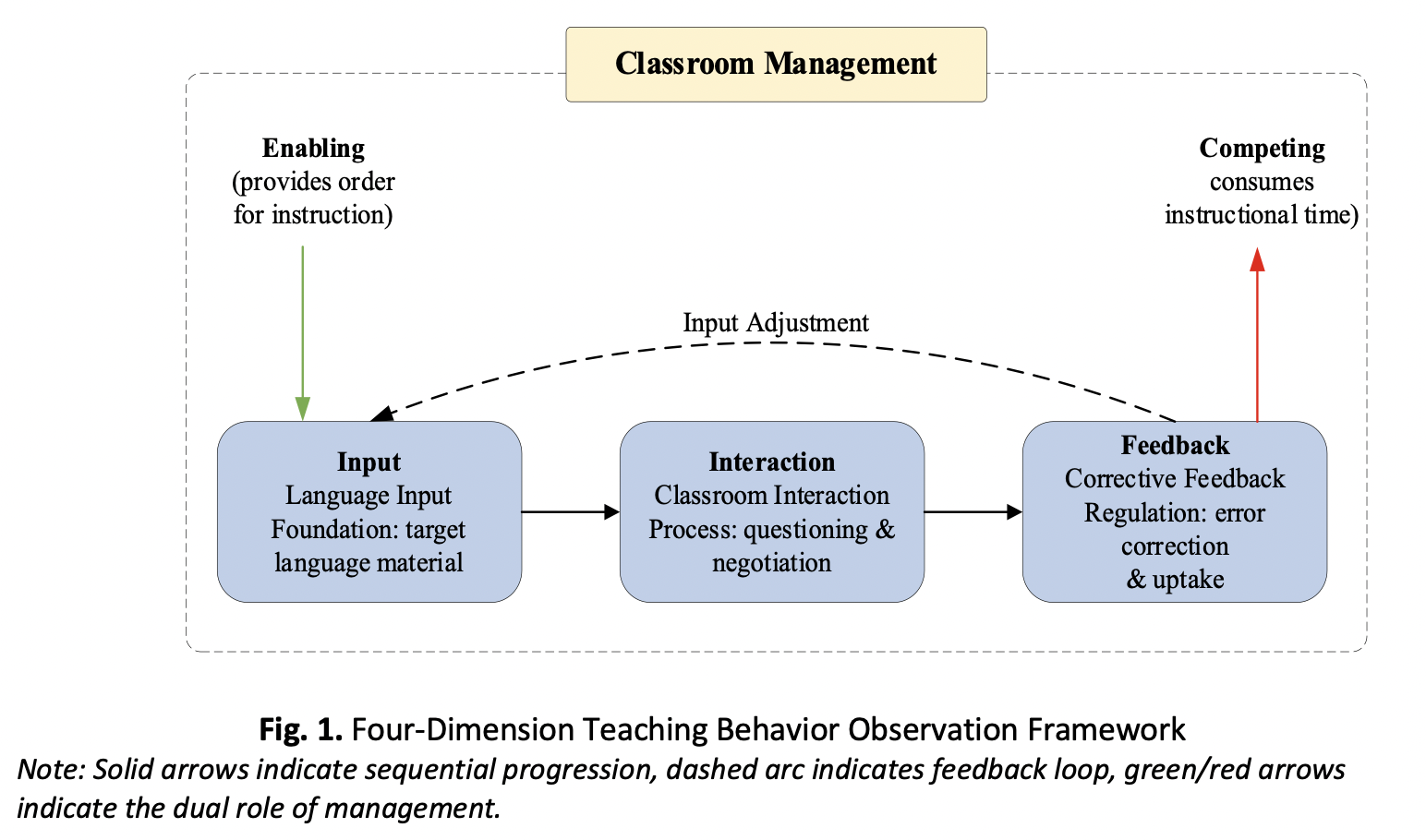
For the vast majority of mainland Chinese primary school students, the 40-minute English class is effectively their sole point of access to the target language, thus teachers' observable classroom behavior determines whether there will be any opportunity for language acquisition at all. Current research related to Chinese EFL classrooms is heavily reliant on self-reported information collected from teachers and lacks quantitative findings based on objective classroom observations on large samples. The current study adopted a non-participant structured observation method to analyze teaching behaviors along four axes: language input, teacher questioning, corrective feedback, and classroom management. 54 lessons delivered by 27 primary school teachers working in urban and county-level schools in Hubei Province, China, were coded according to a specially designed instrument (PETBOS). Findings indicated that teachers' speech contained 51% of L1 (Chinese), display questions represented 83% of questions in total with a mean wait time of 1.6 seconds, recasts were the most frequently used (49%) type of feedback but only yielded a 14% repair rate, and instructional time constituted 64% of class time on average. Urban and county teachers demonstrated dichotomy in terms of significant differences between proportions of L2 input usage, referential questions, instructional time, and managerial time (p = .050) while exhibiting similar wait times, types of feedback, transitional periods, and off-task periods. These findings offer concrete, quantifiable measures for targeting teacher development and indicate that mere redistribution of resources will not affect entrenched patterns of teachers' habitual classroom behavior, and alternative strategies such as video-stimulated reflective practice must be employed.