Effects of Digital Simulation Training and Balance Training on Technical Stability of University Curling Athletes
Keywords:
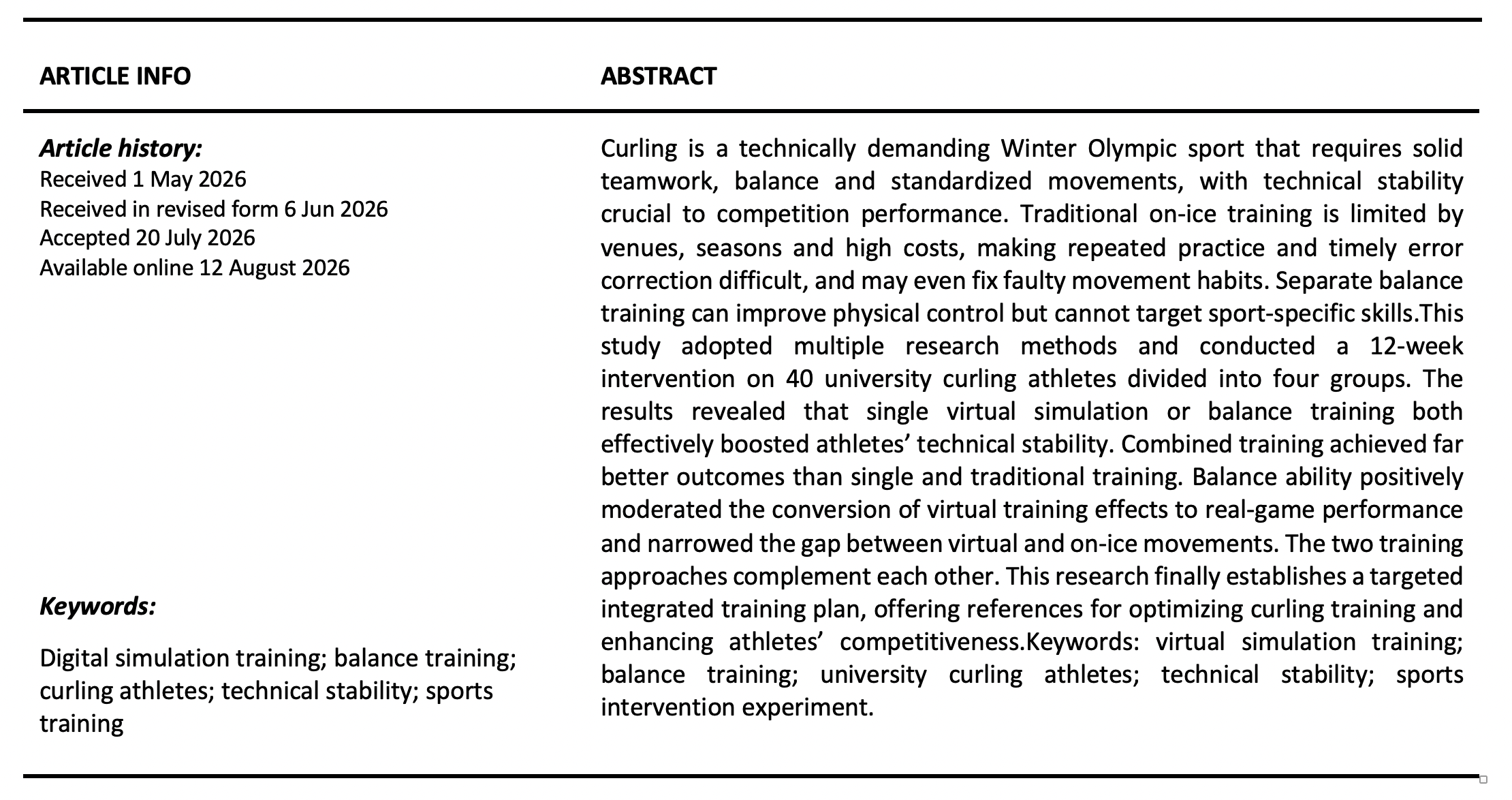
Digital simulation training, Balance training, Curling athletes, Technical stability, Sports trainingAbstract
Curling is a technically demanding Winter Olympic sport that requires solid teamwork, balance and standardized movements, with technical stability crucial to competition performance. Traditional on-ice training is limited by venues, seasons and high costs, making repeated practice and timely error correction difficult, and may even fix faulty movement habits. Separate balance training can improve physical control but cannot target sport-specific skills. This study adopted multiple research methods and conducted a 12-week intervention on 40 university curling athletes divided into four groups. The results revealed that single virtual simulation or balance training both effectively boosted athletes’ technical stability. Combined training achieved far better outcomes than single and traditional training. Balance ability positively moderated the conversion of virtual training effects to real-game performance and narrowed the gap between virtual and on-ice movements. The two training approaches complement each other. This research finally establishes a targeted integrated training plan, offering references for optimizing curling training and enhancing athletes’ competitiveness.Keywords: virtual simulation training; balance training; university curling athletes; technical stability; sports intervention experiment