Who is Hurt, Who Acts, Who Contributes to Harm? Role-Specific Pathways from Online Disinhibition to Adolescent Anxiety
Abstract
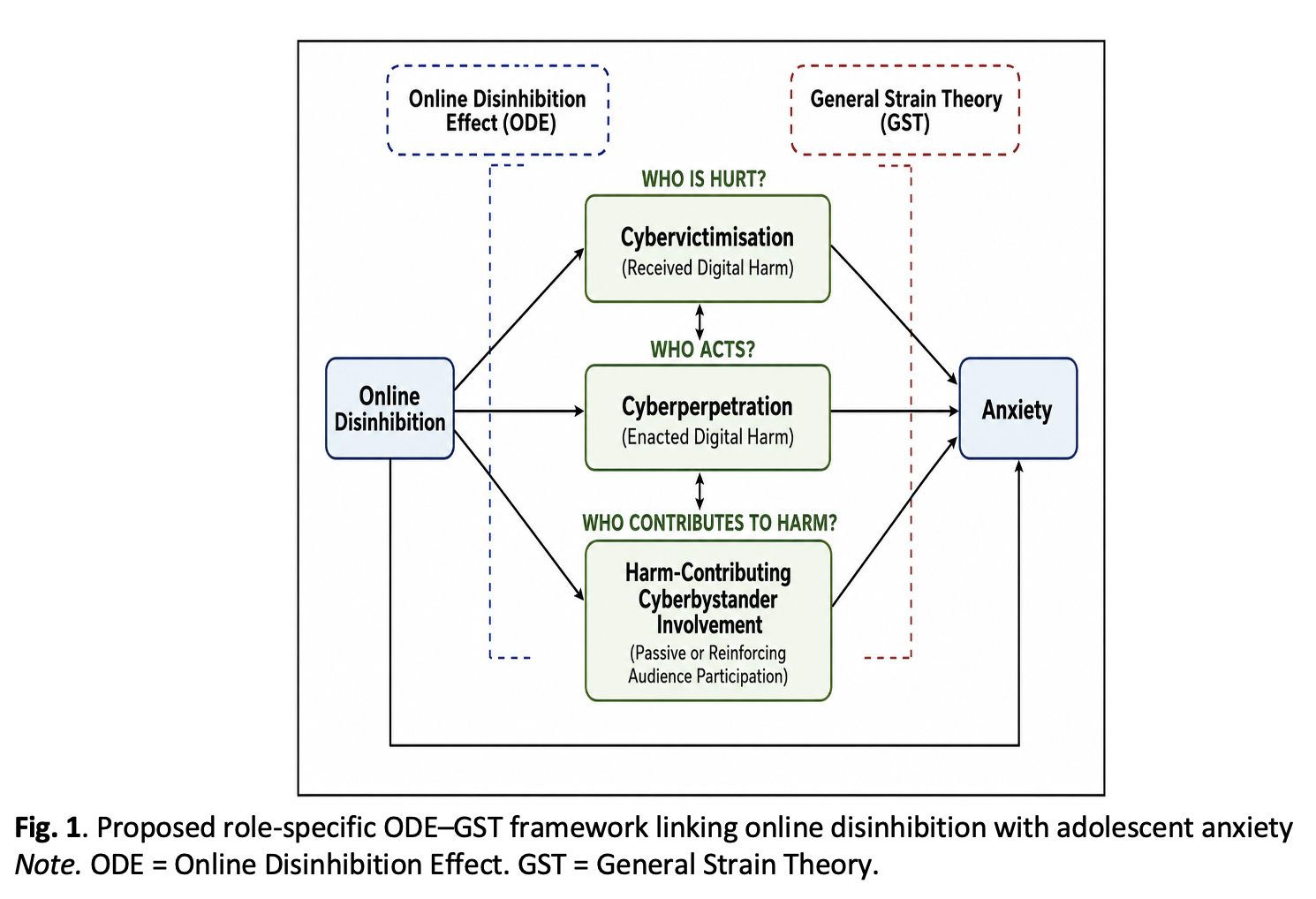
Adolescent cyberbullying unfolds through distinct behavioural positions as young people receive digital harm, enact it, or contribute to its continuation from an audience position. Aggregate cyberbullying classifications obscure behavioural direction, role overlap, and unequal associations with online disinhibition and anxiety. This paper develops a role-specific framework linking online disinhibition with adolescent anxiety through cybervictimisation, cyberperpetration, and harm-contributing cyberbystander involvement. A focused comparative conceptual synthesis integrates theoretical and empirical studies across communication-related and strain-related segments, assigning the Online Disinhibition Effect to reduced behavioural and communication restraint and General Strain Theory to the strain-related significance of each role. The synthesis reveals a pronounced asymmetry: online disinhibition is most consistently associated with cyberperpetration, cybervictimisation carries the strongest anxiety-related support, and harm-contributing cyberbystander involvement has the narrowest behaviour-specific research base. The framework clarifies who receives harm, who enacts it, and who permits or amplifies its continuation, establishing a differentiated basis for future testing and role-sensitive intervention.