
Lecturers’ Digital Readiness and Pedagogical Innovation in Malaysian Polytechnics and Community Colleges

Authors

  • Abdul Aziz Ab Nasir Department of Information and Communication Technology, Politeknik Sultan Abdul Halim Mu’adzam Shah, Bandar Darulaman, 06000 Jitra, Kedah, Malaysia
  • Wan Ahmad Ramzi Wan Yusuf Department of Information and Communication Technology, Politeknik Sultan Abdul Halim Mu’adzam Shah, Bandar Darulaman, 06000 Jitra, Kedah, Malaysia
  • Mohd Faizal Yahaya Department of Information and Communication Technology, Politeknik Sultan Abdul Halim Mu’adzam Shah, Bandar Darulaman, 06000 Jitra, Kedah, Malaysia

Keywords:

Digital readiness, pedagogical innovation, polytechnic, community college

Abstract

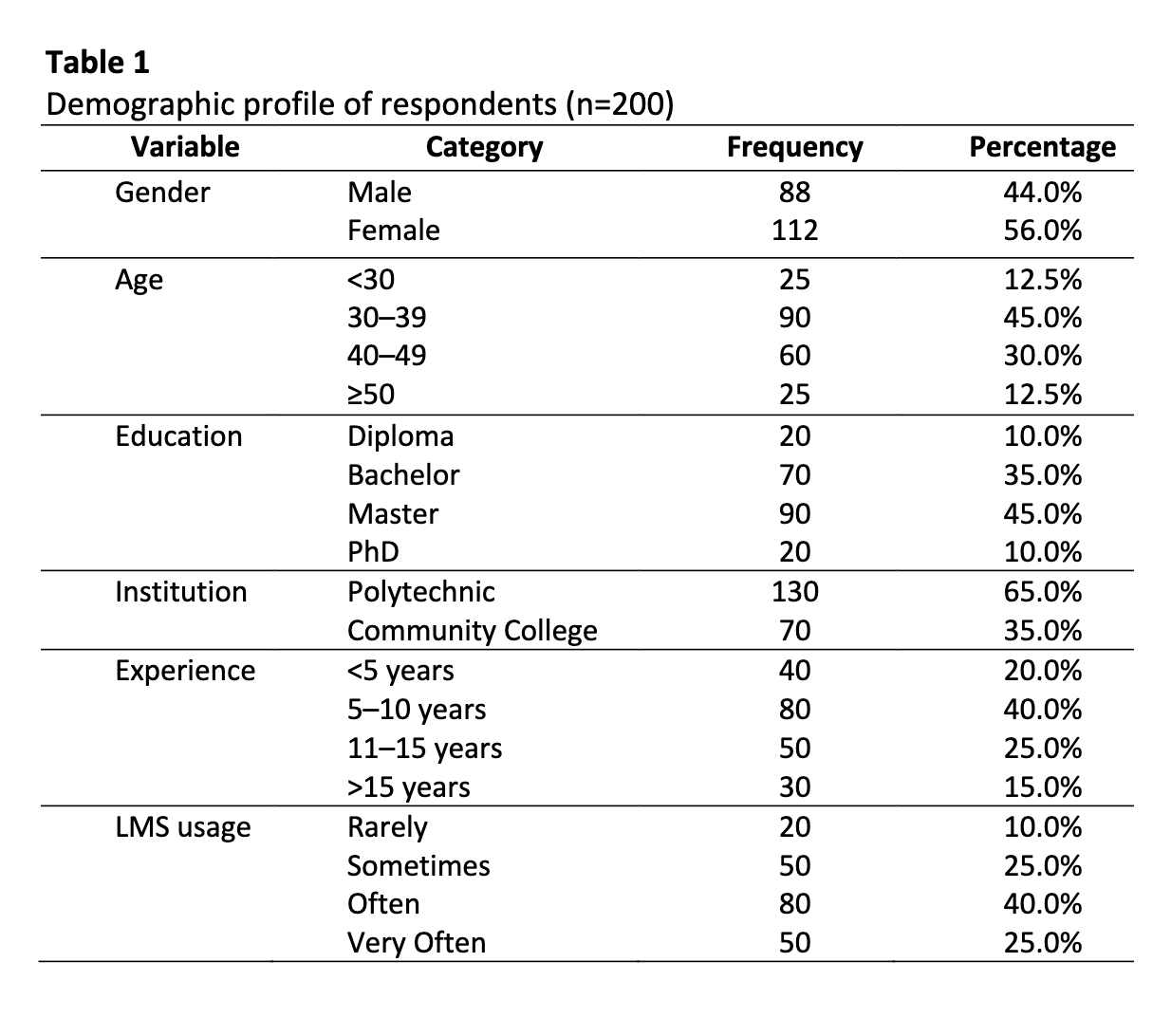
The rapid digital transformation within higher education has reshaped how teaching and learning are designed and delivered. In Malaysia’s Technical and Vocational Education and Training (TVET) sector, polytechnics and community colleges under the Department of Polytechnic and Community College Education (JPPKK) are progressively integrating digital tools to support flexible and innovative teaching practices. However, despite significant technological investment, many lecturers still face challenges in applying technology effectively to promote pedagogical innovation. This gap highlights the need to examine the extent to which lecturers are digitally ready and how such readiness influences their ability to innovate in teaching. The purpose of this study is to investigate the relationship between digital readiness and pedagogical innovation among lecturers in Malaysian polytechnics and community colleges. A quantitative cross-sectional survey was conducted involving 200 lecturers selected through purposive sampling. Data were collected using a structured questionnaire adapted from previous validated instruments and analyzed using descriptive statistics, Pearson correlation, and simple linear regression with IBM SPSS Version 26. Results revealed that lecturers demonstrated a moderate-to-high level of digital readiness (M = 3.65, SD = 0.50) and a moderate level of pedagogical innovation (M = 3.45, SD = 0.52). A significant positive correlation (r = .377, p < .01) was found between the two constructs, and regression analysis confirmed that digital readiness significantly predicted pedagogical innovation, explaining 14.2% of the variance (R² = .142). These findings suggest that while lecturers possess positive attitudes toward technology, continuous professional training, institutional support, and enhanced digital literacy are necessary to strengthen pedagogical innovation. The study contributes to Malaysia’s digital education reform efforts by providing empirical evidence to guide TVET institutions in promoting sustainable and technology-driven teaching practices. Its implication also extends to policymakers and institutional leaders in designing targeted professional development frameworks that enhance lecturers’ capacity for digital innovation and support Malaysia’s Education 5.0 vision.

Author Biographies

Abdul Aziz Ab Nasir, Department of Information and Communication Technology, Politeknik Sultan Abdul Halim Mu’adzam Shah, Bandar Darulaman, 06000 Jitra, Kedah, Malaysia

aznasir10@gmail.com

Wan Ahmad Ramzi Wan Yusuf, Department of Information and Communication Technology, Politeknik Sultan Abdul Halim Mu’adzam Shah, Bandar Darulaman, 06000 Jitra, Kedah, Malaysia

ramzi@polimas.edu.my

Mohd Faizal Yahaya, Department of Information and Communication Technology, Politeknik Sultan Abdul Halim Mu’adzam Shah, Bandar Darulaman, 06000 Jitra, Kedah, Malaysia

faizalyahaya@ polimas.edu.my

Downloads

Published

2025-12-29

Issue

Section

Articles