Implications of Artificial Intelligence and Automation for Job Displacement and Workforce Readiness in the Accounting Profession
Keywords:
Artificial intelligence; automation; job displacement; workforce readiness; accounting professionAbstract
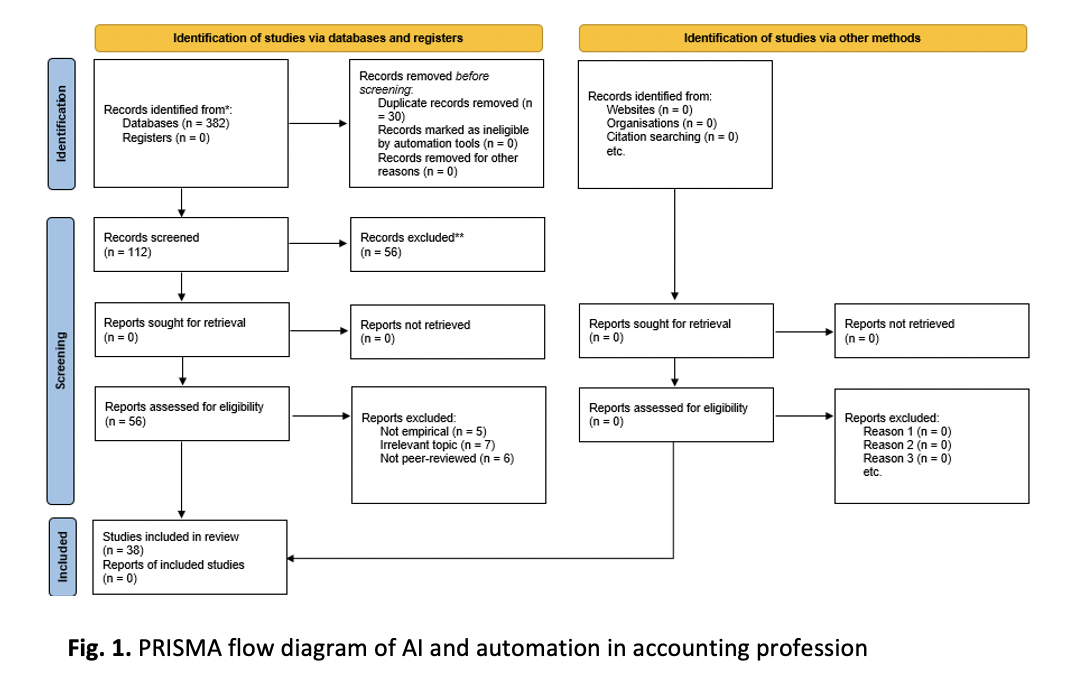
The rapid advancement of artificial intelligence (AI) and automation technologies is reshaping the accounting profession, altering employment structures and skill requirements within an increasingly digital economy. Despite growing scholarly attention, existing studies remain fragmented in their treatment of how these technologies influence job displacement and workforce readiness among accounting professionals. This study systematically synthesises prior research to examine the implications of AI and automation for employment dynamics and evolving skill demands in the accounting field. Using a systematic literature review of studies published between 2015 and 2025 and retrieved from major academic databases, the review identifies key themes, research patterns, and gaps in the literature. The findings highlight two recurring implications: the progressive automation of routine accounting tasks, which is associated with changes in traditional role configurations, and the increasing emphasis on adaptive, technology-oriented competencies in defining workforce readiness. While the literature consistently reports productivity and efficiency gains from AI-enabled systems, it also reveals uneven empirical attention to long-term employability outcomes and skill transition processes. By consolidating and critically mapping existing evidence, this review clarifies current understandings and identifies directions for further research on digital transformation in the accounting profession.