Exploring the Role of Religiosity and Demographic Factors in Shaping Counterproductive Work Behavior
Keywords:
Counterproductive Work Behavior, higher education, religiosity, age, genderAbstract
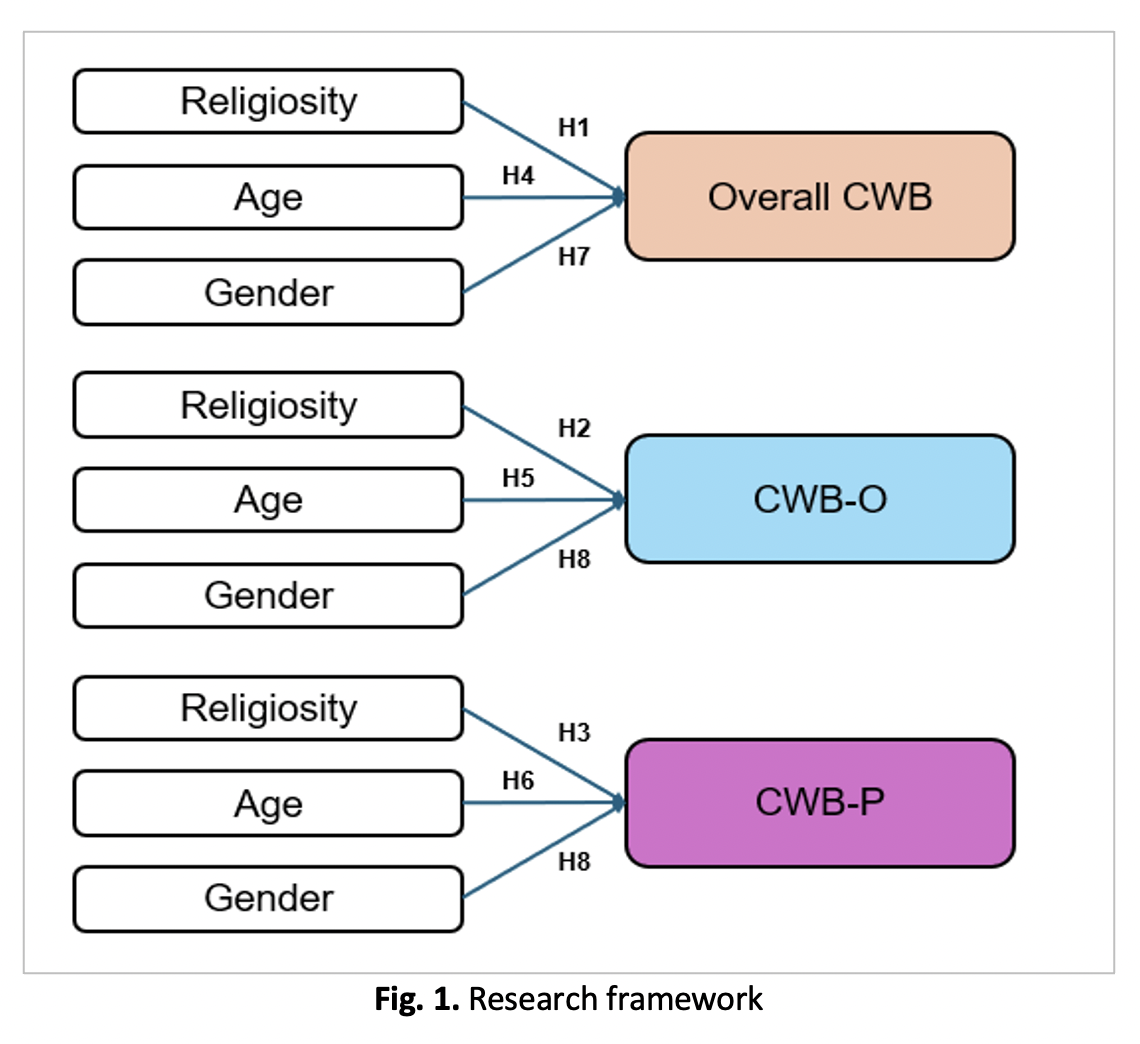
Ethical behavior in the workplace is an essential component of organizational effectiveness, as it influences both employee well-being and overall productivity. Among the various dimensions of workplace ethics, Counterproductive Work Behavior (CWB) has received growing attention due to its detrimental consequences, including organizational losses and interpersonal conflict. While prior research has examined various individual and situational predictors of CWB, the role of personal values and moral frameworks, particularly religiosity, remains underexplored in the context of higher education in Malaysia. Religiosity is linked to the four core components of social bonds: attachment, commitment, involvement, and belief, indicating a potential negative association with CWB. Based on Social Control Theory, this study examined the influence of religiosity, as well as demographic factors such as age and gender, on overall CWB and its two dimensions: behaviors directed at the organization (CWB-O) and at people (CWB-P). Data were collected from 537 administrative staff in Malaysian public universities. Multiple regression analysis revealed that religiosity significantly and negatively predicts all forms of CWB, whereas age and gender did not show significant effects. The findings highlight the protective role of religiosity as a psychological and moral buffer that reduces workplace deviance. The study contributes to management and organizational psychology by demonstrating that fostering value-based interventions, such as promoting religiosity or ethical commitment, may effectively mitigate CWB and enhance workplace ethics.