Upcycling Textile Using Tie-And-Dye In Achieving Zero Waste Malaysia

Authors

  • Maithreyi Subramaniam Department of Creative Industries, Faculty of Communication and Creative Industries, Tunku Abdul Rahman University of Management and Technology, Jalan Genting Kelang, 53300 Kuala Lumpur, Malaysia
  • Rusmawati Ghazali Faculty of Art and Design, Universiti Teknologi MARA, Jalan Ilmu 1/1, 40450 Shah Alam, Selangor, Malaysia
  • Hema Zulaika Hashim Faculty of Art and Design, Universiti Teknologi MARA, Jalan Ilmu 1/1, 40450 Shah Alam, Selangor, Malaysia
  • Nur Shakeira Abdul Hamid Faculty of Art and Design, Universiti Teknologi MARA, Jalan Ilmu 1/1, 40450 Shah Alam, Selangor, Malaysia
  • Syed Muhamad Ahmad Sherazi Berjaya Ros, No. 1 Jalan Warisan Megah 1 /5, Kota Warisan 43900 Sepang Selangor

Keywords:

Upcycling, textile, tie-and-dye, zero waste, Malaysia

Abstract

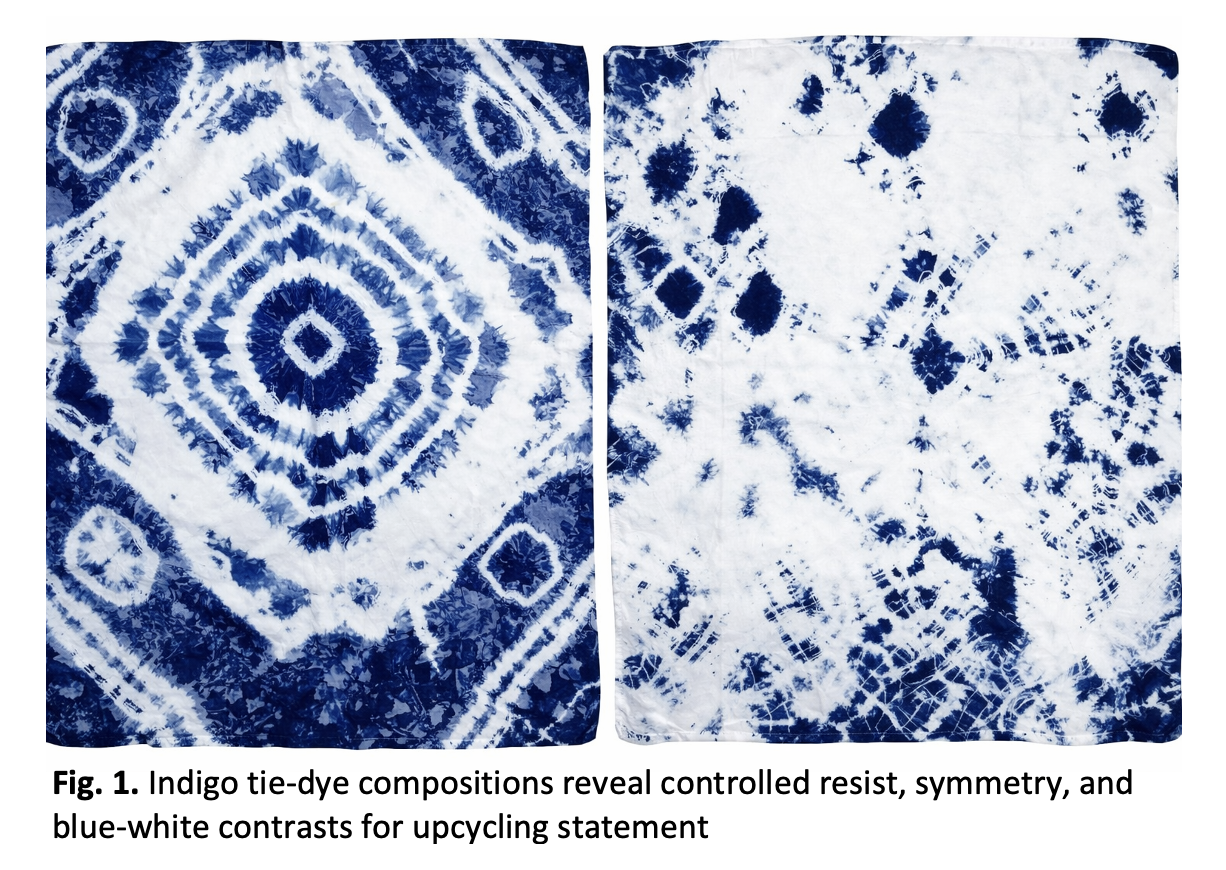
Upcycling, which relates to the ideas of sustainability and circular economy, has become one of the effective ways of mitigating the environmental impact of generating waste, and reducing of resources; in line with Sustainable Development Goal 12 Responsible Consumption and Production. Malaysia’s upcycling challenge is being driven by fast fashion and low reuse capacity, causing household textile waste to end up in landfills, pollution and climate impacts. The purpose of this study is to propose upcycling using tie-and-dye method, with the aim of turning the post-consumer textile wastes into marketable products, in order to promote sustainable textile and fashion industries in Malaysia. A practice-based research upcycling tie-and-dye methodology was used, where post-consumer textiles were cleaned, tied into resist patterns, dyed in baths with light mordanting, then rinsed, shade-dried, and assessed for colorfastness, pattern definition, and surface renewal. The results show that addressing textile waste requires a shift upstream, where design, material strategy, and recovery systems are integrated from the outset rather than treated as end-of-life fixes. Upcycling, particularly through tie-and-dye, emerges as a credible circular pathway that extends material life, preserves value, and avoids energy-intensive recycling processes. In conclusion, it moves beyond a niche green practice by linking cultural craft, sustainability, and functional longevity into a single design strategy. When supported by aligned policy, infrastructure, and market mechanisms, upcycled tie-dyed textiles can contribute meaningfully to landfill reduction, decarbonisation, and a resilient circular fashion economy in Malaysia.

Author Biographies

Maithreyi Subramaniam, Department of Creative Industries, Faculty of Communication and Creative Industries, Tunku Abdul Rahman University of Management and Technology, Jalan Genting Kelang, 53300 Kuala Lumpur, Malaysia

maithreyi@tarc.edu.my

Nur Shakeira Abdul Hamid, Faculty of Art and Design, Universiti Teknologi MARA, Jalan Ilmu 1/1, 40450 Shah Alam, Selangor, Malaysia

asd@c.com

Downloads

Published

2026-02-01

Issue

Section

Articles