
Youtube Videos as Learning Support in Computer Architecture: A Quasi-Experimental Study of Student Achievement

Authors

  • Mazuin Stapah@Salleh Department of Information and Communication Technology, Politeknik Sultan Abdul Halim Mu’adzam Shah, 06000 Jitra, Kedah, Malaysia
  • Azrul Hisham Shuib Electrical Unit, Kolej Komuniti Arau, 02600 Arau, Perlis, Malaysia
  • Donny Setiawan Institut Agama Islam SEBI, Jln Raya Bojongsari, Sawangan, Kota Depok, Jawa Barat, 16517, Indonesia

Keywords:

Youtube Videos, Self-Directed Learning, Traditional Instruction, Computer Architecture, TVET

Abstract

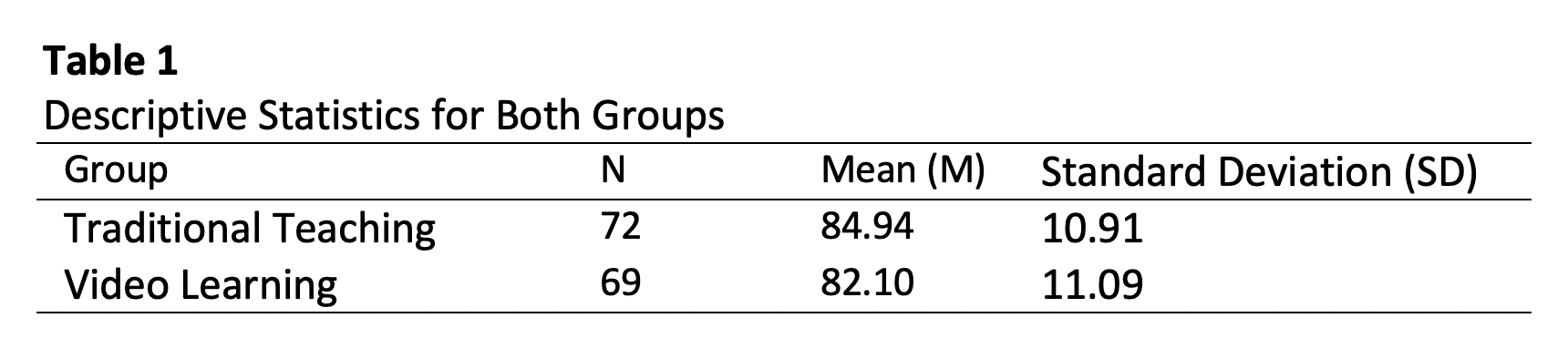
This study examines the role of YouTube videos as a learning support resource for the Operating System and Networking topic in the Computer Architecture course at Polytechnic Sultan Abdul Halim Mu’adzam Shah (POLIMAS). With the growing use of digital video platforms in higher education, it is important to evaluate their contribution to student learning, particularly in technical and vocational education and training (TVET). This study evaluates whether there is a statistically significant difference in achievement between traditional classroom instruction and self-directed learning using YouTube videos. It also estimates the practical magnitude of any difference using Cohen’s d. A non-equivalent quasi-experimental design was employed involving two cohorts of Diploma in Digital Technology students: a traditional teaching group (n = 72) and a self-directed YouTube-based learning group (n = 69). Achievement data were analysed using descriptive statistics and an independent samples t-test. The traditional teaching group recorded a slightly higher mean score than the YouTube-based group; however, the difference was not statistically significant, t (139) = 1.53, p = 0.127, with a small effect size (Cohen’s d = 0.26). Overall, self-directed learning using YouTube videos produced performance comparable to traditional instruction, although it did not surpass it. The findings also suggest that YouTube videos are best positioned as a supplementary resource, particularly when combined with structured teaching activities such as diagram-drawing exercises and direct lecturer guidance. This study provides empirical evidence to inform the design of blended learning approaches in TVET and technology-based education contexts.

Author Biographies

Mazuin Stapah@Salleh, Department of Information and Communication Technology, Politeknik Sultan Abdul Halim Mu’adzam Shah, 06000 Jitra, Kedah, Malaysia

mazuinss@polimas.edu.my

Azrul Hisham Shuib, Electrical Unit, Kolej Komuniti Arau, 02600 Arau, Perlis, Malaysia

azrul.hisham@kkarau.edu.my

Donny Setiawan, Institut Agama Islam SEBI, Jln Raya Bojongsari, Sawangan, Kota Depok, Jawa Barat, 16517, Indonesia

donny.setiawan@sebi.ac.id

Downloads

Published

2026-03-18

Issue

Section

Articles