Cooperative Learning Strategies for English as a Second Language (ESL) Module Development
DOI:
https://doi.org/10.37934/arsbs.42.1.283290Keywords:
Cooperative learning strategies, English as a Second Language (ESL), ESL teachers, module developmentAbstract
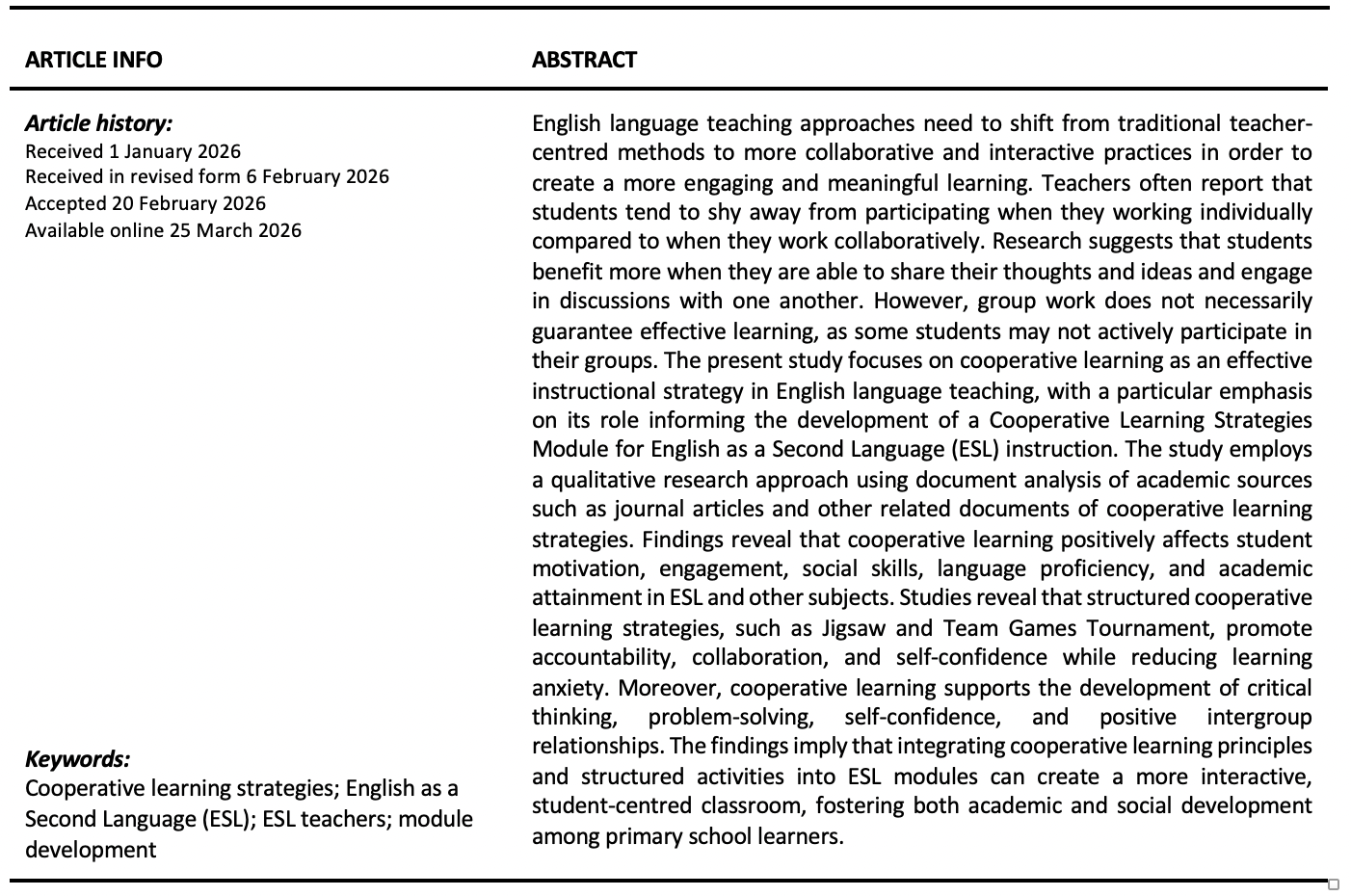
English language teaching approaches need to shift from traditional teacher-centred methods to more collaborative and interactive practices in order to create a more engaging and meaningful learning. Teachers often report that students tend to shy away from participating when they working individually compared to when they work collaboratively. Research suggests that students benefit more when they are able to share their thoughts and ideas and engage in discussions with one another. However, group work does not necessarily guarantee effective learning, as some students may not actively participate in their groups. The present study focuses on cooperative learning as an effective instructional strategy in English language teaching, with a particular emphasis on its role informing the development of a Cooperative Learning Strategies Module for English as a Second Language (ESL) instruction. The study employs a qualitative research approach using document analysis of academic sources such as journal articles and other related documents of cooperative learning strategies. Findings reveal that cooperative learning positively affects student motivation, engagement, social skills, language proficiency, and academic attainment in ESL and other subjects. Studies reveal that structured cooperative learning strategies, such as Jigsaw and Team Games Tournament, promote accountability, collaboration, and self-confidence while reducing learning anxiety. Moreover, cooperative learning supports the development of critical thinking, problem-solving, self-confidence, and positive intergroup relationships. The findings imply that integrating cooperative learning principles and structured activities into ESL modules can create a more interactive, student-centred classroom, fostering both academic and social development among primary school learners.