Optimization of Solar Power Plant (PLTS) usage for Substitution of Internal Electricity usage in an Effort to Increase the Efficiency of Gas Engine Power Plant (PLTMG)
Keywords:
Gas Engine Power Plant (PLTMG), Solar Power Plants (PLTS), self-useAbstract
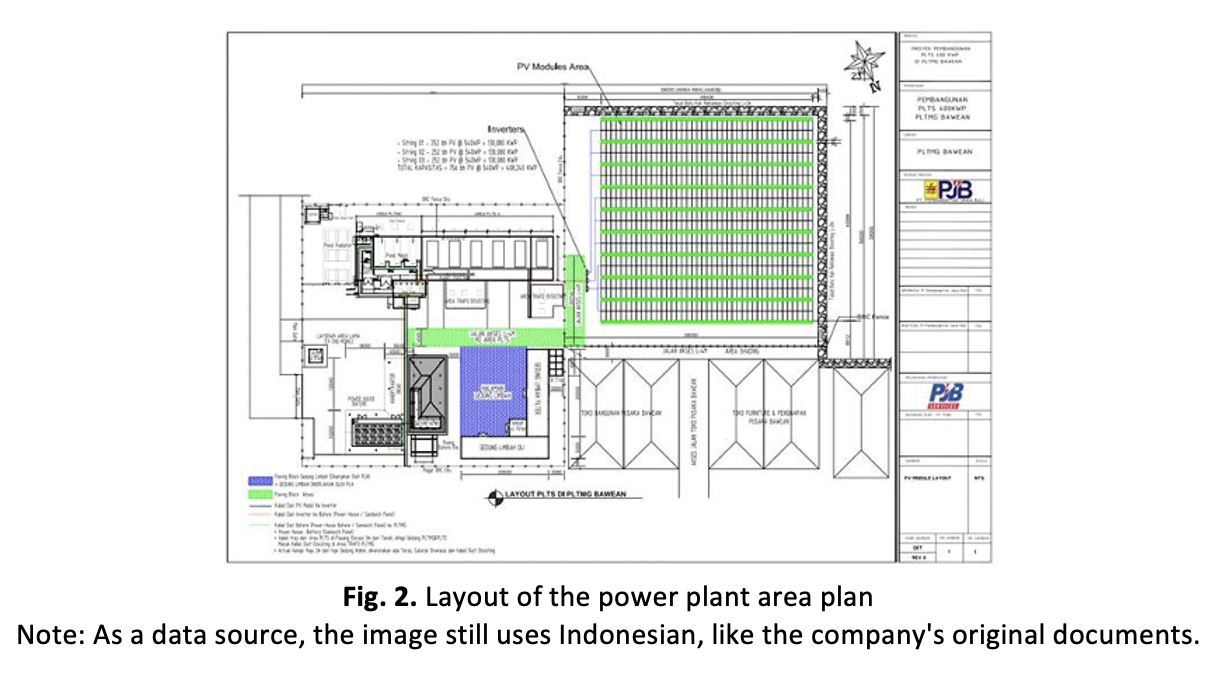
Gas Engine Power Plant (PLTMG) is a type of plant that is widely used in small-scale electricity systems and in remote locations. This is because PLTMG has very flexible operating capabilities and faster startup times when compared to other traditional plants. In its operational process, PLTMG requires electricity resources to support various supporting equipment such as cooling systems, pumps, air compressors, control systems, and lighting. The electrical energy used for this purpose is referred to as the auxiliary load, which directly reduces the amount of net electricity that can be channeled to the grid, thus impacting the efficiency of the plant. One approach that can be applied to reduce the use of electrical energy in power plants is to utilize renewable energy sources, such as Solar Power Plants (PLTS), to meet some of the internal electricity needs of PLTMG. In the Bawean PLTS system, this plant is designed to provide additional power to the PLTMG machine by using the settings of the Energy Management System (EMS), which aims to make the energy produced by PLTMG can be used more optimally to support the power grid. Based on the analysis of internal electricity usage data at the Bawean PLTMG, the total internal load of the plant was recorded at 643.42 kW, which is equivalent to around 21.45% of the total capacity of the plant which reached 3 MW. On the other hand, solar power systems can produce around 100 to 120 kW of power when solar radiation conditions are at maximum levels. Assuming that operations run effectively for 6 hours every day, the electrical energy produced by solar power plants can be estimated to reach 720 kWh per day or approximately 21. 600 kWh in a month. This energy can replace about 18.65% of the plant's total internal electricity needs.