Banana Pseudostem Waste Bio-Briquettes using Cassava Peels Binder
Keywords:
Banana pseudostem waste, briquettes, Cassava peelsAbstract
This research explores the potential of banana pseudo-stem waste and cassava peels (binder)—both abundant agricultural wastes in Uganda for the production of bio-briquettes as a sustainable energy source. While banana pseudo-stems account for 60% of banana waste, mechanical fiber extraction generates a large amount of trash that is largely discarded. Cassava peels, on the other hand, offer a starch-rich, non-edible alternative to traditional food-based binders like cassava starch. The study involves converting Banana plant pseudo-stem waste into biochar, then into briquette feedstock, and using cassava peel starch as a binder at varying ratios. Bio-briquette samples were produced using different compaction loads, and their physical, Mechanical and thermal properties were tested to validate performance. The conducted tests resulted in a calorific value of 8.172 MJ/Kg, a burning rate of 6.85g/min, a heat utilization efficiency of 91%, a moisture content of 8.8%, a compressive strength of 0.83 MPa, and an average density of 232kg/m3. The project aims to reduce agricultural waste, provide clean energy, enhance food security, and support circular economy practices in Sub-Saharan Africa.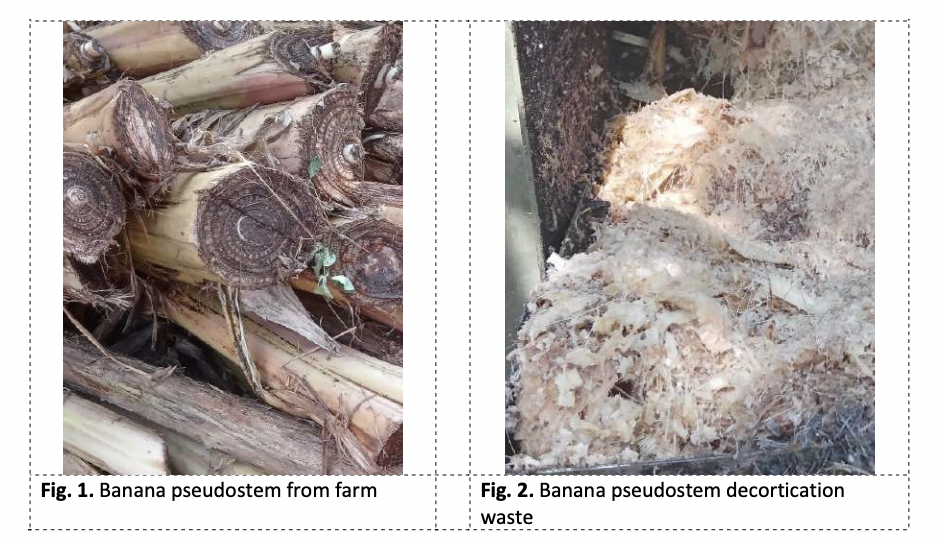
Downloads
Published
2026-03-03
How to Cite
Nyang’au, M. G., Mutua, F. N., Muumbo, A. M., & Kamalha, E. (2026). Banana Pseudostem Waste Bio-Briquettes using Cassava Peels Binder. Karya International Journal of Biofuel and Bioenergy , 4(1), 1–16. Retrieved from https://karyailham.com.my/index.php/kijbb/article/view/966
Issue
Section
Articles