Molarity-Controlled KOH Activation of Sugarcane Bagasse-Derived Carbon for Energy Storage Applications
Keywords:
Activated carbon, chemical activation, energy storage, biomass-derived carbonAbstract
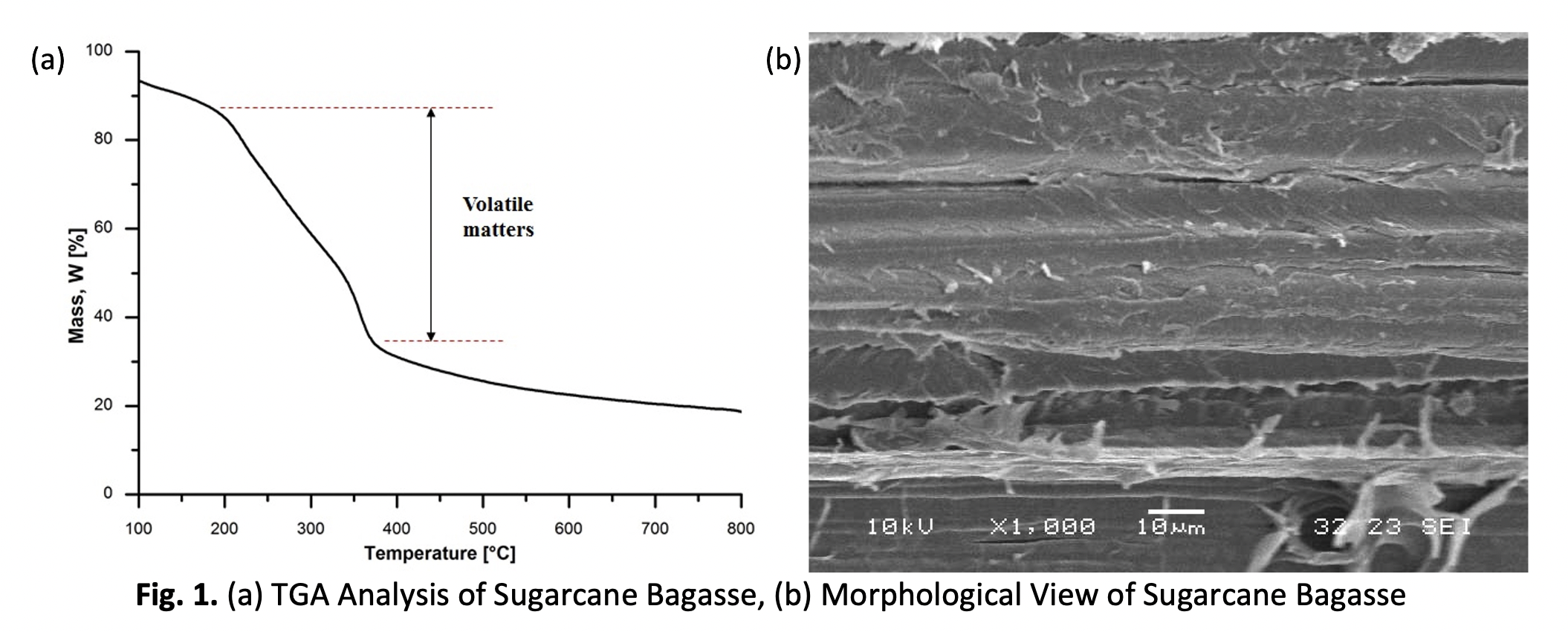
As world shift to a world with green and high technology, it is a challenge to find alternative carbon source for the energy storage electrode. Activated carbon are known to have high surface area and porosity which significant to various applications including energy storage electrode materials. It was developed from a sustainable non-toxic and low-cost precursor source. In this work, activated carbon was prepared from sugarcane bagasse using single-step chemical activation using various molarities of potassium hydroxide (KOH) as an activating agent followed by pyrolysis at 650 °C. This study aims to investigate the influence of different KOH molarities on structural and electrochemical properties of activated carbon. This parameter will also affect the properties of the activated carbon produced. The characterization of sugarcane bagasse activated carbon using specific techniques such as scanning electron microscopy (SEM), thermo-gravimetric analysis (TGA), X-ray diffraction (XRD), Linear Sweep Voltammetry (LSV) and Fourier transform infrared (FT-IR) spectroscopy revealed that increasing in KOH molarities will also enhance the properties of activated carbon such as pore development and structural disorder, resulting in predominantly amorphous carbon with enlarged interlayer spacing, reaching ~0.3 nm for the 1.2 M sample. Linear sweep voltammetry analysis conducted within a voltage window of −1.5 V to 2.3 V demonstrated that the activated carbon produced using 1.2 M KOH indicates the pseudocapacitor trend compared to lower molarity samples. These findings emphasize the role of chemical activation parameters in enhancing the microstructure and electrochemical performance of biomass-derived activated carbon and highlight sugarcane bagasse as a promising, low-cost, and sustainable electrode material for energy storage applications.