Trends in Hybrid Learning Research: A Bibliometric Study of Technology- Enhanced Education (2008–2025)
Keywords:
Hybrid learning, Technology-enhanced learning (TEL), bibliometric analysis, scopusAbstract
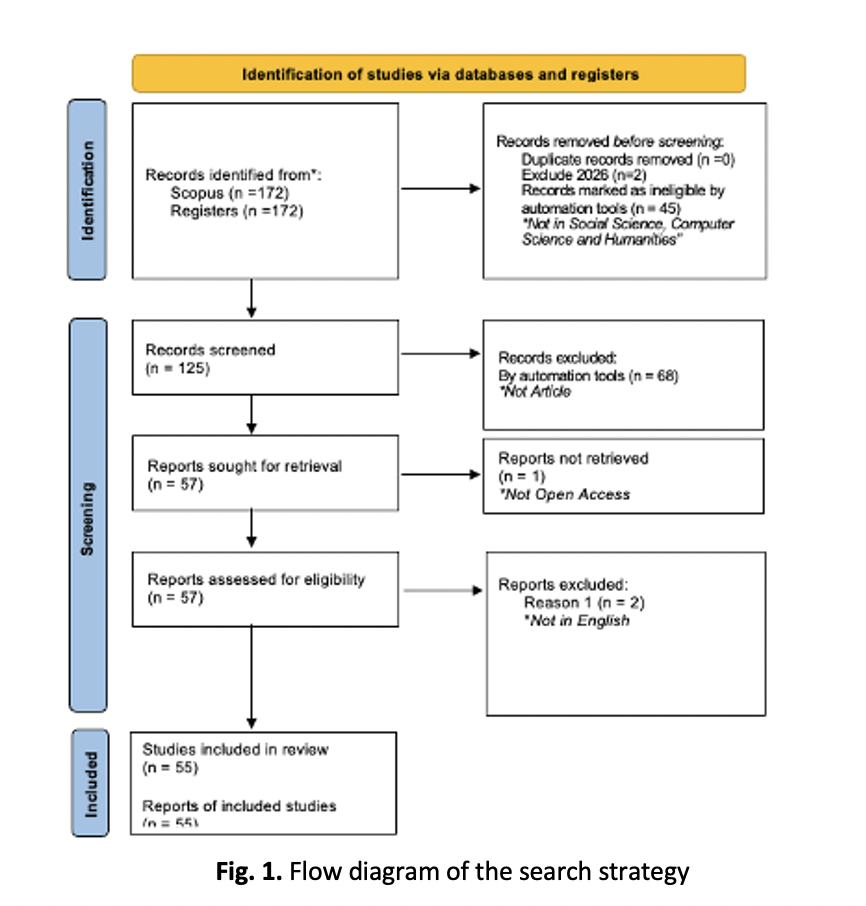
Hybrid learning, supported by technology-enhanced learning (TEL), has become a key instructional strategy in the post-pandemic era to promote flexibility, continuity, and pedagogical resilience across educational settings. Despite rapid growth in related publications, the structure, main contributors, and thematic development of hybrid learning research remain poorly mapped. This study aims to explore the development, impact, and thematic trends of hybrid and blended learning research within the broader field of technology-enhanced education from 2008 to 2025. A bibliometric analysis was performed on 55 Scopus-indexed journal articles collected through a PRISMA-guided search. Performance indicators, including total publications, citation counts, authorship patterns, and impact scores, were combined with science-mapping methods such as keyword co-occurrence and thematic clustering to identify major research streams and emerging topics. The results show a significant rise in research output after 2019, with publication volume peaking in 2025, indicating increased scholarly focus during and after the COVID-19 pandemic. A core group of highly cited studies forms the foundation of the field, focusing primarily on learning effectiveness, student engagement, instructional design, and digital transformation. However, perspectives from educators, institutional preparedness, and equity issues are less explored. These findings offer a structured overview of the evolution and influence of hybrid learning research and suggest evidence-based directions for future studies and policy in technology-enhanced education.Downloads
Download data is not yet available.